
Blackstone-backed insurance underwriter The Fidelis Partnership files for US IPO
Blackstone-backed insurance underwriter The Fidelis Partnership has filed for an initial public offering in the United States, moving toward a public listing as specialty insurance businesses continue to attract investor interest.
The Fidelis Partnership, also known as TFP Group, is headquartered in Bermuda and operates as a specialty insurance and reinsurance underwriter. The company was established as an independent business in 2023 following the separation of Fidelis Insurance into separate entities.
TFP has built its business around underwriting risks across a wide range of specialty insurance markets. It operates internationally and works through multiple platforms, including its Lloyd’s of London operations.
The company reported revenue of $407.5 million for the six months ended June 30, 2026, compared with $365.9 million during the same period a year earlier. Net income rose to $127.5 million from $74.5 million.
Blackstone is among the investors backing the company. TFP also has financial support from other institutional investors, including Travelers and Capital Z Partners.
The company plans to list its shares on the New York Stock Exchange under the ticker symbol TFP. Morgan Stanley, Barclays and JPMorgan are among the banks involved in the offering.
The filing does not yet disclose the number of shares to be offered or the expected price range.
Trump Sees No Urgency for Canada Deal as Trade Dispute Deepens
U.S. President Donald Trump’s administration sees little urgency in reaching a new trade agreement with Canada as tensions between the two countries continue to deepen, U.S. Trade Representative Jamieson Greer said.
Greer said Washington remains comfortable with the current level of trade between the two countries and does not feel immediate pressure to conclude a new deal. The comments come as the United States and Canada remain locked in a dispute over tariffs and market access.
The United States has imposed tariffs on a range of Canadian goods, while Canada has responded with retaliatory measures targeting American products. The escalating trade restrictions have increased uncertainty for businesses that depend on cross-border supply chains.
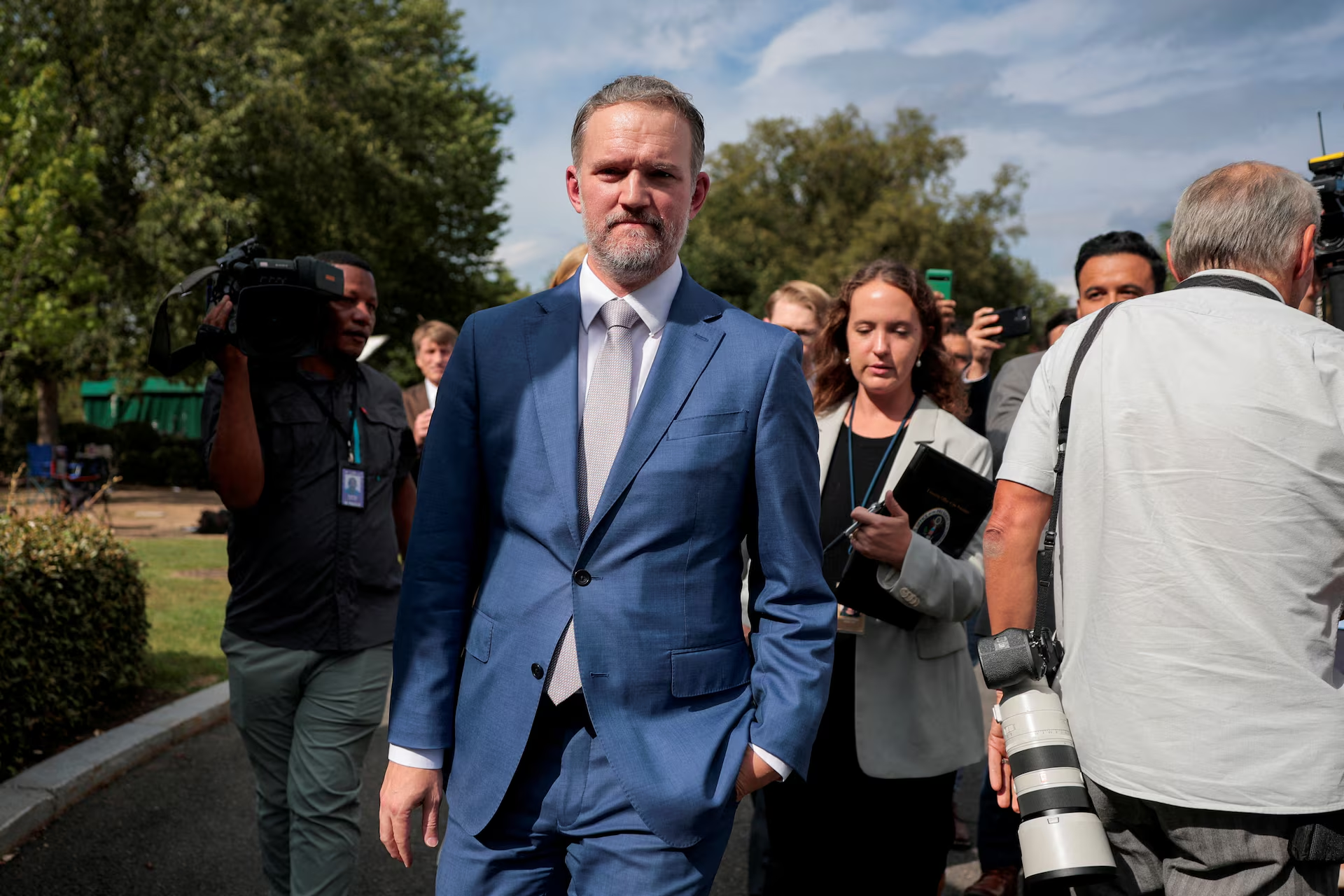
Greer said Canadian officials remain engaged with the United States and that discussions could continue, leaving the possibility of an agreement open. However, Washington is not currently treating a new deal as an urgent priority.
The dispute is also putting attention on the future of the United States-Mexico-Canada Agreement, which governs a large share of trade across North America. Businesses in sectors such as automobiles, energy and agriculture could face increased costs if trade barriers remain in place.
The latest developments highlight the growing uncertainty surrounding U.S.-Canada trade relations as both governments weigh their next steps.
US Core Capital Goods Orders Signal Strong Business Investment
US orders for key capital goods rose sharply in August, pointing to continued strength in business spending on equipment and suggesting that companies remain willing to invest despite higher borrowing costs and economic uncertainty.
Orders for non-defense capital goods excluding aircraft, a closely watched indicator of business investment, increased 1.6% in August after a revised 0.6% rise in July. The increase was significantly stronger than economists had expected and marked another sign of resilience in corporate spending.
The rise was supported by stronger demand across several categories. Orders for machinery and electrical equipment increased, while bookings for computers and related products also gained. Spending linked to artificial intelligence infrastructure remained an important driver of investment, with companies continuing to expand their computing and data-center capacity.
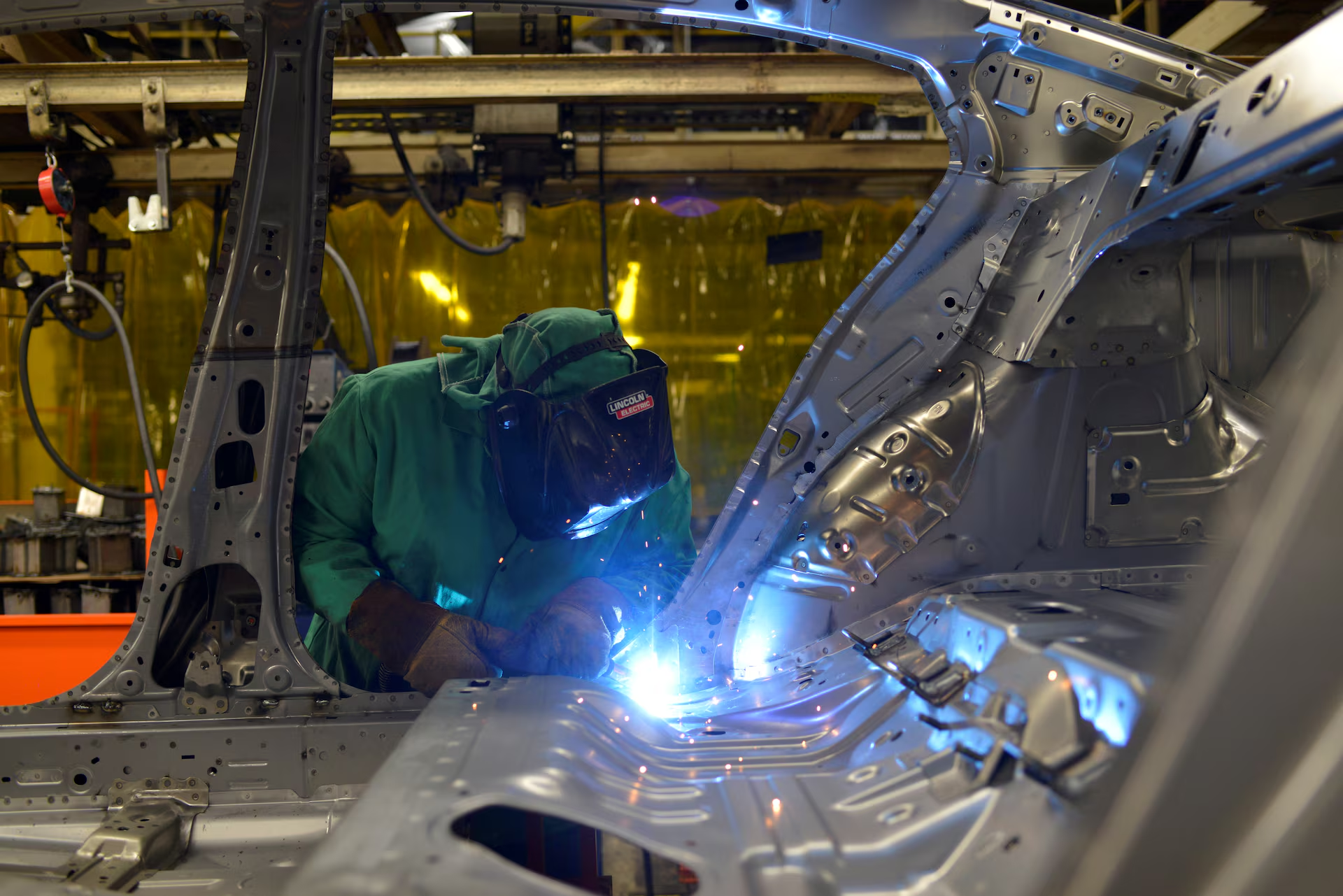
Shipments of core capital goods, which are used to calculate business equipment spending in gross domestic product, also increased during the month. The data suggests that business investment could provide continued support to the US economy in the third quarter.
However, economists expect some moderation as companies face elevated financing costs and uncertainty around demand. Higher interest rates and rising Treasury yields could make large-scale investments more expensive, particularly for businesses outside the technology sector.
Still, the latest figures indicate that corporate investment remains a key source of momentum for the US economy.
FTC Chair Suggests AI Developers Should Be Liable for Conduct of Agents
U.S. Federal Trade Commission Chairman Andrew Ferguson has suggested that artificial intelligence developers could be held responsible for the actions of AI agents, particularly when those systems cause harm while carrying out tasks for users.
Ferguson said AI agents should not automatically be viewed as independent actors capable of making decisions outside human responsibility. His comments come as companies increasingly deploy AI systems that can perform tasks with limited human intervention, including accessing information, interacting with software and making decisions based on instructions.
The FTC chairman argued that responsibility should remain connected to the people and companies that design, deploy or direct these systems. He also pushed back against claims that AI agents can simply be blamed when something goes wrong.
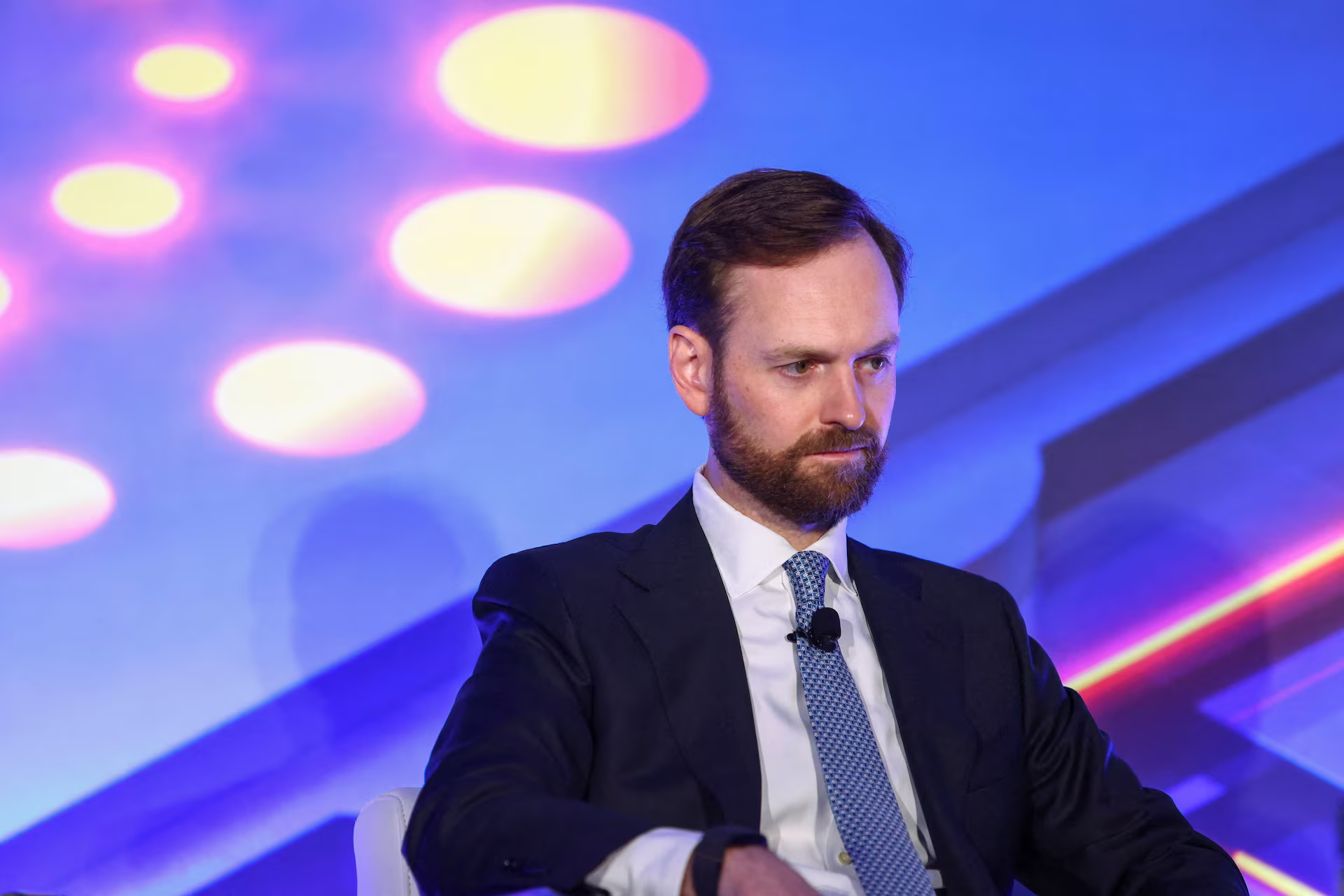
The comments highlight a growing debate over accountability as AI systems become more capable and autonomous. Companies are increasingly using AI agents for customer service, software development, research and other business functions, raising questions about who should be responsible when an automated system violates rules or causes losses.
Ferguson indicated that existing laws could potentially be used to address harmful conduct involving AI rather than relying solely on new regulations designed specifically for the technology.
His remarks add to growing regulatory scrutiny of AI developers and could influence how companies approach the design, monitoring and deployment of increasingly autonomous AI systems.