
France Probes Misuse of Smart Glasses in Sexual Harassment Cases
French authorities are investigating the alleged misuse of camera-equipped smart glasses in cases involving sexual harassment and the recording of women without their knowledge or consent. The investigation highlights growing concerns about privacy as wearable technology becomes more common in public spaces.
The probe follows complaints involving people allegedly using smart glasses to secretly record women and share the footage online. Authorities are examining whether the devices were used to capture individuals without their consent and whether the recordings were subsequently distributed through social media platforms.
Smart glasses have become increasingly sophisticated, with some models allowing users to take photographs, record videos, make calls and interact with artificial intelligence without reaching for a smartphone. Their compact design, however, has raised questions about how easily people can identify when they are being recorded.
France’s investigation has brought renewed attention to the privacy challenges created by wearable cameras. Unlike conventional smartphone recording, smart glasses can be operated while the wearer appears to be simply looking at another person, potentially making covert recording more difficult to detect.
Privacy regulators and authorities are also examining whether existing rules adequately address the use of such devices. Questions include how consent should be established, how recordings should be handled and what responsibilities users have when sharing footage online.
The issue has gained wider attention as social media trends encourage users to document interactions with strangers in public. When such recordings involve sexualised or humiliating content, concerns can extend beyond privacy to harassment and exploitation.
The investigation could have implications for the wider smart-glasses industry as manufacturers continue to add cameras, artificial intelligence and other advanced features to wearable devices.
Authorities may also examine whether existing privacy and harassment laws provide sufficient protection against emerging forms of covert recording. The case underscores the challenge of balancing technological innovation with individual privacy and consent as smart glasses become more widely adopted.
OpenAI Forecasts Nearly $280B in Cash Burn by 2030
OpenAI is reportedly forecasting cash burn of nearly $280 billion through 2030 as the artificial intelligence company prepares for a massive expansion in computing infrastructure and AI development.
According to the reported projections, OpenAI expects its revenue to grow sharply over the next five years. The company is forecasting revenue of around $36 billion in 2026, potentially rising to approximately $350 billion by 2030. Despite this growth, its spending requirements are expected to remain significantly higher as it expands its operations.
A major portion of OpenAI’s projected expenditure is expected to go toward computing capacity and infrastructure. The company is reportedly planning hundreds of billions of dollars in spending on data centres, computing systems and other infrastructure needed to develop and operate increasingly advanced AI models.
The scale of the projected spending reflects the unusually high costs associated with frontier artificial intelligence. Training large models requires vast amounts of computing power, while serving millions of users and enterprise customers also requires continuous access to specialised hardware and data-centre capacity.

OpenAI’s financial plans come as competition in the AI industry intensifies. Technology companies and AI startups are investing heavily in computing infrastructure as they race to develop more capable models and expand their commercial applications.
The company is also expected to require continued access to external capital to finance its expansion. Its reported fundraising discussions have involved valuations running into hundreds of billions of dollars, reflecting investor expectations around the future growth of generative AI.
The projected cash burn also highlights the financial challenge facing OpenAI. Even with rapid revenue growth, the company expects infrastructure and operating costs to remain substantial for years.
OpenAI’s long-term strategy depends on converting growing demand for its AI products into sufficient revenue to support its enormous infrastructure commitments. The reported projections underline how much capital may be required to compete at the leading edge of the AI industry through the end of the decade.
Foreign Hackers Targeted Colorado Water Systems in August, Governor’s Office Says
Foreign hackers targeted water and wastewater systems in Colorado during August, according to the governor’s office, raising concerns about the growing cybersecurity risks facing critical infrastructure.
The incidents involved attempts to gain unauthorized access to computer systems operated by water utilities. Officials said the activity was detected and investigated, with no indication that the attacks caused widespread disruption to water services or affected the safety of drinking water.
The incidents highlight the increasing dependence of water facilities on digital technology. Modern utilities use computer systems to monitor treatment processes, control pumps, manage distribution networks and track operational data. While these systems improve efficiency, they can also create potential entry points for cyber attackers.
Colorado officials are working with local water providers and cybersecurity agencies to determine the scope of the incidents and understand how the attackers attempted to access the systems. Authorities have not publicly identified the individuals or organizations responsible, and no specific foreign government has been confirmed as being behind the activity.

Water utilities across the United States have faced growing cyber threats in recent years. Smaller facilities can be particularly vulnerable because they may have limited cybersecurity resources and rely on older technology. A successful attack could potentially disrupt operations, interfere with equipment or prevent employees from accessing essential systems.
Following the incidents, officials are encouraging utilities to strengthen network security, monitor systems for suspicious activity and maintain backup procedures that can keep essential services operating during a cyberattack.
The events also demonstrate the importance of cooperation between local utilities, state governments and federal cybersecurity agencies. Water infrastructure is highly decentralized, with individual communities responsible for operating many facilities.
Although the Colorado incidents did not result in a reported major interruption to the state’s water supply, they serve as a warning about the potential consequences of attacks on essential infrastructure. Investigators are continuing to examine the activity and whether similar attempts have targeted water systems elsewhere in the country.
Disney Names Character.AI’s Karandeep Anand as Its First Tech Chief
The Walt Disney Company has appointed Karandeep Anand as its first Chief Technology Officer, creating a new senior leadership role as the entertainment company expands its focus on artificial intelligence, digital products and technology infrastructure.
Anand, who previously served as CEO of Character.AI, is expected to join Disney in October. He will report to CEO Josh D’Amaro and oversee technology operations across the company’s businesses.
His responsibilities will include enterprise technology, infrastructure, data and artificial intelligence platforms, as well as product and engineering teams. The new role is expected to bring greater coordination across Disney’s technology operations as the company continues to expand its digital offerings.
Anand brings extensive experience from the technology industry. Before joining Character.AI, he was president and chief product officer at financial technology company Brex. He previously held leadership roles at Meta and spent more than 15 years at Microsoft, where he worked on its Azure cloud business.
His appointment comes as Disney seeks to strengthen its digital ecosystem and make greater use of technology across entertainment, streaming, sports and consumer experiences. Artificial intelligence is also becoming increasingly important to major media companies as they explore new ways to personalize content and engage audiences.
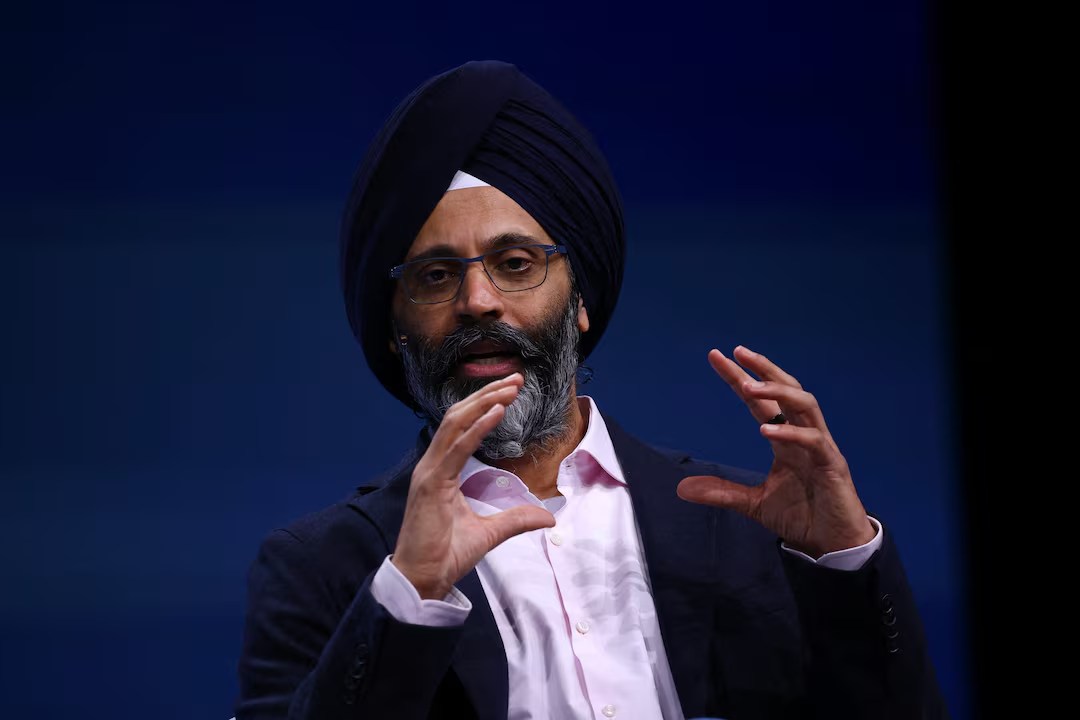
The move is notable because Disney and Character.AI have previously been involved in a dispute over the use of Disney characters on the AI chatbot platform. Character.AI later removed Disney-related characters from its service.
Anand’s move places an executive with experience in cloud computing, consumer technology and artificial intelligence at the centre of Disney’s technology strategy.
Disney has also been reshaping its leadership team as it focuses on streaming and digital growth. The creation of a dedicated technology chief position reflects the increasing importance of technology to the company’s operations.
With Anand taking on the role, Disney will be looking to integrate its technology capabilities more closely with its entertainment businesses while exploring new applications for AI and digital platforms.