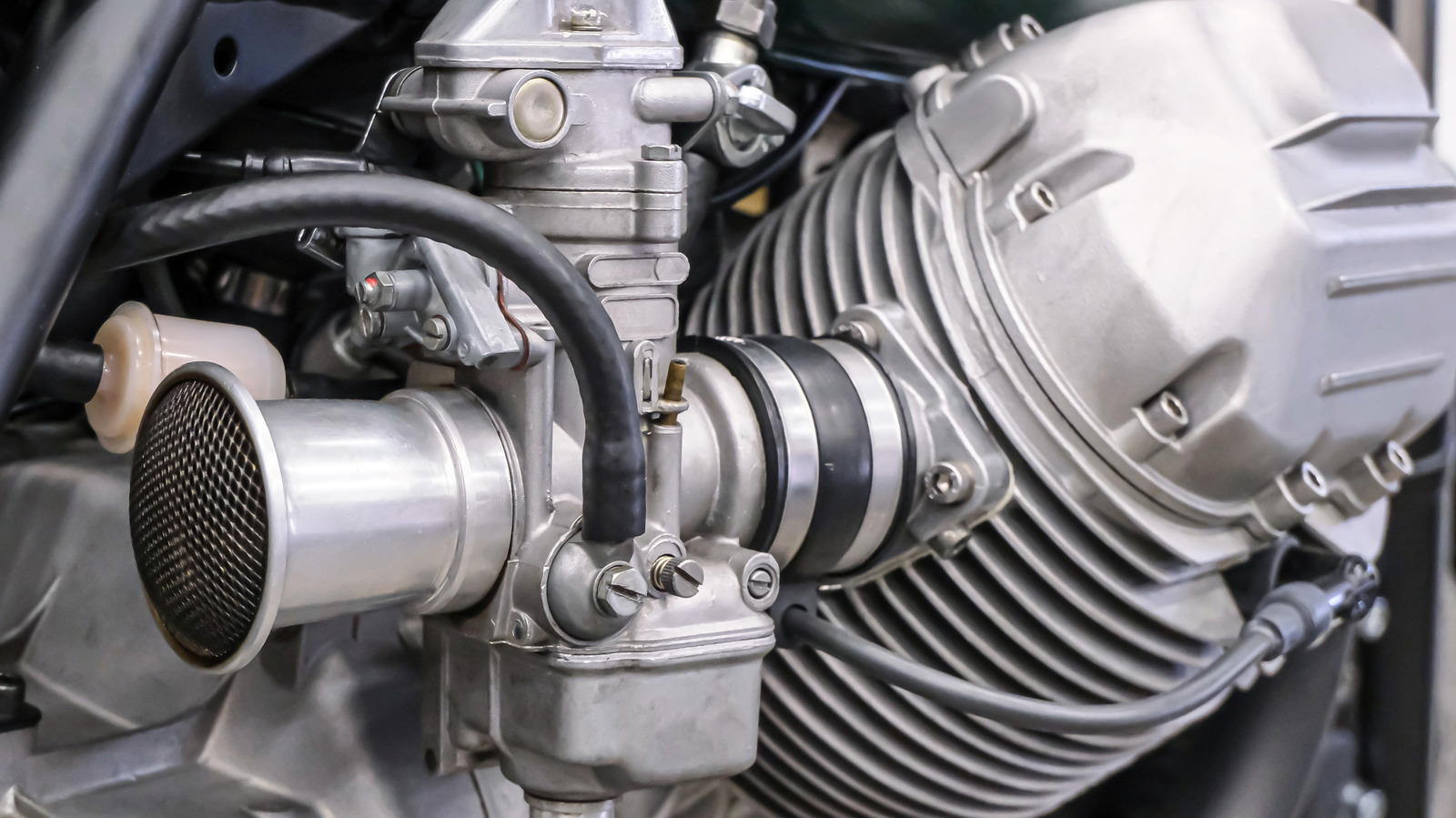
Motorcycles have a lot of different parts on them, from breather bolts on Harley-Davidsons to handlebar risers. Some are optional and customizable, while others aren’t, which is why no motorcycle is universally comfortable for every rider straight from the factory or dealership floor. This is also why it helps to figure out what size motorcycle is best for you. That being said, one of the more interesting motorcycle parts is a velocity stack. You’ll often find them on modern motorcycles, and if you’ve ever noticed a trumpet-shaped intake on a performance bike’s carburetor or throttle body, you already know what they look like.
Also called an intake trumpet or air horn, a velocity stack is a flared tube that attaches to the air intake on an engine. Its main job is to improve and manage the engine’s airflow. Instead of air rushing in through a sharp opening, the velocity stack’s flared end smooths the path from the calm air outside to the fast-moving air inside the intake. The result is more air getting into the engine with less resistance. Combined with the right fuel, this extra air intake translates to an increase in power.
Additionally, due to the smoother airflow, velocity stacks can give you a better throttle response. Plus, they will notably change the sound of a motorcycle, giving you a loud and aggressive roar from the intake. Interestingly, changing how long the velocity stack is has different effects. For instance, shorter stacks allow for higher RPMs, which is great for top-end power. On the other hand, longer stacks build more midrange torque. Either way, velocity stacks are a great tuning tool, enabling various driving styles.
Can velocity stacks damage the engine?
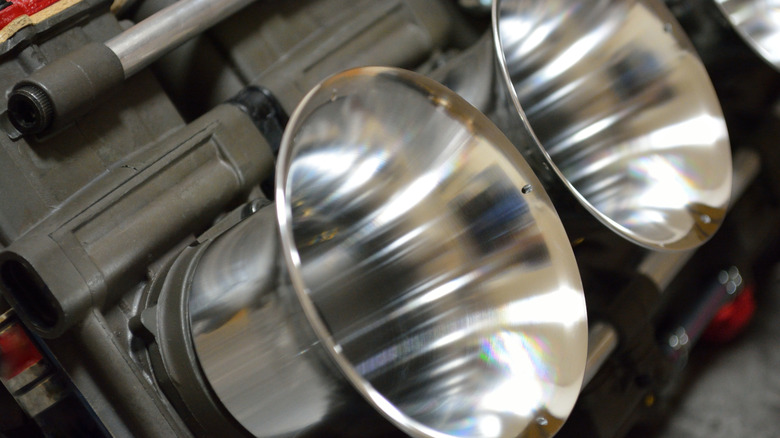
While velocity stacks have their pros, there are some cons as well. Namely, they can damage the engine due to a lack of air filtration. Without any modifications, velocity stacks are completely open to air, so there’s nothing to protect your engine against dirt or debris. Also, for everyday street motorcycles, this equates to worn cylinder walls and piston rings, especially if you ride in dusty or sandy places.
However, the majority of solutions come in two forms; you can either install the stacks inside an original airbox, or installing properly designed foam or other high-quality filters over them. There’s also an option of adding velocity stack covers. You do add a little bit of airflow resistance with these choices, but it helps the engine’s life in the long run. With less debris and dirt, you’ll also have an easier time cleaning your engine.
Another con of velocity stacks is that on fuel-injected motorcycles, adding aftermarket velocity stacks usually means you’ll need to retune the engine management system. Since the new setup changes how air flows, the factory fuel settings will be off. The quickest way to kill your vehicle’s torque at lower speeds is by ditching the original airbox for an open stack without a plenum or the correct calibration.
In the end, adding velocity stacks depends on what you’re after and what your motorcycle already has. If it has a standard single throttle body and a factory intake manifold, there is no real benefit. However, it can improve your horsepower and throttle feel if your engine already has individual throttle bodies or performance carbs.