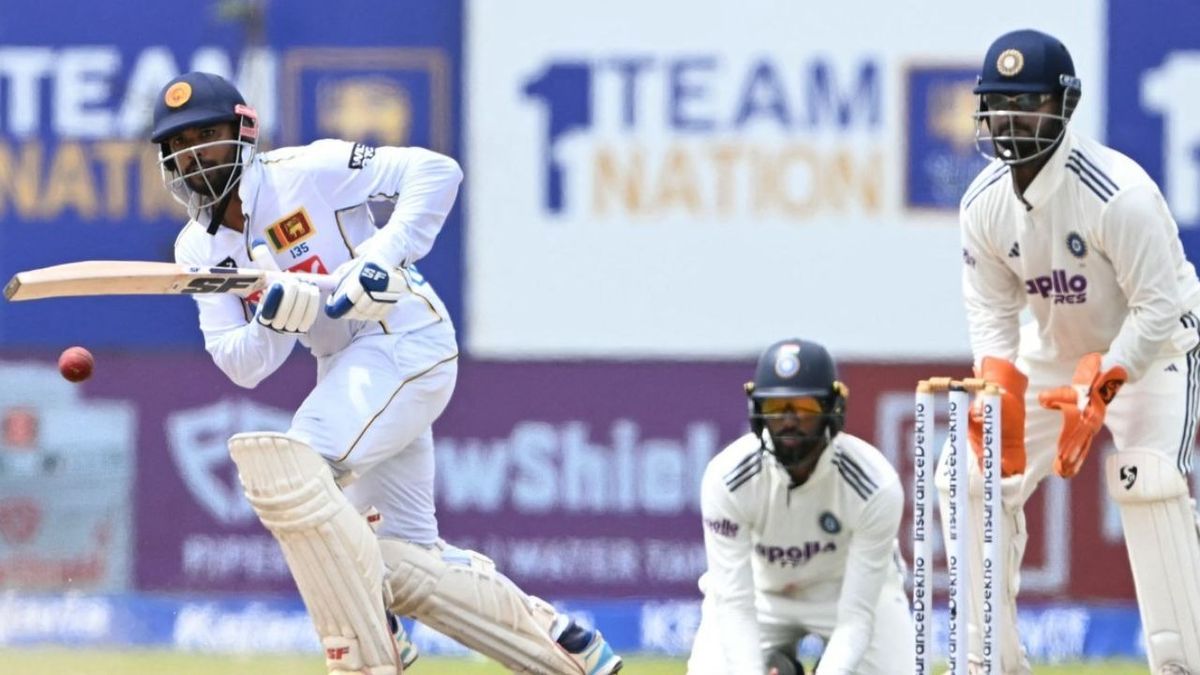
IND vs SL: The second and last test match between India and Sri Lanka is being played at the Sinhalese Sports Club in Colombo. Batting first, Team India declared the innings by scoring 503 runs for 9 wickets in the first innings. In response, Sri Lanka has scored 265 runs for 8 wickets in its first innings till the end of the third day's play. Sri Lankan team is still behind by 238 runs. Not only this, Sri Lanka is also in danger of playing follow-on. Sri Lanka still needs to score 38 runs to avoid follow-on. So let us understand in this article what is follow-on and how it works.
What is follow on in test cricket?
During a normal match in International Test cricket, both the teams bat 2-2 times in turn. India vs Sri Lanka follow on from Colombo Test. In this match, India declared its innings after scoring 503 runs in its first innings. In response, Sri Lanka had scored 265 runs in its first innings by the end of the third day's play. Sri Lankan team is still behind by 238 runs. Whereas to save the follow on, Sri Lanka will have to score 38 more runs.
Sri Lanka still needs to score 38 runs to avoid follow on
According to the rules of Test cricket, to avoid follow-on in a 5-day match, it is mandatory for the team batting second to reach at least 200 runs behind the opponent's score. According to this, Sri Lanka will have to score a minimum of 303 runs (503 – 200 = 303) to avoid follow-on. Since Sri Lanka is currently on 265 runs, they still need to score 38 more runs to avoid follow-on. If the Sri Lankan team gets all-out before scoring these 38 runs, then Indian captain Shubman Gill will have the right to force Sri Lanka to start their second innings immediately. In such a situation, the normal order of the match will change and Sri Lanka will have to play its second innings continuously without any break.
If Sri Lanka fails to overcome India's first innings lead of 238 runs (503 – 265 = 238) in its second innings, then India will win the match by an innings and a margin of runs. Whereas if Sri Lankan team succeeds in scoring 238 runs and takes the lead, then Team India will have to play the second innings to win the match.
Team India would like to bowl out Sri Lanka quickly on the fourth day
In such a situation, the Indian team would like to give follow-on to Sri Lanka by making them all out at the beginning of the fourth day and then they would like to score their second innings at 200 runs and win by one innings and runs. Let us tell you that this series is very important for Team India from the point of view of World Test Championship. To remain in the race for the WTC final, India will have to score points by winning the second Test also. Let us tell you that Team India is ahead 1-0 in the series after winning the first test match played in Galle.
Stumps!
Rain brings an end to Day 3 in Colombo 🌧️
Sri Lanka 265/8 in the first innings, trail by 238 runs
Scorecard ▶️ https://t.co/r9FgXSdsMf#TeamIndia | #SLvINDpic.twitter.com/cc3dtY64ek
— BCCI (@BCCI) August 25, 2026
What are the main benefits of giving follow on?
When a captain forces the opposing team to follow-on, the biggest advantage is saving time and more chances of winning by innings. Since the opposing team is all out very cheaply in the first innings, they come under immense mental pressure. In such a situation, batting in the second innings continuously shakes the confidence of their batsmen, due to which they often fall apart early in the second innings also. Apart from this, the expectation of the match ending on the third or fourth day of the game increases, due to which the risk of the match going to the last day due to bad weather or rain and getting a draw is completely eliminated.
What is the disadvantage of giving follow on?
On the other hand, the biggest disadvantage of giving follow-on is excessive fatigue of the bowlers and the risk of their injury. When a team gives follow-on to the opposition team, their bowlers have to bowl continuously without rest. To take 20 wickets in Test cricket, bowlers may have to bowl more than 100 to 150 overs. Bowling again immediately without any recovery time reduces the speed of fast bowlers and may spoil their line-length. Apart from this, the risk of serious injuries like muscle strain increases significantly.
When does the captain refuse to give follow-on?
Even after getting a huge lead, it is not necessary to follow-on. Captains themselves often choose to bat again because they want to give rest to their tired fast bowlers. The captain wants to wait for the pitch to break down more in the fourth innings so that his spinners can take advantage on the fifth day. They want to completely eliminate the risk of losing the match by scoring big runs themselves.
When the follow-on bet backfired
This has happened only 4 times in the history of Test cricket when the team playing follow-on has won the match. The most famous among these is the Eden Gardens Test (2001) in Kolkata, where Australia gave follow-on to India. After this V.V.S. Thanks to the historic partnership of Laxman (281) and Rahul Dravid (180), India not only made a comeback in the match but also created history by defeating Australia. Recently in 2023, New Zealand also registered a historic win against England by 1 run after playing follow-on.
Also read: 'Ghost hidden in the pitch…' Australia-Bangladesh Mackay Test ends in just 2 days, Sunil Gavaskar gets angry at ICC and western media