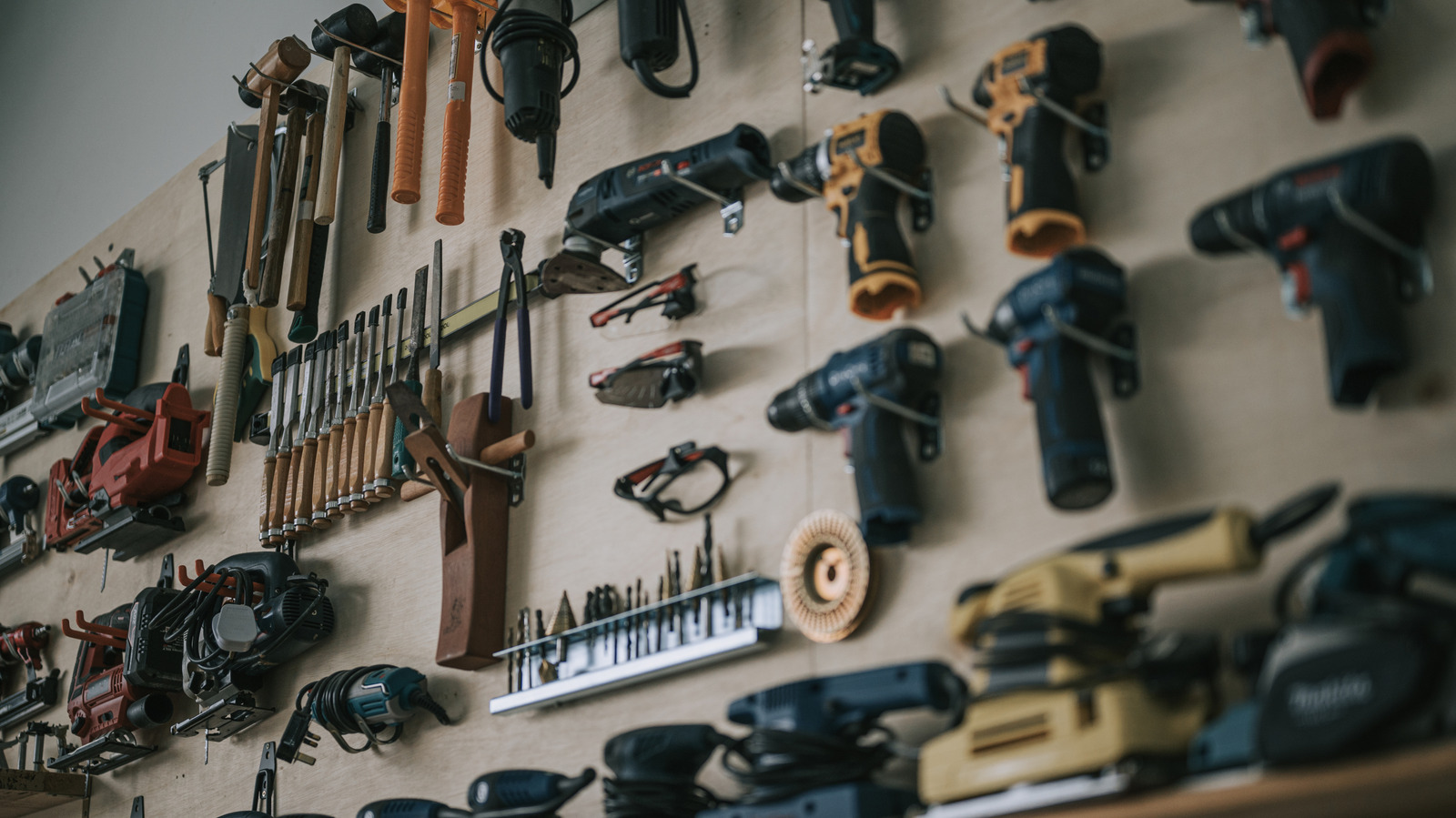
There are plenty of cheap tools out there, like cordless drills, but you’ll also find options that cost a lot more. If you’re a business looking to get complete sets, that money adds up fast. You certainly don’t want to eat those losses if some, or even all of that equipment gets stolen or damaged in an accident. That’s exactly why tool insurance exists.
The whole thing actually sits inside a category called inland marine insurance, which grew out of the marine coverage that once protected cargo on ships – before a version of it was adapted over time for goods moving over land. That brings us to one major rule here: Tool insurance only applies to stuff that’s portable – both handheld and heavy — like hand tools, power tools, ladders, and generators.
Suppose you have a sander riding around in your truck, then that tool is covered. What’s not covered is the stationary stuff, like a drill press bolted to the floor of your garage, since it would fall under a commercial property policy instead. That also means that coverage follows your tools wherever they go, whether they’re stored at a job site or moving from place to place in the back of a van.
The keyword here is business, though, so the tools being insured must earn money. Often, these policies are included as part of handyman insurance packages as a component, but plenty of insurers also sell them on their own. Either way, they do not cover gear you use for your weekend projects, since that would typically fall under your homeowners policy.
Who sells the best tool insurance?

For one-person operations, ERGO Next and Thimble are names that come up often. Meanwhile, for crews and heavy machinery, The Hartford, Travelers, and Chubb are well known. As for the best, opinions vary, but Construction Coverage, a research site, landed on The Hartford as the best overall. It did so after comparing more than a dozen different insurers for 2026.
Elsewhere, NerdWallet, a personal finance ratings site, puts Nationwide and The Hartford at the top, both tied with a 4.5 out of 5 rating. One reason why The Hartford tops rankings comes down to one genuinely useful perk. For any newly purchased gear, policyholders will immediately get coverage for a short period, which gives them time to formally add it to the policy before a coverage gap opens up.
That said, regardless of what you opt for, all of them have a set of rules that are more or less standard. One is that most policies cap annual payouts at around $10,000. Coverage also usually applies only to tools under five years old. Any high-value items (typically over $2,500), though, have to be scheduled, meaning each one must be listed individually with its make, model, and serial number. But cheaper items get grouped together under a single combined value.
Most policies also let you pick between actual cash value coverage and replacement cost coverage. As for premiums, most insurers on their websites at standard limits run their policies anywhere from $175 to $450 a year, which lands somewhere between $15 and $38 monthly.
Common claims and who should get tool insurance
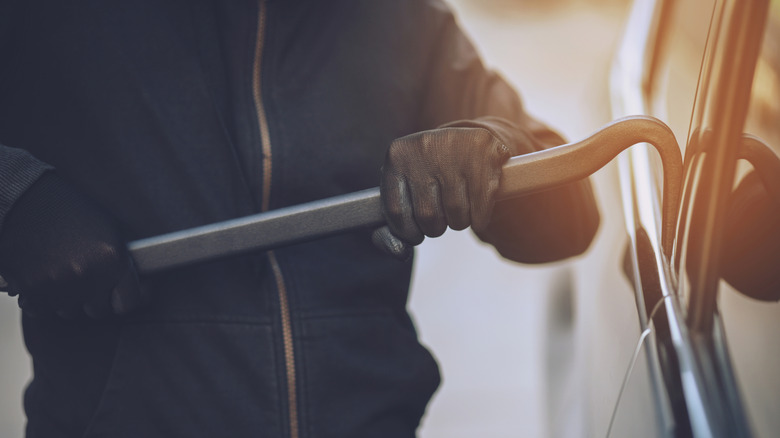
When it comes to claims, it’s theft that ranks as the most common one. For some context, the National Insurance Crime Bureau estimates that construction equipment theft results in losses anywhere between $300 million and $1 billion a year, and plenty of that is bound to be tools as well. Among these, it’s vehicles that serve as the usual crime scene.
As long as there are signs of forced entry, these incidents are covered. If there are no signs whatsoever, as happens in the case of leaving power tools in an unlocked car, and the tools may be written off as a mysterious disappearance instead. Speaking of, there are creative ways to mark your tools for identification and protection against theft worth knowing about.
Claims for accidental damage also come up constantly. These can include things like water leaks ruining your gear, or a drop that breaks an expensive compressor. Of course, damage doesn’t include normal wear and tear. It also may not cover mechanical faults, since those are normally handled by warranties, some of which may even be lifetime. In fact, owning out-of-warranty tools makes for a pretty good case to get them insured.
Speaking of good reasons to get insured, the biggest beneficiaries here are the folks whose livelihood rides on tools that leave the house to earn money. That includes electricians, plumbers, carpenters, lawn care pros, cleaners, photographers, mobile mechanics – and of course, the companies that employ them.