0
New Delhi: In the early hours of 31 May 2016, a fire broke out in a shed at the Central Ammunition Depot in Pulgaon, near Wardha in Maharashtra. The shed held sensitive ammunition. The depot’s firefighters did what they were trained to do: they ran towards it.
By the time the blaze was confined to that one shed, 16 people were dead. Two were Army officers and one was a jawan. The other 13 were civilian firefighting staff, the depot’s own fire crew. Six more of their colleagues were injured.
Ten years on, that toll still captures the oldest rule of firefighting: someone has to go in first. Someone has to get close enough to find the seat of the fire, judge whether the structure will hold and decide where the water should land. In a house fire, that risk is serious. In an ammunition store, a fuel farm or a refinery, it can kill before anyone has time to react.
The problem is not a shortage of courage. It is heat, smoke and the threat of a second blast. Radiant heat stops crews well short of where they need to be. Smoke hides the flames. And at sites packed with explosives or hydrocarbons, one fire can set off another. The explosions at Pulgaon that night shook houses in the surrounding villages.
A new generation of firefighting robots is built to close that gap. They are not designed to replace crews, but to change the order in which crews go in.
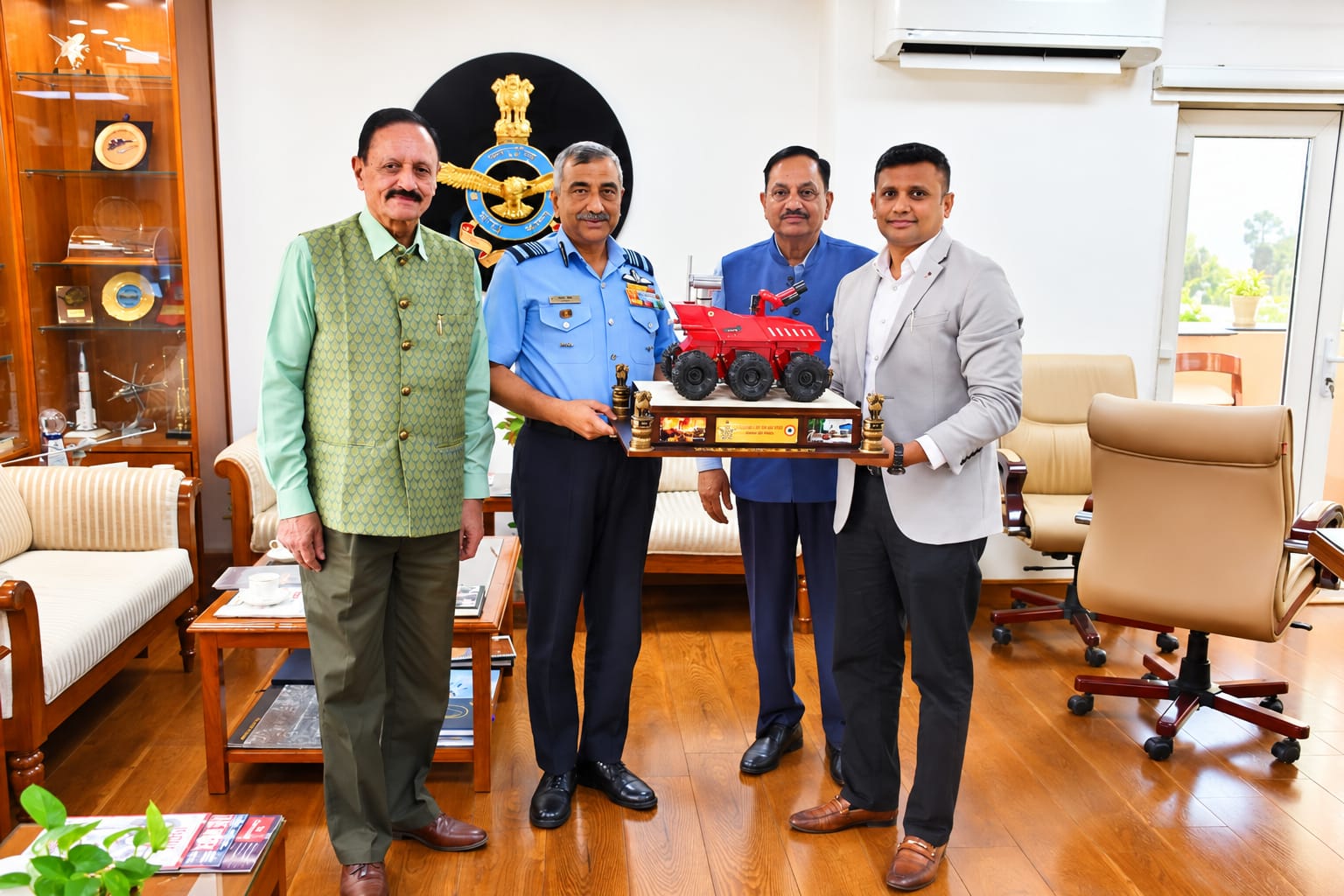
The machine goes first. It is a compact, remotely driven ground vehicle with optical and thermal cameras, so operators can see through smoke and spot hidden hotspots from a safe distance. It hauls charged hoses into the heat, throws a jet of foam or a fog of water at the fire, and cools itself as it works. Firefighters remain in charge; they simply work from further back until the screen tells them it is safe to close in.
In January, the Indian Army signed a ₹62-crore contract with Ahmedabad-based Swadeshi Empresa Private Limited for 18 such robots. They are meant for ammunition and armament depots, fuel storage sites and other high-risk installations, the very kind of place where Pulgaon’s crew died. The machine was first developed for the Indian Navy, which has taken 50 units; the Indian Air Force has ordered 80.
It is not only a military tool. The robot has already been used at a major fire at the Visakhapatnam refinery, the kind of hydrocarbon blaze where intense heat and the risk of flare-ups hold people back. Officials see similar roles at power plants, airports and fuel depots: anywhere access is restricted or dangerous, and the first minutes decide everything.
State fire services have reached the same conclusion. Odisha began weighing robotic firefighting in December 2020, when its fire service arranged a demonstration at the state’s fire and disaster response academy in Bhubaneswar. Maheswar Swain, then the academy’s director, made the case in terms any crew would recognise: firefighters often struggle to get near a blaze because of the heat, the heavy smoke and the fear of an explosion, and that is exactly where a robot can help.
By December 2024, the state’s crews had one to call on. When a godown in Bhubaneswar’s Satyanagar caught fire, 15 fire tenders rushed to the scene, but the heat made it too dangerous for firefighters to enter. A newly acquired remote-controlled robot went in instead. It pumped water at up to 2,500 litres a minute, and its thermal cameras helped crews confirm whether anyone was trapped inside.
No one suggests a machine can do the whole job. A robot cannot calm a family on the pavement, carry a child down a smoke-filled staircase or make the judgement calls that come from years on the line. What it can do is take the first, most lethal minutes, when a roof might fall, a tank might rupture or a shell might detonate.
No one can say how that night at Pulgaon would have ended with a machine at the front. But the Army is now buying robots for exactly the kind of depot where those 13 firefighters died. That is the quiet shift under way: robots do not take firefighters out of firefighting. They take them out of the first, deadliest step.
Someone still has to go in first. Increasingly, that someone can be something.