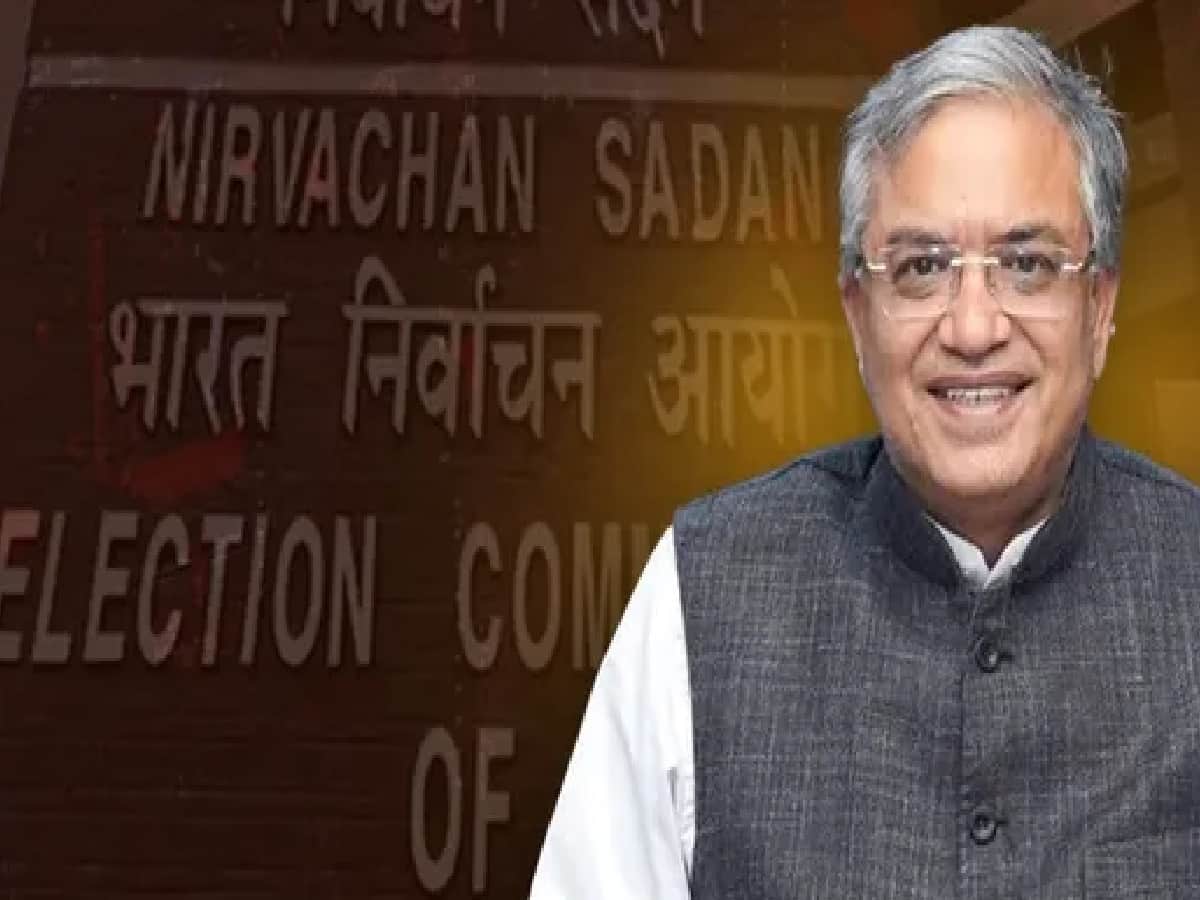
The Election Commission of India and Chief Election Commissioner Gyanesh Kumar have become the focus of the biggest political and administrative debate in the country at the moment. Opposition parties are continuously demanding the resignation of the Chief Election Commissioner over the policy decisions taken during the Special Intensive Revision (SIR) campaign, technical changes in the voter list and steps related to the election process. The controversy over the functioning of the Commission deepened when a detailed investigative report by a leading English daily brought serious internal differences within the Election Commission of India into the public domain. The report, quoting official documents, claimed that Election Commissioner Sukhbir Singh Sandhu and Election Commissioner Vivek Joshi had registered their formal disagreement over the SIR process, policy decisions and administrative orders issued on at least 14 separate occasions within a time period of the last 10 months. These sharp objections included fundamental and sensitive issues like procedural complexities of voter registration, significant amendments made in the format of Form-6 and unilateral centralization of the voter list database of the entire country, which has put a question mark on the impartiality of the entire electoral machinery. Who is CEC Gyanesh Kumar: The journey from IIT, Harvard to Article 370 and Ram Mandir Trust. Gyanesh Kumar, a senior officer of the 1988 batch of Uttarakhand cadre of the Indian Administrative Service (IAS), assumed the constitutional post as the 26th Chief Election Commissioner of the country in February 2025. As per the stipulated constitutional and legal provisions, his tenure is fixed till January 26, 2029. Along with his administrative skills, his academic background is also extremely impressive; He holds a bachelor's degree in civil engineering from the country's top technical institute, the Indian Institute of Technology (IIT) Kanpur. Additionally, he studied Business Finance from the Institute of Chartered Financial Analysts of India (ICFAI) and specialized in Environmental Economics from the prestigious Harvard University in the United States. In the early period of his illustrious administrative career, he held important positions in many important departments under the Government of Kerala. While on deputation to the Central Government, he served as Joint Secretary in the Ministry of Defence, Joint Secretary and Additional Secretary in the Ministry of Home Affairs (MHA), and later as Full Secretary in the Ministry of Parliamentary Affairs and Cooperation. During his sensitive tenure in the Union Home Ministry, he played a very central and decisive role in managing the legal and administrative challenges arising after the abrogation of special constitutional provisions of Article 370 and 35A from Jammu and Kashmir and in preparing the entire framework for the formal formation of Shri Ram Janmabhoomi Teerth Kshetra Trust after the historic decision of the Supreme Court. Who will become the next Chief Election Commissioner of the country after Gyanesh Kumar? After the tenure of Gyanesh Kumar ends on 26 January 2029, based on the established administrative principles of seniority in the Election Commission, the current Election Commissioner Vivek Joshi is considered to be the most likely candidate to become the 27th Chief Election Commissioner (CEC) of India. Vivek Joshi is a highly experienced IAS officer of 1989 batch of Haryana cadre, who has held many important responsibilities at the Central and State level and before his appointment in the Election Commission, he has held the top administrative position as the Chief Secretary of Haryana. His possible promotion and appointment will also be executed by the President subject to the new statutory provisions passed by the Parliament in 2023, the recommendations of the Search Committee and the formal approval of the High-level Selection Committee led by the Prime Minister, which will determine the leadership of the Commission for the next round of national elections. How the Chief Election Commissioner of the country is appointed: Complete legal process Under the Chief Election Commissioner and Other Election Commissioners (Appointment, Service Conditions and Term of Office) Act passed by the Parliament in December 2023, a phased and multi-level legal framework for the selection of the Chief Election Commissioner of the country has now been prescribed. In the first phase of this new system, a special 'Search Committee' formed under the chairmanship of the Union Law Minister becomes active, in which two senior Secretary level officers of the Government of India are included as members. This search committee deliberates upon stringent standards of prescribed service norms, seniority and administrative qualifications and shortlists the top 5 names of suitable candidates. Thereafter, a decision-making meeting of a three-member high-powered selection committee is held to select the final name from these shortlisted names. This three-member powerful panel comprises the Prime Minister of the country himself (who is the ex-officio Chairman of the Committee), the official Leader of the Opposition in the Lok Sabha or the leader of the largest opposition party, and a Union Cabinet Minister specially nominated by the Prime Minister as a member. The name formally recommended by this high level selection committee is given the final approval by the President of India and a notification is duly issued. It is noteworthy that before this law of the year 2023 came into existence, the Chief Election Commissioner and other Commissioners were appointed under Article 324 (2) of the Constitution directly by the President on the general advice of the Prime Minister and the Union Council of Ministers. The confrontation and current controversy between the Supreme Court and the Parliament on the new law of 2023. Since the appointment of Gyanesh Kumar, a sharp political and legal battle has been going on across the country over this revised selection system. In fact, in March 2023, the five-judge Constitution bench of the Supreme Court, while giving a historic ruling in the case 'Anoop Baranwal vs Union of India', had given clear instructions that unless the Parliament makes any new law to protect the autonomy and institutional impartiality of the Election Commission, the Prime Minister, the Leader of the Opposition in the Lok Sabha and the Chief Justice of the country (CJI) will compulsorily be included in the selection committee. However, the central government passed a new law in December 2023, completely excluding the Chief Justice of India from this three-tier panel and replacing him with a Union Cabinet Minister nominated by the Prime Minister. The biggest legal and moral argument of the opposition parties on this change is that under this new structure, two out of three members become direct representatives of the central government and the ruling party, due to which the ruling party gets a permanent two-thirds majority within the committee and any disagreement or objection of the leader of the opposition has no practical meaning. The constitutional validity of this amended law has been challenged through several petitions in the Supreme Court, and after a split verdict by a two-judge bench of the Supreme Court in September 2026, this legal battle is now pending before an even larger constitutional bench.