
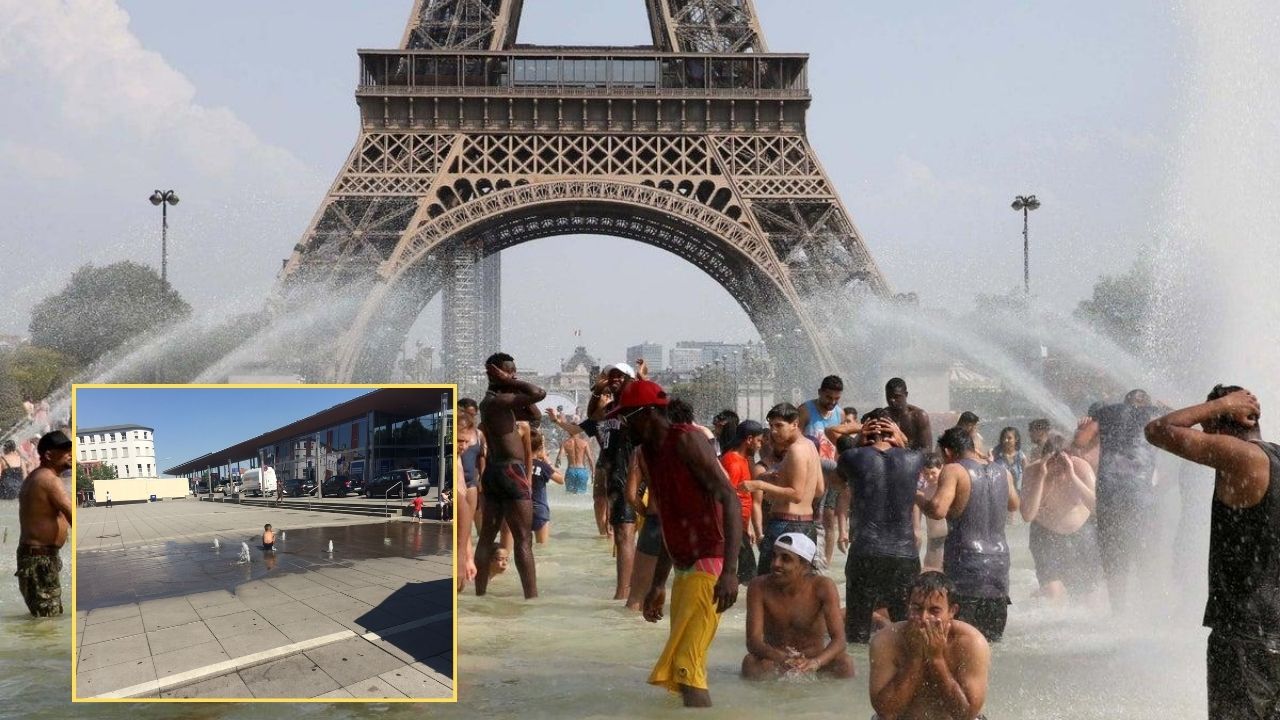
In Europe, 40 degree temperature has become deadly, why are people not able to bear the heat, more than 1300 deaths, how different is the situation from India?

Europe is currently in the grip of extreme heat. However, the heat is still less there compared to India. In many countries including Spain, Germany, Austria, Netherlands and Switzerland, the temperature in the month of June has broken old records. Continuous rising temperatures, heat waves and hot nights have badly affected the life of common people. The situation is such that people have to turn to rivers and the sea to get relief, where incidents like drowning are also being reported. Due to which many people have died so far.
The temperature of most of the states in India is currently 40 degrees or more, yet the situation here is not as bad as seen in Europe, after which the question arises that why the people of Europe are not able to tolerate the temperature of even 40 degrees, what is the reason behind this?
What did WHO say?
According to the World Health Organization (WHO), more than 1,300 additional deaths due to extreme heat have been recorded in Europe since June 21. WHO Director General Tedros Adhanom Ghebreyesus expressed serious concern about the rising temperatures in Europe on the social media platform X. He said, “At present, 15 crore people are facing severe heat, hundreds of people have died, schools are closed, the power system is collapsing.”
Why is 40°C in Europe more dangerous than India?
Many states in India record temperatures of 45 degrees Celsius or more every year, but in Europe even 40 degrees temperature becomes a serious problem for people. The reason for this is not only the temperature, but also the lifestyle there, the structure of the houses and lack of preparation for the weather.
Most of the buildings in Europe are built to protect from cold. In these, thick walls, small windows and construction materials that trap heat inside are used. This design is beneficial in winters, but in summers these houses do not allow the internal heat to come out, due to which the rooms remain hot for a long time.
Why no AC in homes?
In many countries of Europe, traditionally the need for air conditioners has been very less. For this reason, ACs are not installed in a large number of houses. When the temperature remains around 40 degrees for several consecutive days and there is not enough coolness even at night, it becomes difficult for people to stay indoors.
In the current heat wave in Europe, not only the day temperature but also the night temperature is much higher than normal. Due to the temperature not decreasing at night, the body does not get enough time to recover from the heat, due to which the risk of heat stress and health related problems increases.
Has climate change increased the challenge?
According to the report, due to climate change, extreme heat events are being seen more frequently in Europe than before. What was once considered exceptional weather is now seen almost every year. Due to this, pressure on health services, electricity system, water resources and urban infrastructure is also increasing.
What is the biggest challenge facing Europe?
The biggest challenge for Europe now is not only rising temperatures, but also preparing its cities, homes and public infrastructure for the changing climate. To reduce the damage caused by future heat waves, major changes will be necessary in house construction, energy system and public health system.

Comments are closed.