
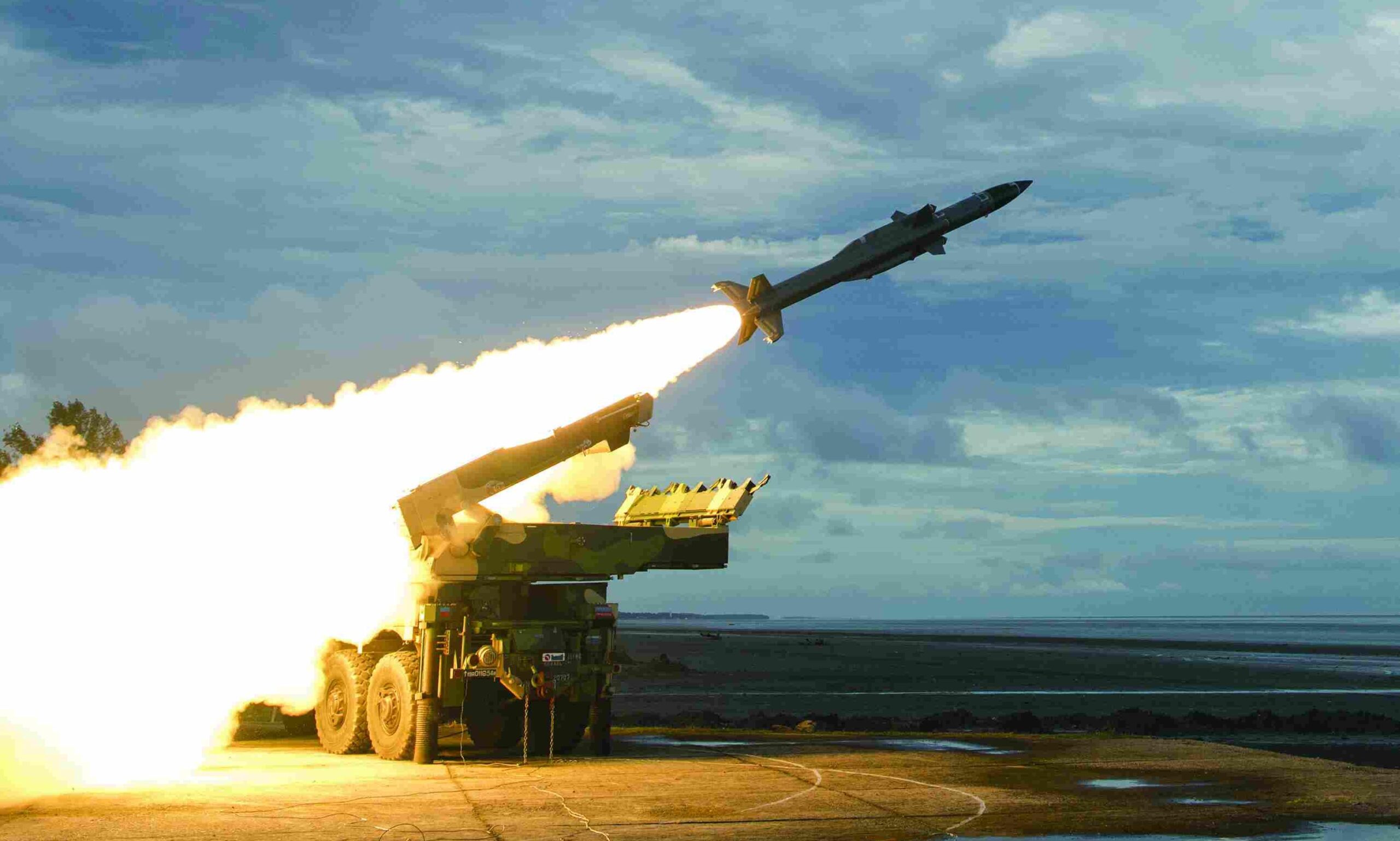

India needs to do much more to make its airspace less vulnerable, and that too at the earliest. While the existing air and missile defence (AMD) network performed well during Operation Sindoor last year, the challenge was quite limited.
The majority of the well over 1,000 drones launched by Pakistan were essentially low-grade ones, interspersed with only some kamikaze unmanned aerial vehicles, Fatah rockets and CM-400 cruise missiles of Chinese and Turkish origin. Furthermore, the cross-border hostilities lasted only four days – a low-level conflict compared to the protracted full-scale wars in Ukraine and Iran.
The strategic reality check is clear: India requires a robust, multi-layered AMD grid capable of thwarting hostile aerial intrusions cost-effectively on a sustained basis, while withstanding attempts to overwhelm it through sheer volume of drones and projectiles let loose by an adversary. While no airspace can be made truly impregnable, India must plug glaring gaps to counter a near-peer Pakistan and a militarily superior China.
Hard lessons
The US and Israel learnt a hard lesson during their attack on Iran two months ago. Using high-grade military interceptors, costing $2-4 million apiece, to take out drones like the Iranian Shahed-136 ones, made with commercial-grade technology and costing just $35,000 per unit, is unsustainable.
Even during the India-Pakistan conflict from May 7 to 10, 2025, Islamabad’s strategy of launching multiple drone waves – only some of them armed – was aimed to map Indian AMD radars and deplete its stockpiles of expensive interceptor missiles and ammunition.
Anticipating this, India had moved some of its limited AMD systems from the China front to the Pakistan one.
Mission Sudarshan Chakra
Recognising the operational necessity for an expanded AMD grid, Prime Minister Narendra Modi on August 15 last year announced the launch of the ambitious Mission Sudarshan Chakra to give “complete security cover” to strategic sites and civilian infrastructure, including hospitals, railways and centres of faith, in the next 10 years.
The roadmap for this indigenous national AMD shield, which will be progressively strengthened and integrated with potent counter-offensive weapons, includes a medium-term action plan for completion by 2030 and a long-term one by 2035.
This will not be easy. It will require building a multi-layered integrated system of an overlapping network of early-warning and tracking radars, robust command and control nodes, and effective land, air and sea-based batteries of advanced interceptor missiles and other kinetic AMD weapons to intercept threats at various altitudes and ranges.
It will inevitably have to include advanced directed energy weapons (DEWs) like high-power lasers for “hard kills” of hostile drones and specialised jamming and spoofing systems for “soft kills”. The proposed shield, with a four-tier surveillance layer on land, sea, air and space as well as integrated AMD weapons, will need to be fully driven by Artificial Intelligence (AI) if the sensor-to-shooter loop has to be drastically shortened.
Long-range air defence systems
Post-Operation Sindoor, Pakistan is rapidly expanding its arsenal of kamikaze drones, unmanned combat aerial vehicles (UCAVs), loitering munitions, long-range missiles and precision strike guided rockets.
While doing the same, India is also finalising a flurry of deals to augment its AMD network. As of now, the grid includes a mix of indigenous and foreign missile and gun systems plugged into IAF’s automated IACCS (integrated air command and control system). Along with the Army’s new Akashteer system, the IACCS fuses data from myriad radars and sensors to provide a real-time composite air picture for all air defence centres.
The formidable Russian-origin S-400 ‘Triumf’ surface-to-air missile system, which can detect and then destroy hostile strategic bombers, jets, spy planes, missiles and drones at ranges up to 380-km, leads the pack of the kinetic weapons.
Need for S-400 missiles
As per the IAF, the S-400 systems shot down at least five Pakistani fighters in the F-16 and JF-17-class and an ELINT (electronic intelligence) or AEW&C (airborne early warning and control) aircraft in the air – the latter at a record distance of 314 km. Now, India is ordering almost 300 more S-400 missiles, with ranges of 120, 200, 250 and 380 km, for over Rs 10,000 crore to replenish stocks.
At the same time, the case for acquiring five more S-400 squadrons for around Rs 58,000 crore is on track. They will add to the first five squadrons ordered from Russia for Rs 40,000 crore in 2018. While three of these squadrons were inducted, the other two are likely to come this year after a long delay due to the Ukraine war.
India is ordering around 300 more S-400 missiles, with ranges of 120, 200, 250 and 380 km, for over Rs 10,000 crore to replenish stocks.
India, of course, cannot endlessly go on importing such expensive systems in limited numbers. It must push for the timely induction of the indigenous missile-based layered defence system, being developed by DRDO under Project Kusha, by around 2030. With interceptor missiles like the M1 (150-km range), M2 (250-km) and M3 (350-km) missiles, this system can rival the S-400 at potentially half the cost. Its production will have to be massively scaled up.
Medium-range defence capabilities
The Army, Navy and IAF also have the potent Barak-8 MR-SAM systems, jointly developed with Israel, with an interception range of over 70-km. With these systems also playing a major role during Operation Sindoor, a fresh order worth Rs 30,000 crore is being finalised for them.
Also read | India ramps up defence as Bangladesh–China threat grows around Siliguri corridor
Then, there are the indigenous Akash air defence missile systems with a 25-km interception range. In addition to existing systems, the Army Air Defence (AAD) is also inducting two new Akash Prime regiments designed for high-altitude areas above 4,500 metres along the frontier with China. There is also the canister-based Akash-NG (new generation), with an initial interception range of 30-km, in the pipeline.
The QR-SAMs can thwart aerial intrusions at ranges of over 30 km.
The AAD is also going to get three highly mobile regiments of the new indigenous ‘Anant Shastra’ quick reaction surface-to-air missile systems (QR-SAMs), which can thwart aerial intrusions at ranges of over 30 km, for around Rs 30,000 crore. The IAF, in turn, is also looking to induct three QR-SAM squadrons as of now. All such inductions must be fast-tracked.
Short-range and point defence systems
The armed forces currently have a variety of shorter range air defence weapons. They include the vintage Russian Igla-1M (5-km range), OSA-AK-M (10-km) and Pechora missiles (25-35 km) as well as upgraded L-70 anti-aircraft guns (3.5-km) and ZU-23mm twin-barrel cannons (2.5-km).
The newer ones include the Israeli low-level Spyder quick-reaction anti-aircraft missiles (15 km) and Russian shoulder-fired Igla-S (6 km) systems. DRDO, on its part, must ensure the speedy induction of its very short-range air defence system (VSHORADS) missiles, which have a range of up to 6 km.
With the old ‘legacy’ weapons like the L-70 and ZU-23mm guns performing well as point defence systems against low-flying, hard-to-detect drone swarms during Operation Sindoor, the plan now is to go for “smart and programmable ammunition” for them.
Some other new acquisitions for the AAD, which plans to increase its regiments of different weapon systems from the existing 55 to 63, include indigenous mobile AK-630 multi-barrel air defence gun systems. These gun systems are capable of a cyclic rate of fire of up to 3,000 rounds per minute to create a wall of air defence shells to destroy incoming aerial objects at a range of 4-6 km.
Among other deals, a Rs 4,413 crore contract for light-weight modular missile (LMM) systems, which are designed to detect and destroy high-value drones, UCAVs and aircraft at ranges of up to 6-km, was also inked with M/s Thales of the UK last October.
Ballistic Missile Defence shield
Amid all this, India must also expedite the operational deployment of Phase-1 of its two-tier Ballistic Missile Defence (BMD) system, which as per DRDO is designed to track and destroy ballistic missiles in the 2,000-km range class, at different altitudes both inside (endo) and outside (exo) the earth’s atmosphere for “a higher kill probability”.
India had also test-fired an endo-atmospheric interceptor missile under Phase-2 of the BMD system in July 2024. The defence ministry had then said the test demonstrated the indigenous capability to defend against hostile nuclear-capable missiles in the 5000-km range class.
Emerging air defence technologies
The need to lower the cost-per-shot ratio will be crucial. Towards this end, there must be a pronounced thrust on inducting new cost-effective technologies. These can range from AI-powered interceptor drones and quickly-deployable counter-UAS (unmanned aerial systems) guns with ‘smart’ ammunition to DEWs like high-power lasers and high-energy microwave weapons.
India has lagged far behind other countries like the US, Israel and China in developing DEWs. The operational use of DEWs may not be widespread at present, but the future lies in deploying the much cheaper and reusable “beam kills” to take down drones instead of “kinetic kills” with expensive interceptor missiles.
Also read | Defence Ministry clears Rs 1 lakh crore acquisition for armed forces
DRDO’s fledgling indigenous integrated drone detection & interdiction system Mark-2 (IDD&IS) systems, with 30-kilowatt lasers to disable, degrade or destroy small remotely-piloted aircraft and swarm drones at ranges up to 3.5-km, marks a starting point. It needs to be scaled up, with power levels of 50 to 100-kilowatt also being developed.
The US, for instance, has 60-kilowatt lasers called ‘Helios’ (high energy laser with integrated optical-dazzler and surveillance) on some of its frontline warships to intercept armed drones, missiles and fast-attack craft. Israel, in turn, is now deploying a 100-kilowatt ‘Iron Beam’ laser weapon system with a 10-km range.
Crucial strategic necessity
Mission Sudarshan Chakra will not come cheap. It will require significant investments, mission-mode developmental programmes and enormous amounts of integration of diverse capabilities and infrastructure.
Unlike Israel, which defends a compact territory with its ‘Iron Dome’ and other systems, India has to protect a vast and diverse geographical area. The US, on its part, is working on the massive ‘Golden Dome’ project to protect itself from advanced aerial and space-based threats, which could cost around $500 billion over the next 20 years. India, of course, will have to ensure an integrated AMD system that is both operationally effective as well as economically sustainable.

Comments are closed.