
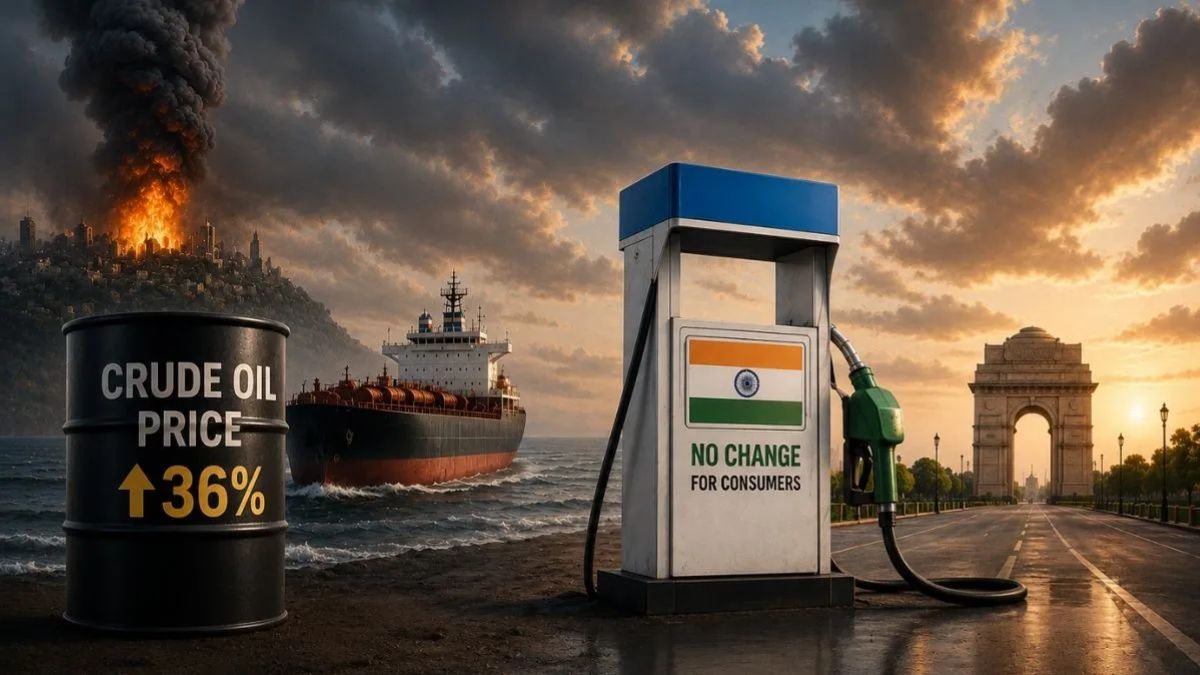
Why India’s petrol prices rose just 7% while global fuel costs soared, former MoPNG official explains

Former Ambassador and Joint Secretary (International Cooperation) in the Ministry of Petroleum and Natural Gas (MoPNG), Sunjay Sudhirhas outlined the measures that helped India limit domestic fuel price increases to around 7% during a period when many countries witnessed average fuel price hikes of 25–30%despite India importing nearly 85% of its crude oil requirements.
Key Takeaways
- Former MoPNG official Sunjay Sudhir explained how India limited fuel price hikes despite heavy import dependence.
- India relied on both supply-side and demand-side interventions.
- The government reduced excise duty on petrol and diesel to cushion consumers.
- Oil marketing companies reportedly absorbed significant under-recoveries during the period.
- Sudhir said the measures helped protect consumers and support macroeconomic stability despite soaring global crude prices.
Speaking about India’s energy management strategy, Sudhir said the government adopted a combination of supply-side and demand-side measures to cushion consumers from the sharp rise in global crude oil prices.
According to Sudhir, while international fuel prices surged significantly, the Indian government prioritised domestic fuel availability to minimise the impact of supply disruptions and rising global energy costs on consumers.
He said the government’s strategy was aimed at softening the impact of shortages and preventing a sharp increase in fuel costs for households and businesses.
On the fiscal front, Sudhir said the Centre reduced excise duty on petrol and dieselallowing retail fuel prices to remain relatively stable despite the steep increase in crude oil prices in the international market.
He noted that public sector oil marketing companies faced substantial under-recoveries during the period, estimating losses of around ₹30,000 crore per month. According to him, the government also absorbed significant revenue losses, stating that excise duty reductions translated into foregone revenue equivalent to around ₹24 per litre on petrol and ₹30 per litre on diesel during the period.
Sudhir said these measures represented a deliberate short-term fiscal sacrifice intended to protect consumers and preserve macroeconomic stability.
He also highlighted the sharp increase in the Indian crude basketwhich, according to him, rose from around $70 per barrel to $156 per barrel. Despite this increase, he said the government was able to contain the rise in domestic retail fuel prices through coordinated policy interventions.
According to Sudhir, balancing supply security, tax reductions and consumer protection enabled India to mitigate the effects of global energy market volatility while maintaining economic stability.
His remarks come as policymakers continue to focus on energy security and fuel affordability amid fluctuations in international crude oil markets.

Comments are closed.