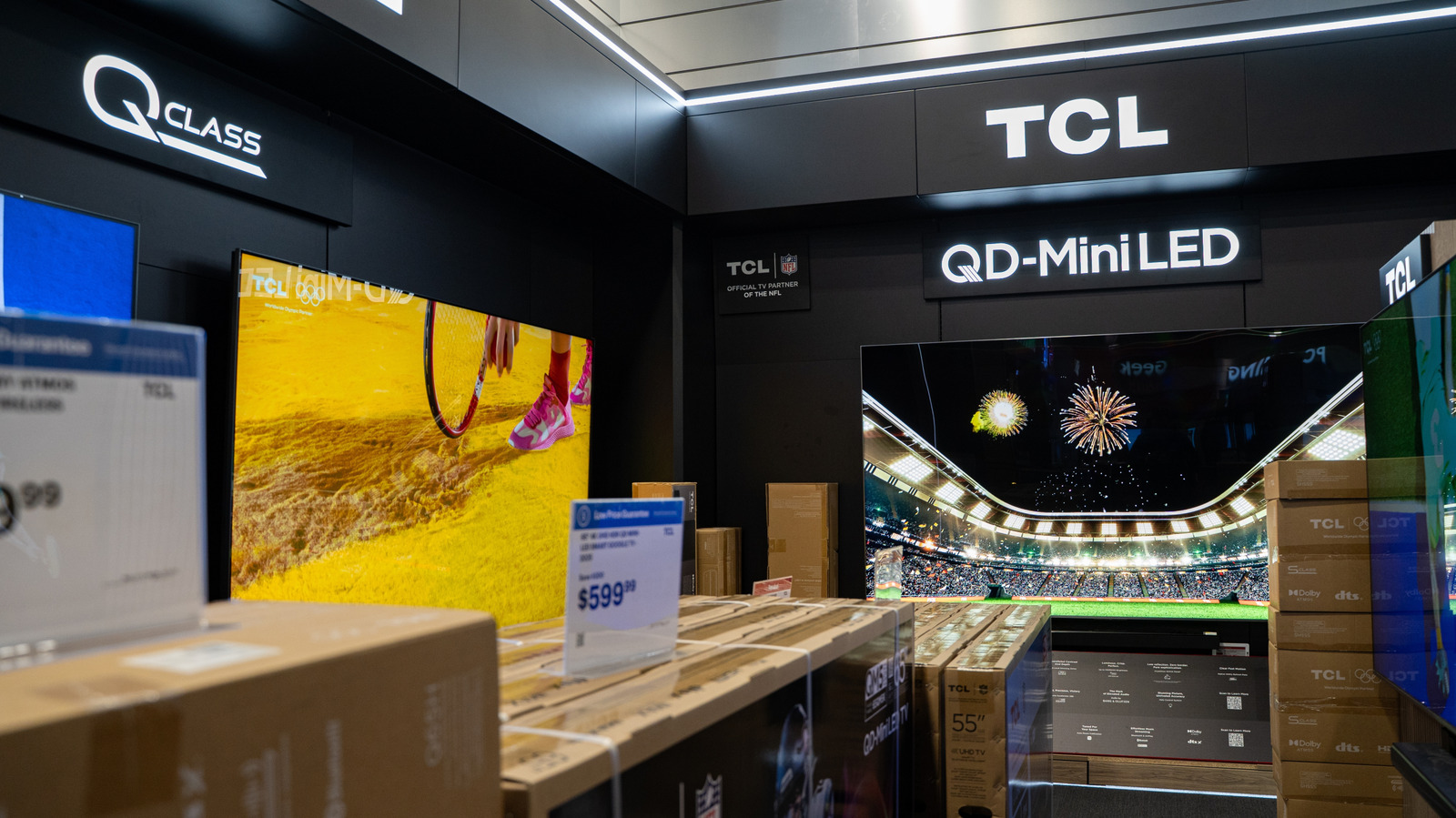
Legal warfare between juggernaut companies is nothing new. Courthouse drama between TP-Link and Netgear over Chinese connections was well-publicized, and so was the patent infringement suit filed by Stratasys that cost Bambu Lab $22 million. You can add the TCL and Samsung Mini LED lawsuit to this already long list, and it seems that this one is getting pretty nasty, to say the least.
Filed in the District Court for the Central District of California, the lawsuit by TCL alleges that Samsung resorted to “defrauding the market” by rebranding its affordable line of regular LED televisions as Mini LED models. These are serious accusations, and TCL went so far as to claim that Samsung made this move to compete with TCL’s successful line of budget-friendly Mini LEDs after its market share diminished because it lacked a competing Mini LED model at that price point. According to the lawsuit, Samsung’s “sham products” took a solid chunk out of TCL’s market share, and thus, the company seeks relief for the harm caused by the defendant’s “corporate greed.”
Does the lawsuit have merit?
Though the judge will decide if Samsung is guilty of shady behavior and whether it violated California’s Unfair Competition Law, the most interesting aspect of the entire saga is what actually constitutes a Mini LED TV. TCL defined the tech as panels that use multiple independently controlled Mini LEDs that can dim or brighten depending on the picture — a technology referred to as FALD or Full-Array Local Dimming. According to TCL, its line of affordable FALD-powered TVs was wildly successful in the U.S., so much so that it challenged Samsung’s status in the Mini LED market. The lawsuit alleges that Samsung’s failure to develop a viable competing product led the company to price its M Models significantly lower than the cheapest TCL models. The catch, according to TCL, is that these were recycled Crystal UHD line products that don’t contain FALD, and are thus misleading consumers.
Mini LED TVs have certain drawbacks, but can offer more value and provide better picture contrast than OLED. Samsung may hold the largest slice of the television market, but TCL is regularly recommended along with Hisense and others as a viable alternative to Samsung’s 4K QLED offerings. As such, for many, it may not be a stretch to imagine Samsung resorting to corporate greed to protect its bottom line. While the court will ultimately decide on the merit of such allegations, TCL does have a proverbial ace up its sleeve: Samsung’s own statements. On its website, Samsung defined Mini LED tech as providing better contrast through local dimming zones, which describes FALD. Going further, Samsung also used the Mini LED moniker for its higher-end Neo QLED models, which do incorporate FALD, and employed similar wording to describe its M Model TV sets.