0
The debate over police action must also confront the growing threat of mob violence against law enforcement.
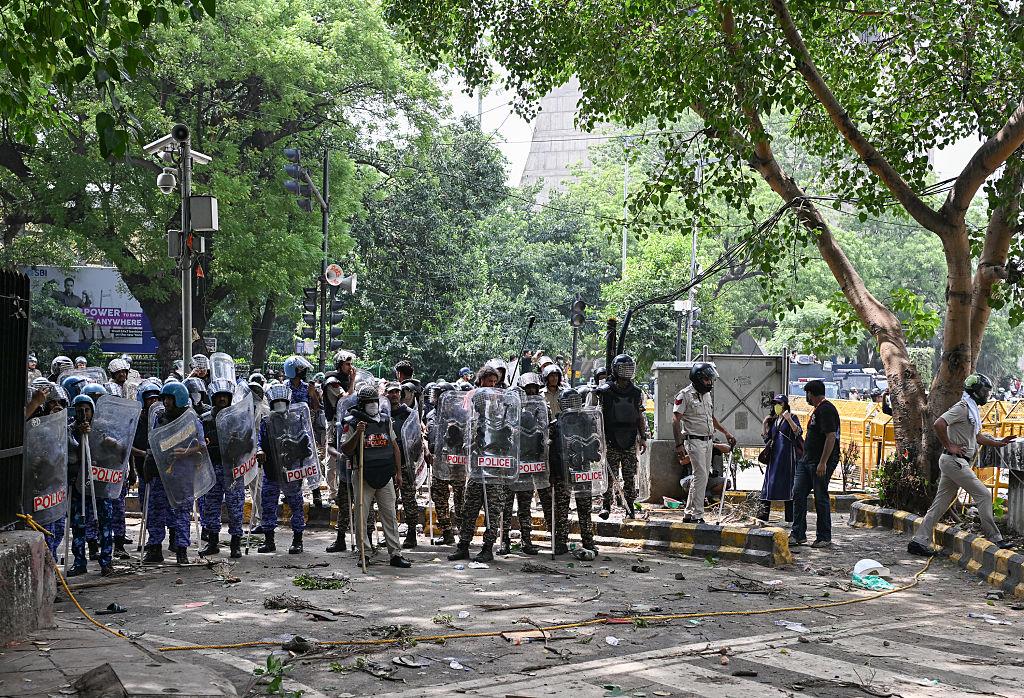
The violent clashes between an aggressive crowd and the police during the final phase of the student protests in Delhi have sparked a serious controversy. Besides the students and their supporters, police action against anti-social elements and criminals has led Rahul Gandhi and his alliance partners to level sweeping allegations in Parliament and on the streets, accusing the police of brutal baton charges, firing and injuring thousands of people. After the resignation of the Union Education Minister, they began demanding the resignation of Union Home Minister Amit Shah, holding him responDelhi’s Ramlila Maidan and Jantar Mantar have long served as the country’s principal venues for protests and democratic dissent. From the Anna Hazare movement to demonstrations by farmers, wrestlers, students and various social organisations, these locations have symbolised the democratic right to protest. sible for alleged police excesses. Their real target, however, is Prime Minister Narendra Modi. The Opposition seems to forget that if, the next time, the police choose not to stop a violent mob from entering Parliament or a State Assembly and instead lay down their batons, tear gas and firearms, what would the consequences be? What would happen to political leaders and the public if the police in any state simply abandoned the streets in protest for their own safety and welfare? Rahul Gandhi may not know this, nor perhaps do his advisers or his “American uncle,” but senior Congress leaders would certainly remember the 1973 Provincial Armed Constabulary (PAC) uprising in Uttar Pradesh during Congress rule. At the time, then Chief Minister Kamalapati Tripathi had to appeal to Prime Minister Indira Gandhi to deploy the Army. Around 35 policemen were killed and hundreds were injured in the Army’s operation.
The crisis eventually forced the Chief Minister to resign, and President’s Rule had to be imposed to restore order. However, during the “March to Parliament” protest organised by the Cockroach Janata Party on July 20, 2026, over alleged irregularities in student examinations, serious clashes broke out between protesters and the Delhi Police in the Jantar Mantar and New Delhi areas. According to the Delhi Police, more than 118 personnel, including senior officers, were injured in the violence. Subsequent reports placed the number of injured policemen at 129. Around 70 protesters were detained, while nearly 60 protesters were also reported injured. On July 31, family members of the injured Delhi Police personnel held a press conference alleging that policemen had been deliberately targeted during the Jantar Mantar protest. According to them, officers deployed in the front lines were surrounded by the crowd, pelted with stones and physically assaulted. They also spoke about the serious injuries sustained by several policemen. On the other hand, protesters have levelled serious allegations against the police, accusing them of using excessive force, carrying out baton charges and taking other coercive measures. With Rahul Gandhi and his associates entering the political fray, organisations claiming to champion human rights from abroad also began criticising Indian democracy and, either openly or covertly, fuelled the controversy further. These groups raised concerns over the alleged excessive use of force during the July 20 police action and the rights of protesters.
The real question in a democracy, therefore, is not whether “the police were right or the protesters were right.” The most important lesson from the incident is that if policemen become direct targets of violent crowds even in the nation’s most sensitive protest zone, it is not merely the problem of an individual officer. If policemen are expected to control crowds numbering in the thousands, they must have adequate authority, resources, rapid deployment support whenever required, and the confidence and backing not only of the government but also of the Opposition and society at large. Police personnel should also have the assurance that if they are seriously injured or killed in the line of duty, their families will receive immediate financial assistance, insurance benefits and proper medical care. It may be a coincidence that amid the nationwide uproar over the recent incident, a Delhi court delivered its verdict in the 2020 murder case of Intelligence Bureau officer Ankit Sharma, who was killed during the communal violence while assisting the Delhi Police. The judgment has made the ongoing debate even more significant. The court found that former Aam Aadmi Party councillor Tahir Hussain, along with four others, brutally murdered Ankit Sharma and dumped his body in a drain.
Sharma was unarmed at the time of the incident. Intelligence Bureau officers typically operate without weapons in disturbed areas to monitor the situation and gather information about criminal activities. Referring to the 51 injuries and seven fatal wounds found on Sharma’s body, the court described the killing as exceptionally brutal and sentenced the accused to life imprisonment. The prosecution had sought the death penalty. The verdict is not merely about a criminal case arising out of the 2020 Delhi riots. It also raises a larger question: when mobs begin targeting police personnel, security forces and intelligence officers responsible for maintaining law and order, how can a democratic system ensure their safety? Today’s Congress and Opposition leaders should reflect on the events of 1973 by considering not only the demands of students but also the concerns of the police regarding dignity, working conditions, housing, leave, the right to form associations and grievances against senior officers. At the time, I was covering Parliament and politics as a correspondent for the Hindusthan Samachar news agency in Delhi. I witnessed the parliamentary debates surrounding the issue. Today, with a much larger population, greater public expectations, anti-India forces operating from abroad, and the rapid spread of both accurate and false information through digital and internet platforms, the situation has become far more complex. In March 1973, organisational activities among subordinate police personnel intensified. By April, signs of indiscipline had emerged, and by May, the discontent had escalated into open defiance. Lucknow University became the epicentre of the unrest. Students were already unhappy with the deployment of the Provincial Armed Constabulary (PAC) during examinations. In May 1973, some dissatisfied PAC personnel established contact with the student movement, leading to slogans such as “PACStudent Unity.”