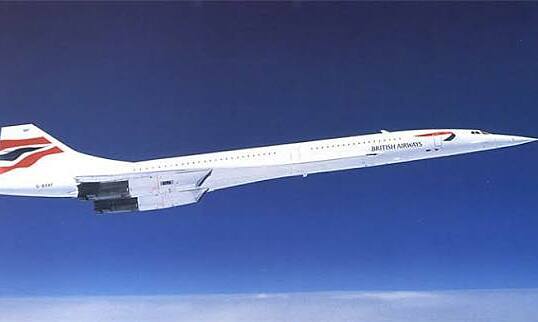
The Concorde was one of the world’s first supersonic commercial passenger jets.
As documented by the National Air and Space Museum, it could cruise at maximum altitudes at speeds of 17,000-18,000 km, twice that of regular jets and allowing passengers to view the Earth’s curvature.
Capable of reaching a maximum cruising speed of 2,178 km/h, it reduced travel times on long-haul routes.
The aircraft made its maiden flight in 1969, completed its first transatlantic crossing in 1973, and entered commercial service in 1976.
British Airways and Air France were the only two airlines that operated the Concorde regularly, primarily on their flagship London-New York and Paris-New York routes.
The Concorde was not a technological failure; rather, its main issues lay in costs and operational feasibility.
The aircraft proved the feasibility of carrying passengers at supersonic speeds in commercial aviation.
However, the model faced severe limitations regarding costs, passenger capacity, route options, and noise levels, making it no longer viable for the economics of the airline industry at the turn of the 21st century.
According to Aerospace Global Newsthe Concorde could not sustain long-term operations because it was fuel-intensive, required custom maintenance, and could only carry around 100 passengers.
This meant ticket prices had to be extremely high.
A round trip between New York and London cost around $7,574 in 1996 compared to an average economy ticket today of $800.
Thus, it rarely operated at full capacity on any of the routes.
Several other airlines also placed orders for the aircraft, but later canceled them, leaving Air France and British Airways as its sole operators.
The aviation landscape also shifted after the Concorde entered service.
The 1970s oil crisis caused fuel prices to surge, prompting airlines to pivot toward larger, more fuel-efficient aircraft like the Boeing 747, which could transport far more passengers at a lower cost per seat.
|
A British Airways Concorde aircraft. Photo by Concorde SST |
Another limitation stemmed from the nature of supersonic flight itself.
When breaking the sound barrier, the Concorde generated a sonic boom that impacted people and structures on the ground. As a result, many countries restricted or banned supersonic flights over land.
The Concorde could travel at supersonic speeds mostly only over oceans.
Unsurprisingly, the two carriers focused on transatlantic flights from London and Paris to New York.
Noise levels also affected the aircraft’s operations.
A Concorde takeoff reached approximately 119.4 decibels, close to the 120-decibel threshold of thunder, a primary reason why airports restricted this aircraft.
Beyond financial and noise challenges, growing safety concerns reached a tipping point following a tragic disaster.
On July 25, 2000, Air France Flight 4590 crashed shortly after taking off from Charles de Gaulle Airport in Paris bound for New York.
The aircraft was carrying 100 passengers and 9 crew members.
During takeoff, a tire on the main landing gear struck a metal strip on the runway, believed to have fallen from a plane that took off earlier, according to the U.S. Federal Aviation Administration (FAA).
The tire burst, and flying debris punctured a fuel tank, causing a fire.
The engines failed, the aircraft lost control, and it crashed into a hotel.
All 109 people on board and 4 people on the ground were killed.
This was the only fatal accident in the Concorde’s operational history, but it shattered passenger confidence and drove up maintenance and operational costs even further.
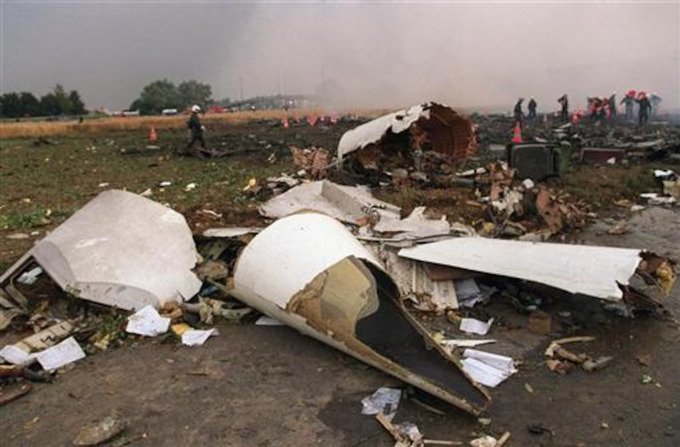 |
|
The nose and cabin of the Air France Concorde lie on the ground at the crash site in Gonesse, a Paris suburb, July 25, 2000. Photo by Reuters/Stringer |
After more than two decades of operation, the Concorde entered a period of decline.
Developed in the 1960s, its maintenance became increasingly difficult and costly by the early 2000s.
In 2003, Air France and British Airways successively retired the Concorde from service.
Following the Concorde’s retirement, the concept of supersonic passenger aircraft continued to be researched.
According to global aviation consultancy ALG, several companies are developing a new generation of aircraft aimed at reducing noise and operating costs, paving the way for a potential resurgence of supersonic aviation in the future.