
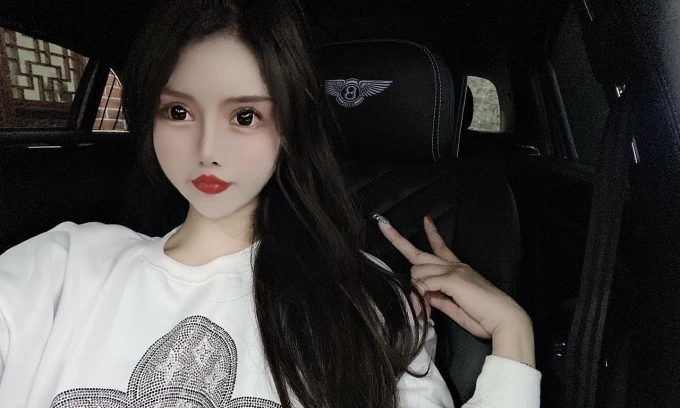

The aesthetic medical market is seeing a surge driven by them.
The industry was worth nearly $53 billion in 2025, with more than 90% of customers under 35 and Gen Z alone making up over half, KPMG data shows.
Unlike older generations, they see cosmetic procedures as a necessary part of life, whether for career success, relationships, or mental well-being.
Surgeries such as double eyelid surgery, acne scar treatments, and slimming injections are among the most requested procedures, with many students seeing cosmetic surgery as a way to gain confidence and improve future career and relationship opportunities, according to Global Times.
Zhou Chuna, 21, from Shanghai, has spent 4 million yuan (US$563,000) on plastic surgery over five years, according to the South China Morning Post. As a student at an international school, she faced discrimination from classmates because of her monolid eyes and flat nose. Boys often gave her harder tasks while favoring more conventionally attractive girls during class chores.
While just 13, but with her mother’s approval, Zhou began undergoing procedures such as double eyelid surgery, nose fillers, and jaw slimming.
Unsatisfied with the results, she kept going. “I want to look so different that those who bullied me wouldn’t recognize me,” she explains.
Between the ages of 13 and 18, Zhou underwent 380 procedures, ranging from injections to surgeries. She says the most painful procedure was jaw bone contouring, which lasted more than 10 hours.
She was bedridden for 15 days, had to remain in a straight position, and could only consume liquid food. The doctor once refused to perform an 11th canthoplasty on Zhou, but she sought other clinics willing to do it.
Zhou Chuna after undergoing multiple cosmetic surgery procedures. Photo from Xiaohongshu |
Her transformation came at a cost of $571,000.
When she shared the absurdity online, she was not castigated; she quickly gained 300,000 followers, along with TV invitations and a chance to launch a music project.
Despite criticism that her face looks unnatural, Zhou says she wants her appearance to reflect the money she spent and pain she endured.
But the process strained her relationship with her family, and her mother eventually cut off financial support. “When their friends asked if I was their daughter, they were unwilling to admit it,” Zhou says.
Now, after medical warnings, she has stopped further procedures, possibly for the time being.
Guozhi, 26, of Beijing has been undergoing cosmetic surgeries to address psychological barriers. While still in primary school, she was isolated for outperforming a more attractive classmate, her classmates organized votes to pressure her into going to another school, according to 36Kr.
The situation lasted for three years, and only stopped when parents intervened. While in middle school a teacher mocked her for her puffy eyes. These experiences led to deep insecurity, and she relied on eyelid tape throughout high school.
She recently took $720 from her parents to undergo double eyelid surgery, and says it helped her move on from the emotional impact of bullying.
Many young people also see appearance as a tool to deal with unfair treatment at work and in relationships. Jingjing, 26, of Zhengzhou says she was rejected for a receptionist’s job at a cosmetic clinic because of dark spots on her face.
The job went to a more attractive candidate. Jingjing later paid for laser treatment and orthodontics to improve her chances. The pressure extends into personal life as well.
Zhang Xiaoxing, 27, of Jinan spent some $1100 on cosmetic procedures after being constantly compared to her friend and feeling disadvantaged in romantic relationships.
Young people are now treating procedures like laser treatments and injections as part of regular self care, according to Zhang Wei, director of a cosmetic surgery clinic in Shanghai.
Male clients are also coming in increasing numbers, and make up around 20%. Some even ask for noticeable, dramatic changes to stand out on social media. “Viewing cosmetic surgery as a means of survival is something earlier generations, like those born in the ’80s and ’90s, never even considered,” Zhang adds.
Comments are closed.