Business Desk – From October 15, 2026, 0.4% merchant discount rate (MDR) will be applicable on select person-to-merchant (P2M) UPI transactions above Rs 2,000. This fee will be limited to a maximum of Rs 300 on transactions of Rs 75,000 or more.
This charge will not be borne by the common customer but by the merchant. Whereas person-to-person (P2P) UPI transfer will remain free as before. According to the government, about 96% of P2M transactions will not be affected by the new MDR.

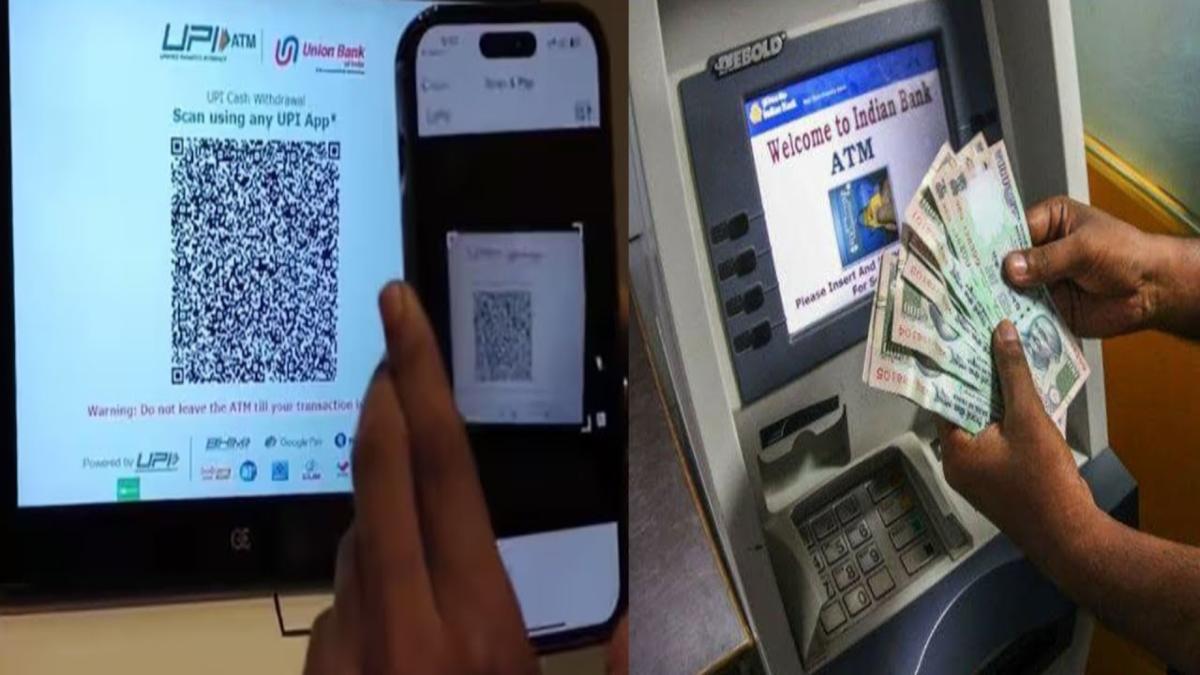
In such a situation, the question arises that if some merchants or customers opt for cash due to MDR on large payments, will the country's existing cash infrastructure be able to handle that additional demand? RBI data shows that the growth of ATM network has been much slower than that of digital payments.
Cash increased, ATM network speed slowed down
As of March 28, 2025, the currency in circulation in the country was about Rs 37.20 lakh crore. In March 2025, it was about 6.5% more than a year ago.
In comparison, between March 2018 and March 2025, the number of ATMs increased from about 2.3 lakh to 2.6 lakh. That means it increased by about 13%.
On the other hand, during the same period the number of UPI QR increased from about 4.1 crore to 65.8 crore. That means there was a jump of more than 1,500%.
However, cash infrastructure cannot be called weak just by looking at the number of ATMs. Apart from ATM, micro ATM, bank branch and other channels are also available for withdrawing cash.
Still huge amount is withdrawn from ATM
According to RBI's Payment System Indicators, about 66.44 crore cash withdrawal transactions took place from ATMs in the financial year 2023-24. Their total value was around Rs 32.59 lakh crore.
However, recent data has shown a decline in cash withdrawal activity from ATMs. The value of cash withdrawal from ATMs in February 2024 was around Rs 2.57 lakh crore, which decreased to around Rs 2.36 lakh crore in February 2025. That means a decline of about 8.4% in one year.
During the same period, cash withdrawal transactions decreased from 5,172 lakh to 4,498 lakh. That means the number of transactions decreased by about 13%.
Use of cash withdrawal from micro ATM increased
Apart from ATM, micro ATM is also an important medium for withdrawing cash. Their number was 17.55 lakh in March 2024, which decreased to 14.68 lakh by February 2025. That means the network decreased by about 16.4%.
Despite this, cash withdrawal transactions through micro ATMs increased. There were about 812 lakh transactions in February 2024, which increased to about 922 lakh in February 2025. That means an increase of about 13.5%.
The total value of these transactions also increased from Rs 21,543 crore to Rs 23,605 crore. It increased by about 9.6%.
2.58 lakh ATM-CRM against 65 crore UPI QR
In February 2025, the number of ATMs and cash recycling machines i.e. CRM in the country was around 2.58 lakh. In comparison, the number of UPI QR was around 64.97 crore.
Between March 2024 and February 2025, the number of UPI QRs increased from 34.34 crore to 64.97 crore. That means an increase of about 89%.
During the same period, the number of ATMs and CRM remained at around 2.58 lakh. That means there was almost no increase in it.
What will happen if demand for cash increases?
It is too early to say that after the implementation of MDR, people will give up large UPI payments and increase the use of cash. The government has also said that the direct burden of MDR cannot be passed on to the customers.
Still, if for some reason the demand for cash increases in big payments, then India does not have only ATM options. Micro ATMs, bank branches and other cash channels are also present.
According to statistics, the currency in circulation in the country is more than Rs 37 lakh crore, while the infrastructure of UPI has expanded very rapidly. On the other hand, the ATM network has remained almost stable and cash withdrawals from ATMs have also decreased in the recent data.
So the real question is not whether people will use cash after MDR or not. The big question is that if the demand for cash increases, through what medium will that cash be released and will the existing cash network be able to easily handle the additional demand?