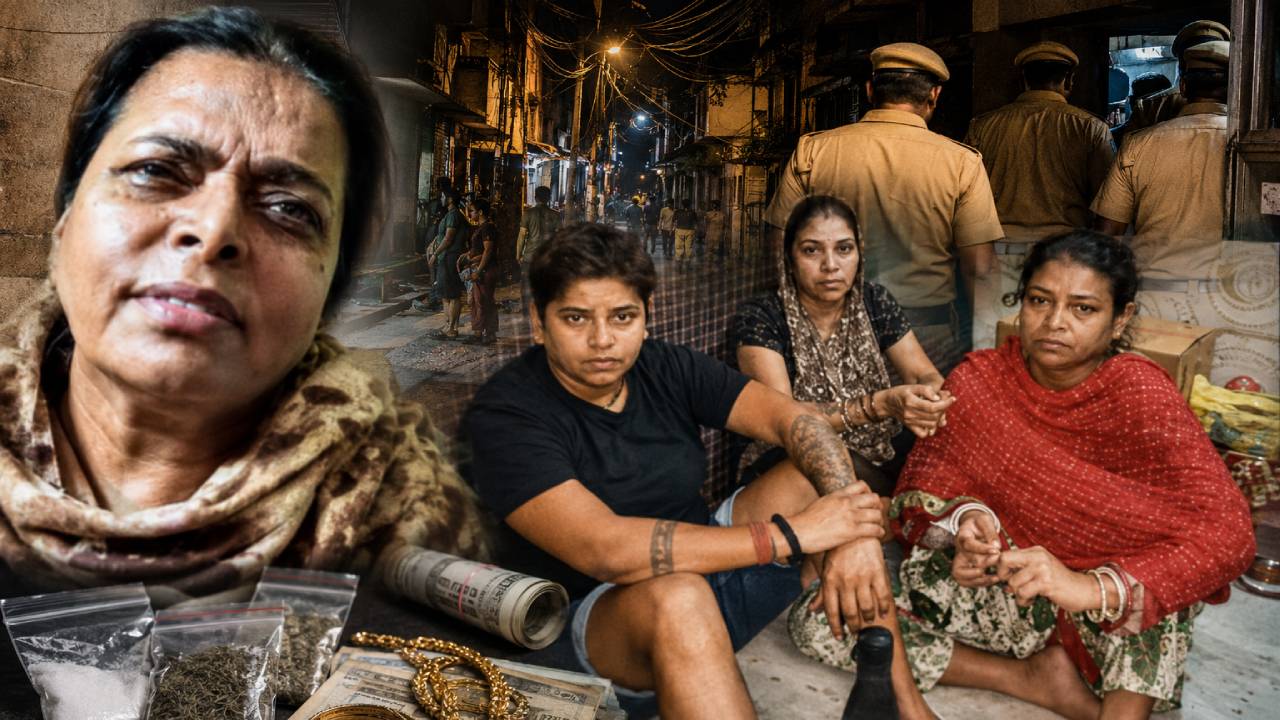
A woman stands in a narrow alley in Delhi. She may seem ordinary, but in the eyes of the police, she’s not just another woman, but allegedly a key link in a vast drug network. Until a few years ago, such women were often seen as the backdrop for their husbands, fathers, brothers, or sons, delivering supplies when needed, or reporting police activity. But now, according to investigators, the picture has changed.
The names of Taslima Putti, Kusum, and three sisters, Paro, Usha, and Kanta, tell the story of this changing landscape. According to the police, these women were allegedly involved in the drug trade and managed to amass wealth worth crores of rupees. From the narrow alleys of Bhalswa Dairy to areas like Sultanpuri and Majnu Ka Tila, investigators are seeing a greater role for women in the drug trade than ever before.
But the question is, how did this happen?
This story begins with the profit calculations that changed the course of the illegal trade. According to a senior police officer, the illegal liquor trade involves transporting heavy crates, and a profit of barely ₹5 per bottle is generated. In contrast, small quantities of marijuana can generate profits of around ₹200 to ₹300—meaning less inventory, less risk, and more revenue.
Small packets of drugs are also easier to conceal. Investigators say small packets of marijuana, heroin, and smack can be hidden under the folds of dupattas, blouses, or under the pallu of sarees. This explains why, according to the police, some women have easily progressed in this trade.
How they became part of this cartel…
According to police officials, many women entered the drug network when their husbands, fathers, brothers, or sons were arrested under the NDPS Act. After their male relatives were imprisoned, information about the suppliers, customers, and where the goods came from and where they were delivered—all of this information already existed within the family. Gradually, women took over the network. They were no longer working solely for someone else. In some cases, they began handling the entire operation themselves.
According to investigators, teams of two or three women formed. One would interact with customers, another would deliver goods, and a third would collect money. Thus, a network was formed in which each individual had a distinct role.
What is the challenge facing the police?
Searching or arresting a female suspect can only be done in the presence of a female police officer. Arresting a woman after sunset or before sunrise requires a magistrate’s permission, and the application must be made through a female officer. A team conducting a raid on a house based on credible information must also include a female officer.
The story of Paro, Usha, and Kanta…
Paro, 28, Usha, 25, and Kanta, 35, are sisters. All three were arrested on June 22nd of this year on charges of drug trafficking. According to investigators, the three spent their childhoods surrounded by drug addicts and drug dealers. They began working as daily wage laborers at the age of 13-14. They then saw people around them making money from this business. According to the investigation, the three sisters also allegedly became part of this network.
Over time, the story went beyond just drug packets. According to the police, the three sisters amassed assets worth approximately ₹2 crore (approximately $20 million). This includes 12-13 flats, each valued at approximately ₹1.5 million (approximately $1.5 million). This means that the same hands that once worked as daily wage laborers allegedly created a network of assets worth crores (approximately $1.5 million).
But the story of Delhi’s drug trade doesn’t end there.
Taslima Putti’s name emerges from Bhalswa Dairy. According to investigators, Taslima allegedly created a heroin supply network worth crores (approximately $1.5 million). He was found to own several properties in JJ colonies. According to the police, he also owned luxury vehicles and his assets were valued at over ₹2 crore.
Then the story of Kusum comes to light.
Four separate houses in Sultanpuri were allegedly joined to create a four-story “mini-mansion.” According to the police, this was Kusum’s hideout. Kusum was arrested this year and faces over a dozen charges under the NDPS Act. But the most intriguing aspect of the house wasn’t its size, but rather its security system.
According to the police, minors were deployed to keep watch around the area. Their job was to monitor whether any unknown individuals or the police were approaching the area. CCTV cameras were installed at the other end of the streets. If the police were spotted anywhere, the information would be relayed to the network.
And then the game of escape began!
The drugs were allegedly transported or disposed of before the police arrived. According to investigators, lawyers’ numbers were always kept ready in this network. Women were allegedly advised not to open the door when the police arrived. CCTV DVRs were also hidden. There are also allegations of attempts to pressure investigating officers by recording police actions on mobile phones and threatening to upload the videos on social media.