
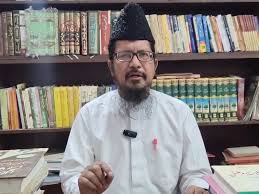
Women’s Reservation Bill 2026: Maulana Barelvi’s support and advice to avoid political quagmire

News India Live, Digital Desk: A new chapter has been added to the country’s politics regarding women’s reservation. While the Central Government has introduced three important bills in the Lok Sabha on 16 April 2026, reactions are coming from various sections of the society. The statement of Maulana Shahabuddin Razvi Barelvi, National President of All India Muslim Jamaat from Bareilly, Uttar Pradesh, is currently the center of discussion. 1. Maulana Barelvi’s stance: A confluence of support and warning. Maulana Razvi has welcomed this initiative of Prime Minister Narendra Modi, but at the same time has drawn a ‘Lakshman Rekha’ for Muslim women: Support of reservation: Maulana called it a commendable and positive step to give rights to ‘half the population’. He believed that this would make Indian democracy more inclusive. Called politics a ‘quagmire’: Along with support, he also gave a serious advice. Maulana argues that today’s politics is full of ‘cunning and deception’. According to him, if women enter active politics, they may have to compromise with their honor, dignity and modesty of the veil. Islamic Viewpoint: He said that in Islam, the safety and honor of women is considered paramount, hence they should maintain the dignity of the house by staying away from this political quagmire. 2. 3 historic bills introduced in ParliamentGovernment has prepared a concrete blueprint to implement women’s reservation before the 2029 Lok Sabha elections: BillMain objectiveConstitution (131st Amendment) Bill, 2026To increase the Lok Sabha seats from 543 to a maximum of 850. (For 815 States, 35 Union Territories). Delimitation Bill, 2026 To redraw the boundaries of constituencies based on the 2011 census so that representation is balanced. UT Laws (Amendment) Bill, 2026 To implement 33% women’s reservation even in Union Territories having assemblies like Delhi, Jammu and Kashmir and Puducherry. 3. Target of 2029: New structure of representationThrough these bills, the government’s aim is not only to provide reservation, but to change the entire structure of Parliament. The increase in the number of seats (to 850) will not only pave the way for women to 33%, but will also increase the representation in proportion to the growing population. Especially in areas like Jammu and Kashmir and Puducherry, with the increase in political participation of women, major changes are being expected in the local leadership there.

Comments are closed.