The eclipse, which will occur on Aug. 12, is expected to draw visitors particularly to areas along the path of totality and nearby locations offering clear views. The timing also coincides with Spain’s peak summer holiday season and the phenomenon will take place around sunset, according to Democrat news site.
International interest has already surged.
Booking data showed accommodation searches by travelers from outside Spain for stays on Aug. 12 and 13 jumped 522% in Soria, a province in northern Spain that is emerging as a major viewing destination, Spain News Today reported.
Searches also rose sharply in other northern provinces — including 356% in León, 345% in Palencia, and 325% in Burgos.
|
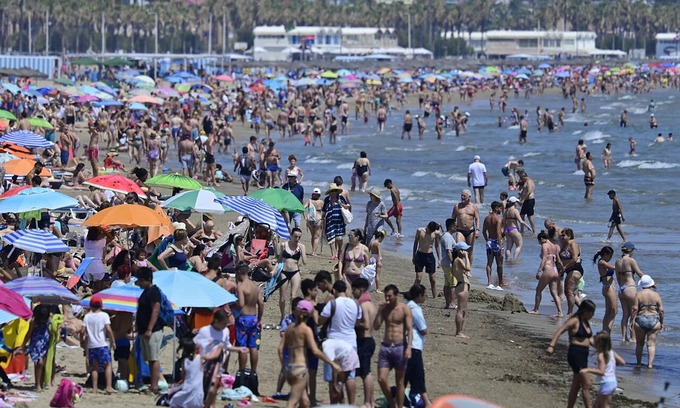
People crowd the beach in Valencia, Spain, on July 5, 2024. Photo by AFP |
Hotels and rural properties in areas with the best visibility have reported high occupancy. Campsites are also fully booked for the summer, prompting some travelers to seek accommodation near rural areas, natural spaces and small towns with less light pollution.
With traditional accommodation in short supply, camper vans have become another option for eclipse watchers.
Luis López, vice president of the Spanish Association of the Industry and Trade of Caravaning (Aseicar), said rental vehicles had been selling out every summer, but bookings for the eclipse began accumulating months ago.
“Many of our associates have 30 or 40 camper vans and rental campers and have been forced to reinforce and expand their vehicles for this purpose, given the flood of requests we receive daily,” López said as quoted by Democrat.
Air travel is also expected to see increased demand.
The government forecasts a 7.9% rise in scheduled airline seats this week compared with the same period in 2025.
Amadeus Travel Intelligence data showed air bookings for the days leading up to the eclipse had risen by more than 90% year-on-year in northern destinations including Santander, Asturias and Bilbao.
Rail operator Renfe will offer more than one million seats on 3,038 long-distance trains between Aug. 7 and 16. It will also increase services on Media Distancia and Cercanías routes, particularly in northern Spain, where many prime viewing locations are concentrated.
Spain welcomed 96.8 million tourists in 2025, a record high and an increase of 3.2% compared with the previous year, making it the world’s second-most-visited country after France.
During the first six months of 2026, 46.57 million international visitors arrived in Spain, 4.6% more than during the same period last year.