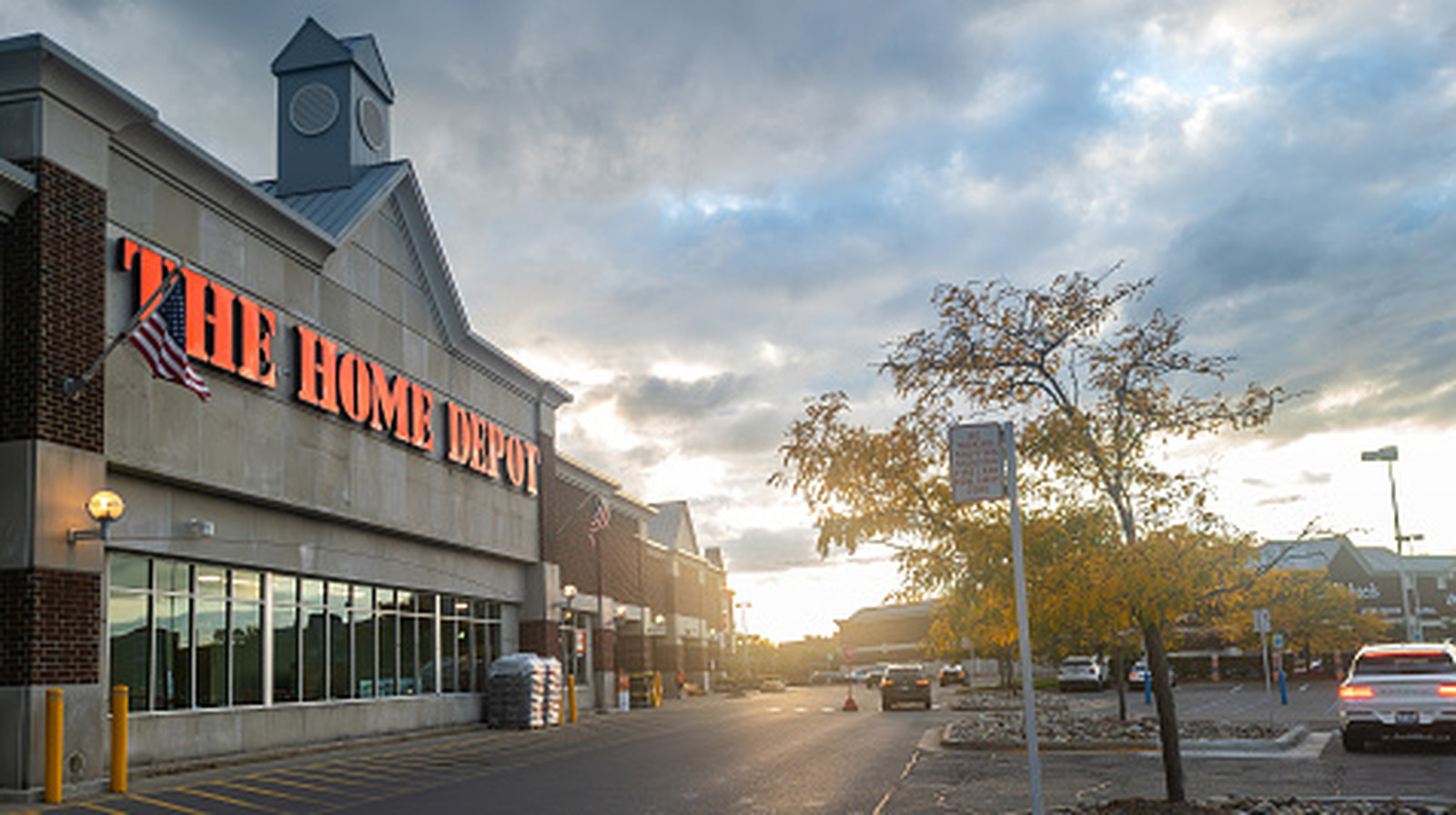
If you’ve noticed security cameras in parking lots at Home Depot or Lowe’s — whether on streetlights or standalone trailers with solar panels on them — it’s because both companies have deals with a company called Flock Safety. Among other things, Flock makes Automated License Plate Readers (ALPR) cameras and gunshot audio sensors. The cameras record every license plate they see, along with additional information about passing vehicles, including any bumper stickers, damage, bike racks, aftermarket wheels, or other identifying features. Flock collates this information into a Vehicle Signature and uses AI to create a searchable database, so it’s possible to look for a vehicle’s activities with details other than just its license plate. So why are Home Depot and Lowe’s paying for Flock cameras, and what are they doing with the data from them?
In an FAQ on its websiteHome Depot says, “Like many retailers, we use license plate readers in our parking lots. These cameras are used for the purpose of detecting and preventing theft and protecting the safety of our customers and associates. We do not grant access to our license plate readers to federal law enforcement.” However, an investigation by 404 Media reveals the last portion of that statement is only partially correct. Home Depot may only be sharing data with local law enforcement agencies, but those agencies can pass it on to their federal counterparts. The investigation found that Lowe’s, meanwhile, is sharing it with both local police, and other police departments across state lines.
A boon for law enforcement, a bane for privacy advocates
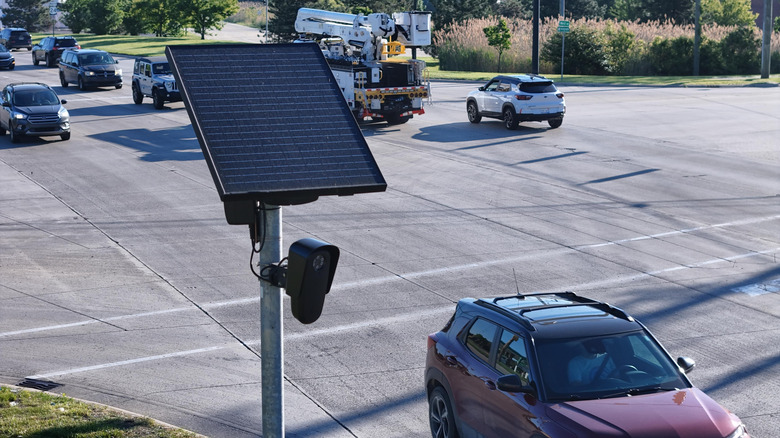
In March 2025, Flock published a blog post claiming its technology had helped expose a $20 million money laundering operation using Home Depot and Lowe’s gift cards. Scammers convinced people to buy the companies’ gift cards using computer malware and malicious text messages and then used the proceeds to buy expensive materials or merchandise from the retailers for resale. The appeal for retailers is easy to understand: more data on shoplifters or scammers makes it more likely they’ll be apprehended. But it’s the information on regular customers, and what those with access to Flock-powered databases can do with it, that has civil rights experts and private citizens worried.
Dozens of documented cases of police using Flock to stalk current or former romantic interests, and at least one instance of Texas police using Flock to investigate a woman who left the state for an abortion, are just some of the reasons there’s increasing resistance to the technology from civil society, and some Flock cameras have been vandalized.
Flock says more than 5,000 of its customers are law enforcement agencies. While private businesses using Flock aren’t obligated to share their data with local police, many choose to. Records obtained by the Electronic Frontier Foundation (EFF) show that the Johnson County, Texas Sheriff’s Office can access data from more than 170 Lowe’s locations, many of them outside of Texas, and from dozens of Home Depot locations in the state.
Who has access to Flock cameras matters
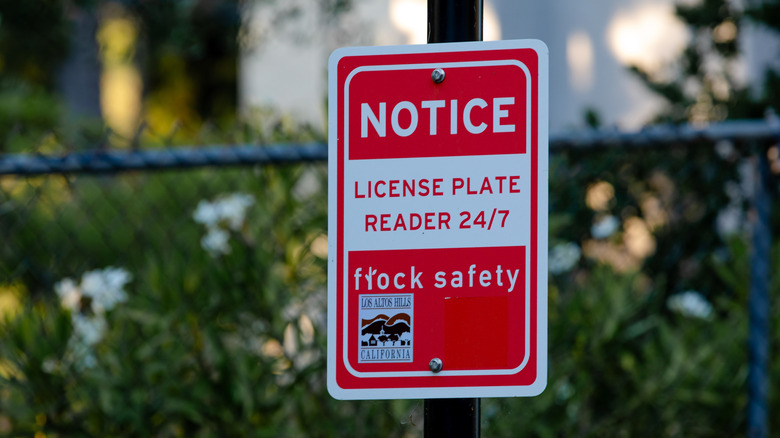
While Home Depot says it does not coordinate with Immigration and Customs Enforcement (ICE), Customs and Border Protection (CBP), or other federal agencies regarding immigration enforcement operations, 404 Media found that ICE, which has no contract with Flock, had routinely accessed and used Flock-sourced data with the help of local police.
The American Civil Liberties Union (ACLU) has found that, even when local police departments opt out of sharing data with federal agencies, Flock retains the right to do so. At the same time, the Institute for Justice continues to document how data from Flock cameras has been misused, and has launched an initiative called The Plate Privacy Project to pressure legislators to crack down on its use, improve safeguards, and force Flock and the companies that use its services to be more transparent about how data are handled to ensure they aren’t abused. Whether the mounting pressure is enough to get Home Depot or Lowe’s to change their stance on, and contracts with, Flock remains to be seen.