
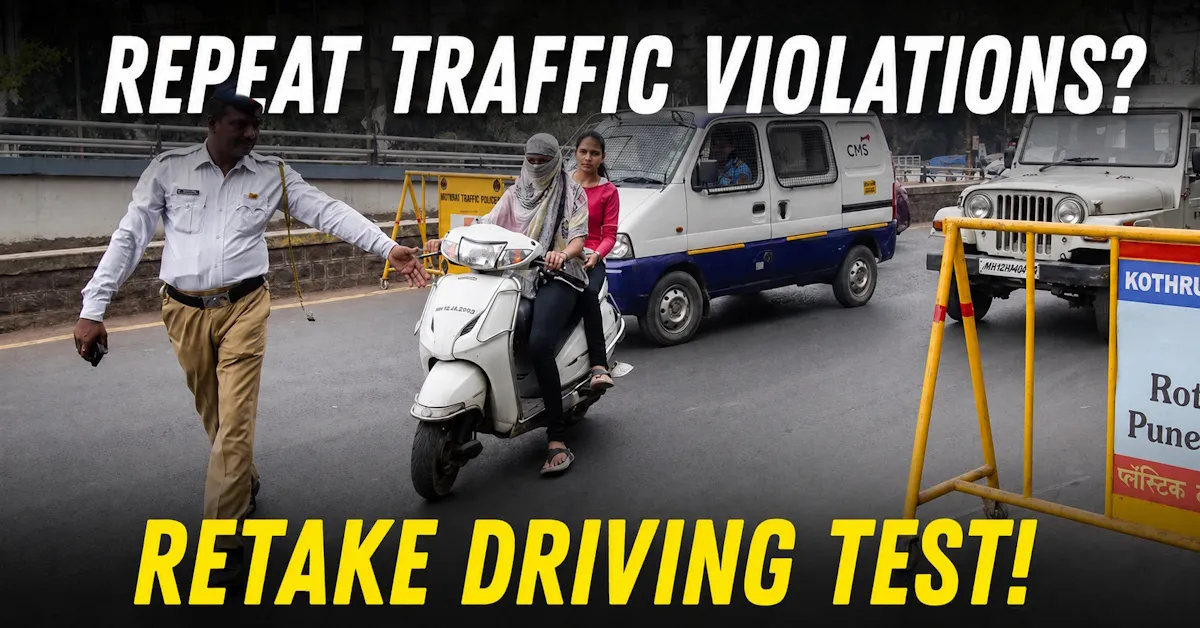

The road transport ministry is preparing amendments to the Motor Vehicles Act that would make retesting mandatory for drivers who have a recorded history of traffic-rule violations. The proposal has been cleared by an informal Group of Ministers headed by Defence Minister Rajnath Singh and may be introduced in the upcoming Monsoon session of Parliament.
The core idea is simple: challan history should not disappear into a database without consequence. If a driver repeatedly breaks traffic rules, licence renewal should not remain automatic. The person may have to take a fresh driving test before the licence is renewed.
That would mark an important shift in enforcement. At present, many traffic penalties are treated as one-time payments. Pay the fine and move on. The new proposal changes that logic. A pattern of unsafe driving could now affect the driver’s right to continue driving without reassessment.
This is where the amendment could matter most. India already has electronic challans, camera enforcement and centralised transport databases. But enforcement has often stopped at fine collection. Linking repeat violations to licence renewal makes the record more meaningful.
A driver repeatedly caught for wrong-side driving, overspeeding, red-light jumping or other dangerous violations would no longer be able to treat each challan as an isolated event. The accumulated record would become evidence of risk. That is closer to how safer road systems work: not only by punishing one violation, but by identifying repeat behaviour.
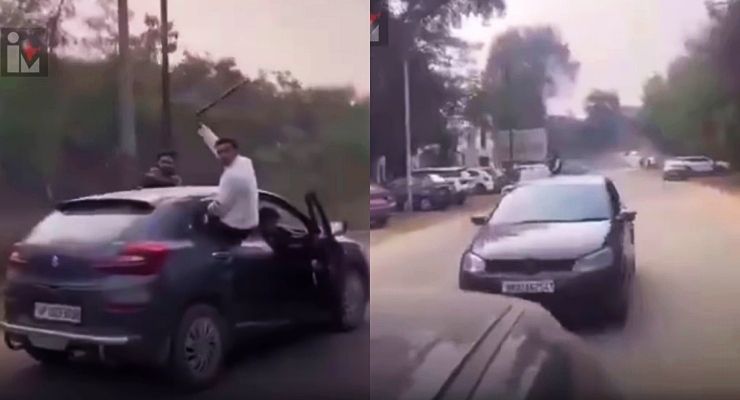
The details will matter. The law will need to define what counts as a “history” of violations. It will also need safeguards against wrongly issued challans, cloned number plates, and cases where the registered owner was not the driver. Without a clean appeals and correction process, the system could punish the wrong person. But the principle is sound: repeat offenders should face stronger consequences than first-time violators.
The Compensation Reform
Alongside the retest proposal, the ministry has proposed a major change in how road crash victims are treated financially. At present, people who suffer serious injuries, or families who lose a member in a road accident, often have to wait until the final disposal of their Motor Accident Claims Tribunal case before receiving compensation. These cases can take years.
The proposed amendment would allow MACTs to award interim compensation at any stage of the proceedings, without waiting for the final judgment. The wording gives tribunals discretion to grant such interim relief as they consider fit.
That is a practical reform. A family that loses its main earner cannot wait for a multi-year legal process to finish. Medical bills, funeral costs, loans, school fees and household expenses start immediately. Interim compensation will not solve the entire problem, but it can prevent families from being pushed into debt while the case continues.
Making Appeals Less Casual
The ministry has also proposed raising the pre-deposit requirement for those who challenge a MACT award. Currently, the challenger must deposit Rs 25,000 or 50 percent of the awarded amount, whichever is less. The proposal would raise this to Rs 10 lakh or 50 percent of the awarded amount, whichever is less.
That is a large jump. The aim is to discourage casual or delaying appeals, especially where insurers or at-fault parties challenge awards mainly to postpone payment. The proposal also raises the threshold for filing appeals in high courts against MACT orders from Rs 1 lakh to Rs 5 lakh.
The logic is clear. A compensation order should not be dragged through years of litigation simply because the cost of delay is low.
Insurance May Also Reflect Driver Behaviour
Another important proposal is to return the power to determine third-party insurance premiums to IRDAI and allow premium calculation to consider vehicle age and challan history. That could bring driver behaviour into insurance pricing.
If implemented well, clean drivers may benefit from lower risk pricing, while repeat violators could face higher premiums. This would make unsafe driving more expensive even outside the traffic-fine system. It also creates a financial incentive to maintain a cleaner record.
The package is not final law yet. It still has to move through the legislative process. But the direction is clear. India is trying to move from one-time fines to consequence-based enforcement. For repeat violators, that could mean a fresh driving test, higher insurance cost, and fewer easy appeals if their driving causes serious harm.
Comments are closed.