Bengaluru, October 8:
YouTuber and political commentator Dhruv Rathee on Thursday accused the Election Commission of India of lacking transparency and accountability in its handling of the Special Intensive Revision (SIR) of electoral rolls, and demanded the resignation of Chief Election Commissioner Gyanesh Kumar.
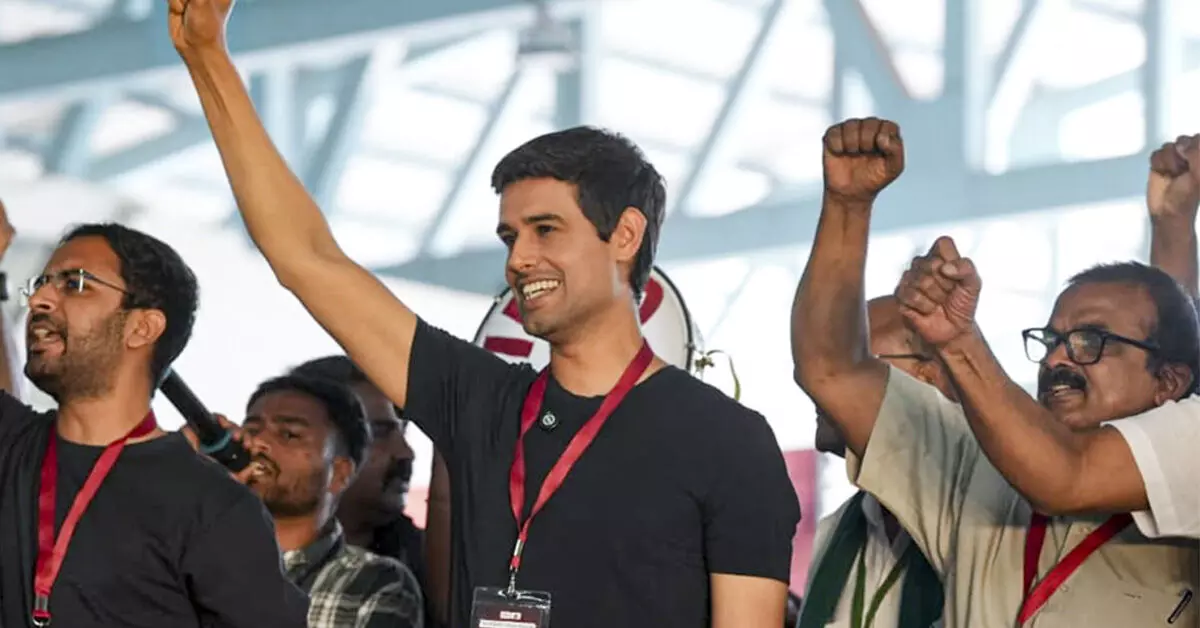
Addressing a protest at Freedom Park in Bengaluru, Rathee alleged that the revision process had resulted in genuine voters being excluded from electoral rolls in several States. He argued that citizens should be able to access information about deleted names and understand the reasons for their removal.
Referring to West Bengal, Rathee claimed that around 70,000 voters had been removed from electoral rolls before the Assembly election and that their names were restored after the results. He alleged that these people had been eligible voters but could not exercise their franchise because their names were missing at the time of polling.
Citing Bihar, he claimed that around 65 lakh names had been removed from the electoral rolls and alleged that details of those affected were not disclosed until the Supreme Court intervened. He also referred to Uttar Pradesh, where he alleged that around 14 lakh voters had been added without the corresponding names being made public.
Rathee raised questions about the software and procedures used for electoral-roll revisions, citing an alleged instance in Goa in which Electoral Registration Officers reportedly faced difficulties adding names because of limitations in the system.
“Zero transparency and zero accountability,” Rathee said, criticising what he described as the Election Commission’s failure to proactively disclose relevant information. He called for the resignation of CEC Gyanesh Kumar and urged citizens to treat the issue as a matter of democratic rights rather than party politics.
The protest was attended by CJP founder Abhijit Dipke, actor-activist Prakash Raj, civil society representatives and people who said they had experienced problems with electoral registration. Participants called for the SIR exercise to be scrapped and demanded greater safeguards against the exclusion of eligible voters.
The Election Commission’s role in maintaining accurate electoral rolls is at the centre of the controversy. Rathee’s figures and allegations represent his claims at the protest; they require assessment against official electoral data and relevant court proceedings. The wider debate concerns how voter verification can be conducted transparently while ensuring that no eligible elector is denied the right to vote.