
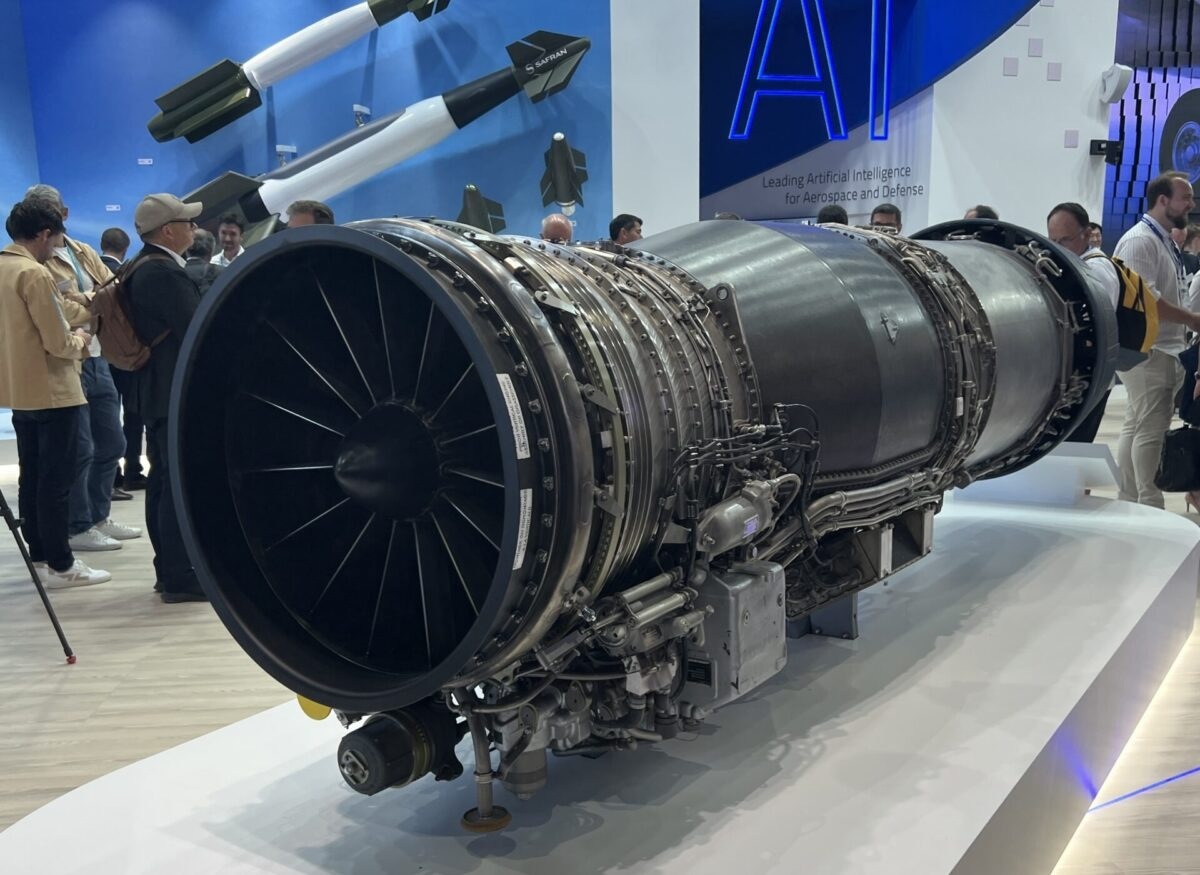

Taking a big step towards India’s defense self-reliance, a possible partnership with French aerospace company Safran is being seriously considered. This partnership is specifically about engine co-development for the Tejas MK-2 fighter aircraft, which is considered important amid the delay in the supply of F404 and F414 engines from American company General Electric (GE).
According to sources, the delay in supply of GE engines has affected the modernization program of the Indian Air Force. The supply disruption of F404-IN20 engines has affected the deployment timeline of Tejas MK-1A. Challenges in restarting production lines following the pandemic, including parts shortages and logistics issues, have further complicated the situation.
In such a situation, Safran’s proposal is being considered strategically important for India. The company has proposed not only co-development but also full technology transfer and sharing of intellectual property rights (IPR). According to experts, this could be a historic opportunity for India’s aerospace sector, as till now important parts of the engine technology, such as turbine blade design, hot-section metallurgy and advanced cooling systems, were not shared by foreign companies.
Saffron is already strengthening its presence in India. The company is going to open a maintenance, repair and overhaul (MRO) facility in Hyderabad by 2025, which will be dedicated to servicing LEAP engines. Additionally, there are also plans to set up a helicopter engine MRO facility in Goa in collaboration with Hindustan Aeronautics Limited (HAL). This initiative reflects Safran’s long-term commitment to India’s aerospace ecosystem.
India has been dependent on foreign engines for a long time. Aircraft like Tejas, Sukhoi Su-30MKI and Mirage-2000 are based on imported engines, increasing both cost and strategic dependence. In such a situation, the plan of co-development of 120 kN thrust engine with Safran, especially for the Advanced Medium Combat Aircraft (AMCA), is being considered as a decisive step towards reducing this dependence.
Another important aspect of this partnership is that it will strengthen the ‘Make in India’ initiative. Indigenous engine manufacturing will not only boost the domestic industry but will also provide new opportunities to private and public sector companies, such as Tata Advanced Systems, Adani Defense and Bharat Electronics Limited. This will give impetus to employment generation, skill development and high value creation.
This cooperation is also beneficial for India from strategic point of view. By getting control over engine technology, India will be able to design and upgrade its aircraft as per its needs, and export possibilities will also increase. Demand for India’s fighter aircraft may increase in markets like South-East Asia, Africa and Latin America.
According to the plan, the project is expected to have the prototype engine ready by 2027 and flight testing to begin by 2028. The initial AMCA prototypes will currently use GE F414 engines, but will be replaced by indigenous engines developed with Safran in the future.
Experts believe that after the experiences gained from the Kaveri Engine Project, this partnership can help India overcome technological hurdles. If the plan is successful, India will join the select few countries capable of developing high-powered combat aircraft engines on their own.
Also read:
BJP celebration in West Bengal, Kamala Bhog in Kolkata, Jhal Mudi distributed!
CM Rangaswami wins in Puducherry with a huge lead!
PM Modi will visit BJP headquarters at 6 pm, will address the workers!
Assam Assembly Elections 2026: Himanta Biswa Sarma’s government ready to return to power

Comments are closed.