
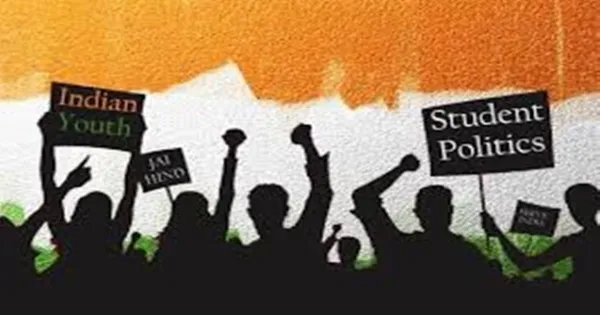

The youth wants a corruption free India and one of these groups expresses dissatisfaction with the current political situation, then it is our responsibility to make them aware of the goodness of politics. Encourage to do something different positive-creative.
Ajay Dayal, Haldwani
If your mind is young compared to your body, age never passes. Learning and doing something new every day is another name for living life. Apart from engineering, medicine, law and enterprise, there is no less enthusiasm among the youth to make future in politics also. The idea is to change the condition and direction of politics. By the way, the names of two prominent youth of South Asia are in discussion these days. Recently, two prominent young leaders of South Asia were included in Time Magazine’s list of 100 Most Influential People of 2026. Both have emerged as the youngest Prime Ministers in their respective countries. One is Balen Shah and the other is Tariq Rehman. Recently, while Balen Shah became the youngest Prime Minister of Nepal, Tariq Rahman has also taken over the leadership of Bangladesh as the youngest Prime Minister.
The ground reality is that in democratic countries there is no government without political parties. Youth leadership can change the condition and direction of politics. The ability to take decisions in difficult situations identifies the youth. Talking about our country, if the youth wants a corruption free India and one of these groups expresses dissatisfaction with the current political situation, then it is our responsibility to make them aware of the goodness of politics. Encourage people to do something positive and creative away from the aspects of nepotism and casteism in politics.
If we look at the statistics, we will find that India is the country with the largest youth demography (15-29 years) in the world, which has more than 35 crore youth population. As per the recent report (2025-26), more than 35 lakh youth are registered on the Mera Yuva Bharat portal. This youth power is also contributing to about 36 percent of the country’s gross national income. If we discuss political and social participation, we find that about 30 percent of the youth are staying away from active politics, while 25 percent participate in political discussions without joining any party. Only 11 percent are active members of any political party.
Also understand the mathematics of youth who are interested in entrepreneurship as compared to politics. 49 percent youth want to become social entrepreneurs, but 58 percent feel the need for funding and 39 percent need the right guidance. Demographic data shows that the share of youth aged 15-29 years in the total population in the year 2021 was 27.2 percent, which is expected to decrease to 22.7 percent by 2036. Surveys say that youth are more interested in issue-based politics rather than traditional politics. Additionally, unemployment and irregularities in government jobs are growing concerns among the youth, which alienate them from mainstream politics.
Youth leadership signals a significant shift in global politics, where youth are now coming forward not only as voters but also as policy-makers and agents of change. This scenario is moving from traditional politics towards modern and innovative approaches. If we assess the global scenario, we will see that political participation of youth has increased and as public representatives, such youth are also working actively on issues like climate change, education, employment and sustainable development. In this context, it is necessary to add that youth of 30-40 years of age are reaching top positions all over the world.
For example, Sanna Marin in Finland (PM at 34), Jacinda Ardern in New Zealand (PM at 37) and Mette Frederiksen in Denmark (PM at 41) have shown the potential of young leadership. Not only this, the United Nations has also formally recognized the participation of youth in governance and policy-making processes as crucial to achieving the 2030 Agenda. Looking deeper, people aged 15-25 make up one-fifth of the world’s population, yet the average age of parliamentarians globally is 53 years.

Comments are closed.