
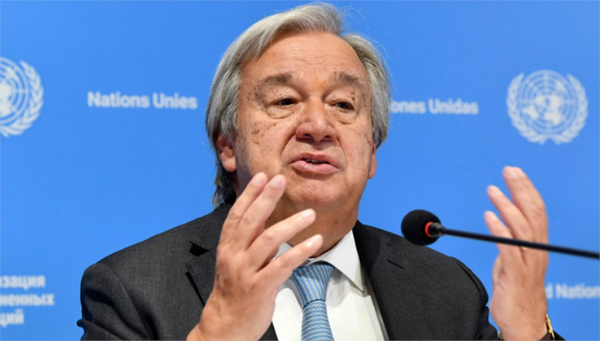

New York. UN Secretary-General Antonio Guterres has appealed for the reopening of the Strait of Hormuz. During a discussion on maritime security in the Security Council, he stated that freedom of navigation through this route must be fully respected. He stressed that these rules must be implemented without delay.
What did the UN Secretary-General say?
Regarding this, Guterres wrote on the social media platform X, “Navigation rights and freedom of passage through the Strait of Hormuz must be respected. I appeal to all parties to open the Strait. Allow ships to pass. Do not impose tolls. Do not discriminate. Let trade resume. Let the global economy flourish. Safe, unimpeded transit is vital, both economically and humanitarianly.”
Why is Hormuz important?
The Strait of Hormuz is one of the world’s most important sea lanes. Nearly a fifth of the world’s oil trade passes through it. Furthermore, a fifth of the world’s natural gas (LNG) and nearly a third of the fertilizer trade also transit through it. The UN chief said that keeping this route safe and open is essential from both an economic and humanitarian perspective.
The disruption of this sea route has dealt a significant blow to the global economy, leading to significant fluctuations in energy and other markets. Shipping costs and insurance prices have skyrocketed. This has become the biggest supply chain problem after the coronavirus pandemic and the Ukraine crisis.
UN Secretary-General
Guterres warned that this pressure is emptying fuel tanks and store shelves. People are struggling to find food. This is the time for sowing crops. If this disruption continues, a major food crisis could arise globally. This could push millions of people in Africa and South Asia into hunger and poverty.
The heaviest burden is falling on poor and small island nations that depend on maritime imports. These countries are not at fault for this crisis, yet they are suffering the most. Guterres urged all countries to exercise restraint and increase mutual dialogue. He also offered his assistance in resolving this issue. He said that the sea should be a zone of peace and cooperation, not conflict. This is the time to make the right decisions and take action.

Comments are closed.