
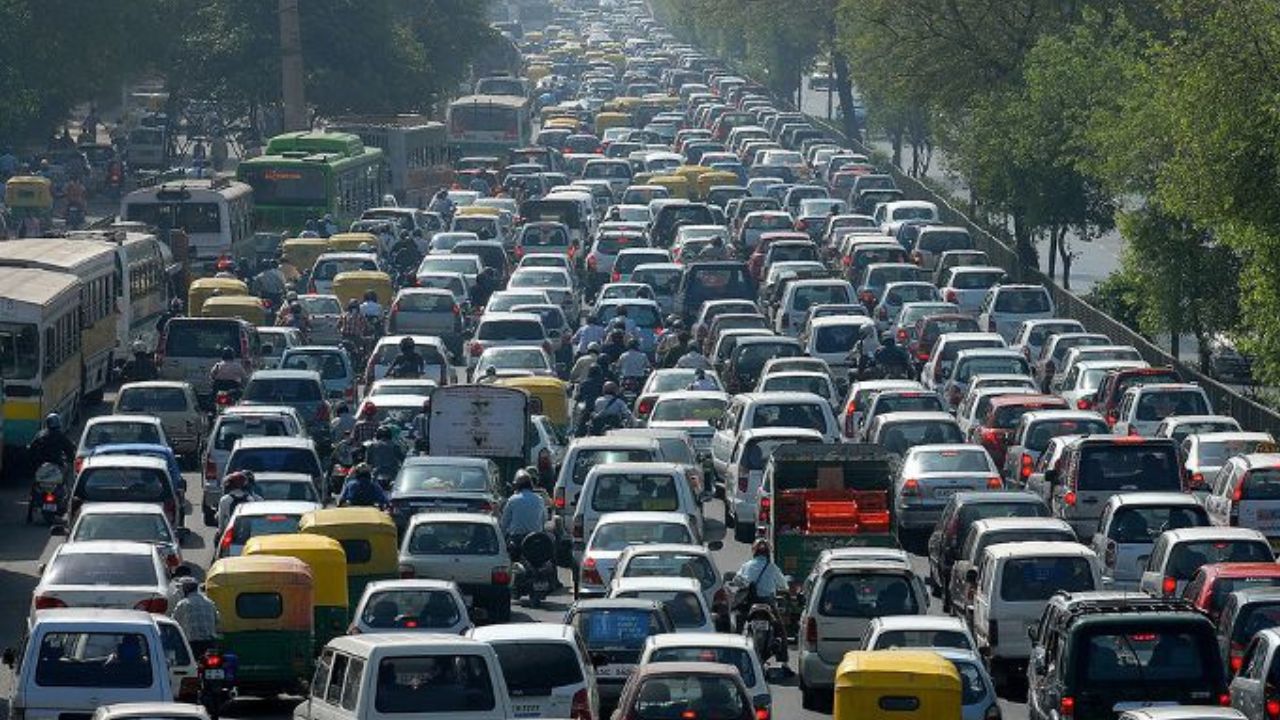
Over 53 lakh vehicles in Mumbai… Along with the population, the increasing number of vehicles is also a problem for Mumbaikars!

- Another thing that has seen a rapid increase on the roads of Mumbai in the last few years is the number of vehicles
- Number of registered vehicles in Mumbai to cross 53 lakh by 2026
- Almost 88 percent of the city’s vehicle population includes two-wheelers and private cars
Local trains, metro, BEST buses and congested roads are the usual picture in the city of Mumbai. But another thing that has seen a rapid increase on the roads of Mumbai in the last few years is the traffic and one of the main factors responsible for this is the number of vehicles. By 2026, the number of registered vehicles in Mumbai has crossed 53 lakhs. Especially, private vehicles have the highest share in this. Two-wheelers and private cars make up nearly 88 percent of the city’s vehicle population. Mumbai’s roads are getting busier day by day due to growing population, changing lifestyles, stress on public transport and increasing trend towards owning vehicles for convenience.
Which vehicles are the most in Mumbai?
Two wheelers have the biggest impact on Mumbai
Most of the vehicles in Mumbai are two wheelers. The number of scooters and bikes has reached around 30 to 31 lakhs. The city’s narrow roads, lack of parking and constant traffic make a bike or scooter the most convenient option for many. Two wheelers are widely used by office goers, delivery partners, students and people working in small businesses. Low maintenance cost and time savings keep these vehicles popular despite rising petrol prices. But due to these vehicles, the problems of traffic discipline are also increasing. Incidents like breaking signals, driving in the wrong direction and driving on footpaths are experienced by Mumbaikars on a daily basis.
Growth of private cars and big problem of parking
The number of private cars in Mumbai has now reached around 15 lakhs. A car was once considered a luxury, but now it has become a necessity for many families. People tend to buy cars due to monsoon rush, tension in local trains and convenience of traveling with family. Compact SUVs and hatchbacks see particular demand. But with the increase in cars, Mumbai has faced a serious problem of parking. In many societies there are parking disputes, while cars parked on the roads further slow down the traffic. In some areas, it is evident that the number of vehicles has exceeded the capacity of the roads.
Auto Rickshaw: The Lifeline of Mumbai’s Suburbs
Auto rickshaws are an integral part of daily life in the suburbs of Mumbai. Be it a journey home from the railway station or a rush for short distances, rickshaws are still the first choice of millions of people. More than two and a half lakh rickshaws are plying in Mumbai. Interestingly, most of the rickshaws run on CNG, which helps in reducing pollution to some extent. However, traffic is affected by rickshaws’ unruly parking and sudden stops. Complaints of refusal of passengers at some places also persist.
RTO India: Negligence of just Rs 100 will result in a hit of Rs 10,000; If you have a car, read this rule now
Kali – Changed taxi culture from Pili to App Cabs
The black and yellow taxi of Mumbai is considered to be the identity of the city. But in the last decade, app-based cab services have changed the way we travel. Today, services like Uber and Ola make it easy for people to get a ride from their mobile. The use of app cabs for airport travel, office commute and late-night travel has increased significantly. However, due to surge pricing, cancellation and increased fares, many passengers are also upset. At the same time, there is a picture of increased financial pressure on traditional taxi drivers.
Mumbai cannot stop without tempo and pickup vehicles
Freight transport is very important for running a city like Mumbai. Thousands of tempo and pickup vehicles ply across the city every day for markets, grocery stores, online delivery and construction materials. Tata Ace, Bolero Pickup and small goods carriers have become an important part of Mumbai’s supply chain. Especially after the growth of e-commerce, the number of delivery vehicles has increased rapidly. The movement of these vehicles is more visible at night because the daytime traffic makes it difficult to transport goods.
Heavy Vehicles and Mumbai’s Traffic Congestion
Although heavy vehicles such as trucks, container vehicles, tankers and BEST buses are less in number, they have a greater impact on traffic. Mumbai Port, construction projects and industrial areas are constantly moving large vehicles. Therefore, the administration has imposed restrictions on heavy vehicles during peak hours in many areas. At the same time, as electric and CNG buses are being increased by BEST, public transport seems to be getting an eco-friendly direction.
It is not possible to expand the roads at the same rate as the number of vehicles in Mumbai is increasing. Therefore, it will be important to strengthen public transport, tighten parking policy and increase electric mobility in the future. Although projects like Mumbai Metro, Coastal Road and Atal Setu are providing some relief, the increasing number of vehicles will continue to be a major challenge for the city. Although it is true that the speed of Mumbai never stops, the number of vehicles running only with that speed is increasing day by day.
Car AC Tips : AC can be troublesome while driving on ghat road? Know the reason, otherwise there may be trouble

Comments are closed.