
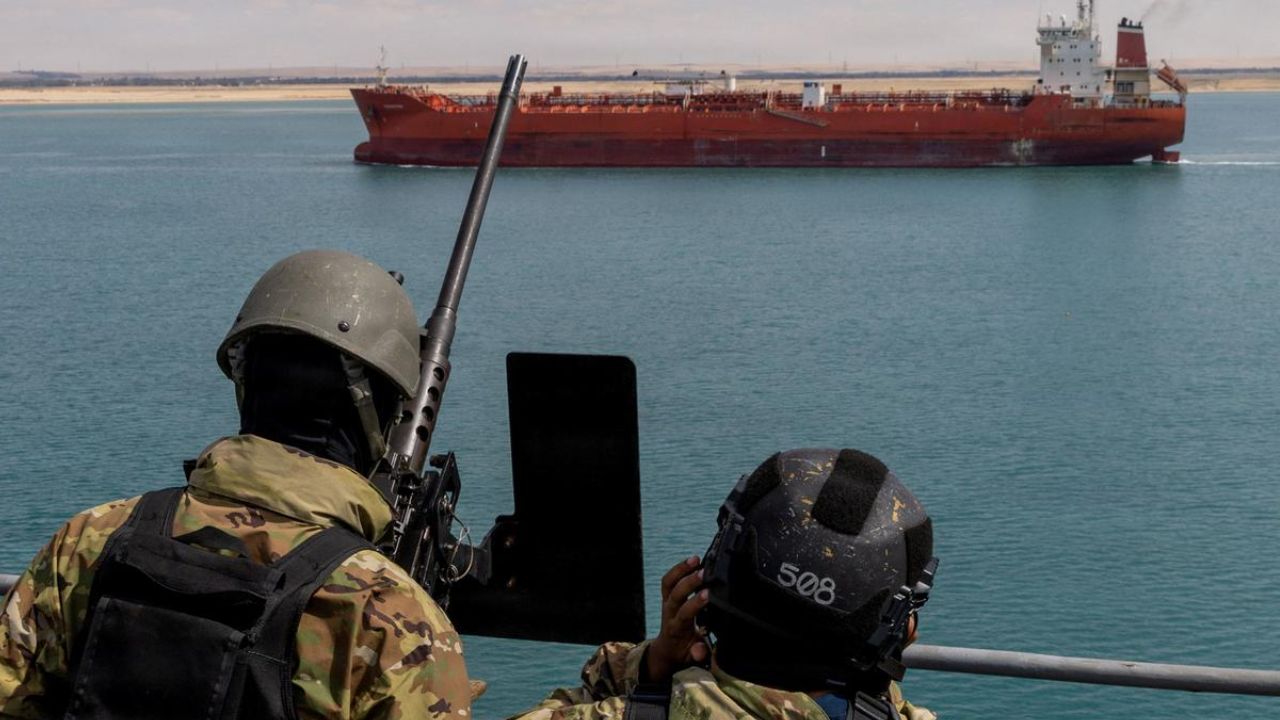

Tehran: In a significant development for global energy markets, three Iranian oil tankers carrying a combined 5 million barrels of crude oil have successfully transited the Strait of Hormuz, following US President Donald Trump’s decision to ease restrictions and lift the blockade on Iranian oil shipments.
The successful passage of the tankers marks one of the first major signs of easing tensions in the Gulf region after months of uncertainty surrounding maritime security and oil exports.
According to Iranian state media reports, the three vessels crossed the strategically vital waterway without incident and are now headed toward international markets.
Iranian state media reports that three Iranian oil tankers carrying a total of 5 million barrels of crude oil have successfully transited the Strait of Hormuz, following Trump’s decision to lift the blockade.
— Clash Report (@clashreport) June 17, 2026
Formal negotiations on a comprehensive peace agreement between the United States and Iran are set to begin on Friday at the Burgenstock mountain resort in Switzerland, shortly after the signing of a framework agreement aimed at ending months of hostilities.
Officials familiar with the process said the talks will continue over a 60-day period and focus primarily on Iran’s nuclear program and the phased lifting of international sanctions.
Iranian Foreign Minister Abbas Araghchi confirmed that discussions on a final settlement would commence immediately after the signing ceremony.
“Most likely on Friday, a new round of negotiations between Iran and the United States to reach a final agreement will begin,” Araghchi said. “The final agreement will determine the future of nuclear issues and the lifting of sanctions.”
According to a report by The Wall Street Journal, the United States will allow Iran to immediately resume oil and fuel exports under the framework agreement. The report, citing sources familiar with the arrangement, said sanctions waivers covering oil sales, banking, transportation and insurance services will take effect as soon as the deal is formally signed.
Debate in Washington
The proposed agreement has sparked debate in Washington, with several Republican lawmakers demanding access to the deal’s text and detailed briefings from the Trump administration before offering their support.
“Let’s look at it and see what it actually is,” Senate Majority Leader John Thune said.
A senior US official, speaking on condition of anonymity, said the framework agreement has already been electronically signed by President Donald Trump, Vice President JD Vance, Iranian Deputy Foreign Minister Majid Takht-Ravanchi and senior negotiator Mohammad Bagher Ghalibaf.
Frozen Assets and Nuclear Inspections
Seeking to reassure critics, Vice President JD Vance said the agreement would not involve any transfer of US taxpayer funds to Iran. His remarks came amid reports in Iranian media suggesting that nearly $12 billion in frozen Iranian assets could eventually be released as part of the broader settlement process.
Vance also confirmed that international nuclear inspectors would be granted access to Iran’s nuclear facilities under the proposed framework.
Regional Tensions Remain High
Despite optimism surrounding the diplomatic breakthrough, fresh Israeli military strikes in southern Lebanon threatened to cast a shadow over the upcoming negotiations.
The Israeli military said it targeted a “suspicious vehicle” near an area where its troops were operating and also struck a rocket-launching site after intercepting incoming projectiles.
In response, Iran’s central military command warned Israel to “await a harsh response.”
Lebanon’s state-run news agency reported that Israeli strikes hit two vehicles in Mayfadoun and another in nearby Shukeen, killing at least four people.
Lebanon became directly involved in the conflict in March after Hezbollah launched rockets at Israel following the killing of Iran’s Supreme Leader, prompting Israeli airstrikes and a subsequent ground offensive.
Ross Harrison, a senior fellow at the Middle East Institute, warned that the Lebanon front could become “the biggest ultimate spoiler” to the peace process.
Mixed Reactions Inside Iran
Reaction within Iran has been divided. The ultraconservative newspaper Vatan-e Emrooz described the framework agreement as a “Trump surrender document,” while Araghchi urged caution, pointing to Iran’s experience with previous failed agreements.
“We have a history of broken commitments. We have a history of agreements being torn up. All of this remains in our minds,” the foreign minister said.
Uranium Dispute Still Unresolved
One of the most contentious issues remains Iran’s stockpile of highly enriched uranium. US and Israeli officials continue to push for its removal, with intelligence assessments suggesting much of the material may have been buried following US strikes last year.
Tehran, however, insists that it retains the right to continue uranium enrichment for peaceful purposes, ensuring that the issue will remain at the center of negotiations as both sides attempt to reach a lasting agreement.
The Strait of Hormuz is one of the world’s most important energy chokepoints, with a substantial share of global crude oil exports passing through it every day.

Comments are closed.