
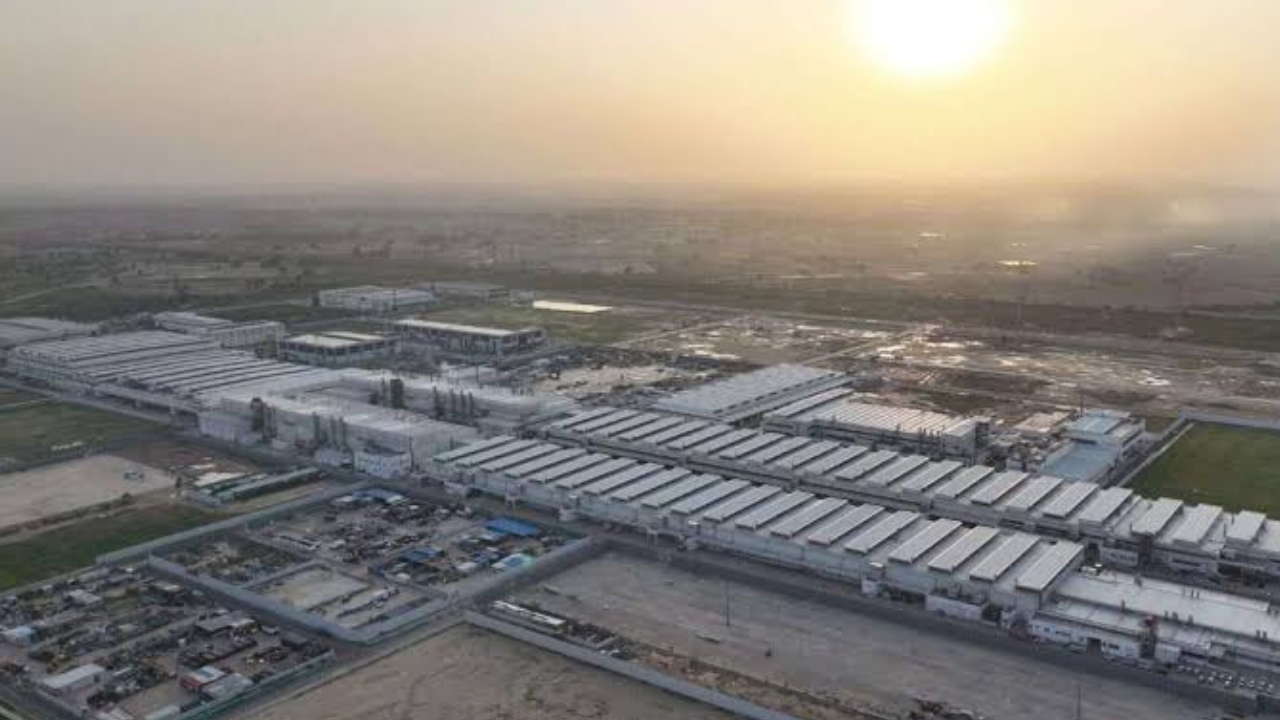

India’s leading automobile company ‘Maruti Suzuki’ has set up its most modern and grand vehicle manufacturing plant at Kharkhoda in Haryana. The plant was officially inaugurated in July 2026 by Indian Prime Minister Narendra Modi and Japanese Prime Minister Sanae Takaichi. It is a great example of ‘Make in India’ and India-Japan Economic Partnership.
Massive expansion and investment
Maruti Suzuki has invested a whopping Rs 35,000 crore for this mega project spread over an area of 800 acres. This is the company’s fourth largest manufacturing plant in India. The plant currently has an annual production capacity of 5 lakh vehicles, which will be increased to 10 lakh (1 million) units in the future. Once operational at full capacity, it will be one of the largest car manufacturing plants in the world. The project is providing direct employment to more than 21,000 people.
Inauguration of Maruti Suzuki’s Kharkhoda Plant by Prime Minister Narendra Modi; Aim to make 40 lakh vehicles every year!
Industry 5.0 and cutting-edge technology
The Kharkhoda plant is based on Suzuki’s ‘Smart Factory’ concept. Here ‘Industry 5.0’ technology has been used to increase the accuracy, safety and speed of production. The plant deploys special AI-powered and human-powered robots, or ‘cobots’, which work on assembly lines with the help of employees. Commercial production of the popular car ‘Maruti Brezza’ was successfully started from this plant in February 2025.
Environmentally friendly and sustainable development
This project is a very important step in terms of environmental conservation. 100% Renewable Energy: The entire power requirement of this plant is met by solar energy and green energy. At present there is a 20 MW solar power plant here, which will be increased to 70 MW by 2030.
Maruti Suzuki’s new 7-seater electric MPV to hit the market; Powerful range, premium features and SUV-like looks!
Zero Liquid Discharge (ZLD): Not a single drop of water is wasted from the plant. 100% of waste water is treated and recycled. There is also a good rainwater harvesting facility here.
Biogas Plant: A biogas plant with a capacity of 10 tonnes per day is also being set up here to reduce carbon emissions.
In addition, rail sidings are being constructed directly within the plant for vehicular traffic, which will reduce road traffic congestion and fuel consumption. Maruti Suzuki aims to produce 40 lakh vehicles per annum by 2030-31, and the Kharkhoda plant will play a key role in that.

Comments are closed.