
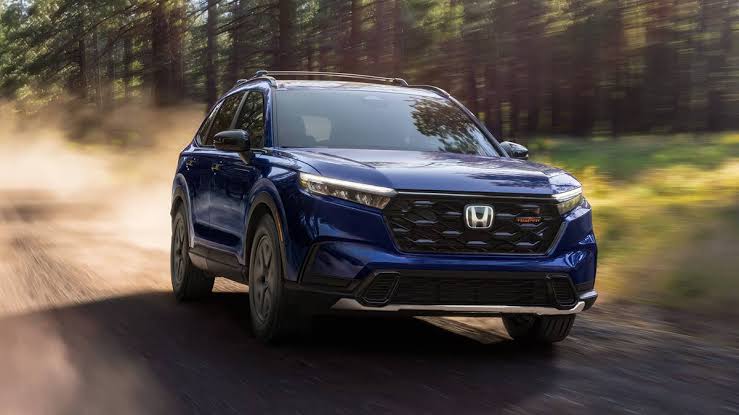

For years, the Ford F-150 has been the benchmark for vehicle sales in the United States. It has dominated the market with remarkable consistency, rarely giving rivals an opportunity to challenge its position. But halfway through 2026, the story looks very different.
The Honda CR-V has emerged as the country’s best-selling vehicle, pushing the legendary pickup truck into second place. While the battle is far from over, the first six months of the year have highlighted how shifting market conditions and changing consumer preferences are reshaping America’s automotive landscape.
Honda Takes the Lead
During the first half of 2026, Honda delivered 226,114 units of the CR-V, comfortably ahead of the Ford F-150, which recorded an estimated 209,311 sales. The Toyota RAV4, another long-time favorite among American buyers, followed with 153,955 units.
The milestone is particularly significant because the Ford F-150 has led total U.S. vehicle sales in 15 of the past 16 years. The only exception during that period was the Toyota RAV4, making Honda’s rise to the top an important moment for the SUV segment.
Supply Issues Slow Down Rivals
Honda’s success has certainly been helped by challenges faced by its biggest competitors.
Toyota has been navigating production changes for the redesigned 2026 RAV4. The transition between manufacturing facilities has affected inventory levels, resulting in fewer vehicles reaching dealerships. Consequently, RAV4 sales have dropped sharply compared to the same period last year.
Ford has encountered its own setbacks. A fire at one of its key aluminum suppliers in late 2025 disrupted production of the F-150 for several months. Although manufacturing has resumed, limited inventory continued to affect deliveries throughout much of the first half of the year.
These supply constraints created an opening in the market, and Honda was ready to seize it.
Hybrid Demand Continues to Grow
The CR-V’s popularity isn’t solely the result of competitors struggling with inventory. Honda has successfully positioned the SUV as one of the most attractive hybrid options in its class.
More than half of all CR-Vs sold this year have been hybrid models, reflecting the growing demand for fuel-efficient vehicles without the range concerns associated with fully electric cars.
Honda has also strengthened customer loyalty through its leasing programs. A large percentage of existing CR-V lease customers have chosen to stay with the brand, while lease penetration has steadily increased, helping maintain strong showroom traffic.
Strong Momentum Despite Limited Inventory
Recent sales figures suggest that consumer demand for the CR-V remains exceptionally strong. Sales increased by 19 percent in May and accelerated further with a 30 percent jump in June.
Interestingly, dealerships are operating with only around two weeks of available inventory. Despite these tight stock levels, Honda has continued running production at full capacity to meet customer demand.
The combination of healthy demand and disciplined inventory management has allowed the company to maintain its sales momentum even as supply remains constrained.
The Race Is Far From Finished
While Honda currently holds the top position, the second half of 2026 is expected to be much more competitive.
Toyota is gradually increasing production of the new-generation RAV4, while Ford anticipates normal F-150 production levels after recovering from earlier supply disruptions. As inventory improves, both manufacturers are expected to regain lost ground.
For now, however, the Honda CR-V has accomplished something few vehicles have managed in recent years. It has dethroned America’s long-standing sales champion, proving that a combination of efficient hybrid technology, strong customer retention, and timely execution can shift the balance in one of the world’s most competitive automotive markets.

Comments are closed.