

Hyundai Creta EV Prices Drops Over Rs. 7 Lakh To Rs 10.99 Lakh With BaaS: Here’s How The Math Works

Hyundai has introduced a Battery-as-a-Service option for the Creta Electric, reducing its advertised starting price to Rs 10.99 lakh ex-showroom. The battery charge begins at Rs 3.90 for every kilometre travelled.
The figure brings the showroom price close to that of the entry-level petrol Creta. It does not make the electric version a Rs 10.99 lakh car in total-cost terms.
Under the conventional ownership model, the 42 kWh Creta Electric Executive costs approximately Rs 18.03 lakh ex-showroom. BaaS removes Rs 7.04 lakh from the initial vehicle price and converts the battery into a continuing usage-linked financial obligation.
Electricity, insurance, finance charges and maintenance remain separate.
The difference between the outright and BaaS prices is Rs 7.04 lakh.
At the advertised starting rate of Rs 3.90 per kilometre, a simple division produces a theoretical crossover point of approximately 1,80,500km. That means the cumulative per-kilometre battery payments would equal Rs 7.04 lakh after about 1.8 lakh kilometres.
This is not a true break-even calculation. It ignores interest, finance fees, taxes, changes in the per-kilometre rate, residual value and the time value of money. It also assumes that the starting rental remains unchanged for the entire period.
The calculation nevertheless shows why BaaS can appeal to lower-mileage owners. A buyer driving 1,000km a month would pay approximately Rs 3,900 monthly or Rs 46,800 annually towards the battery. At 1,500km a month, the charge rises to Rs 5,850 monthly and Rs 70,200 annually. At 2,000km, it becomes Rs 7,800 monthly and Rs 93,600 annually.
Over five years, those simplified totals would be Rs 2.34 lakh, Rs 3.51 lakh and Rs 4.68 lakh respectively, before finance costs or contractual adjustments.

The Rs 3.90-per-kilometre amount is a battery payment. It is not the cost of charging the car. An owner must still pay for the electricity used at home or at a public charger. At an illustrative home tariff of Rs 8 per kWh and energy consumption of 7km per kWh, electricity would add approximately Rs 1.14 per kilometre.
The combined battery and home-energy cost would then be about Rs 5.04 per kilometre before charging losses. Public fast charging can cost considerably more, depending on the operator and location.
A petrol Creta returning 14km per litre with petrol at Rs 100 per litre would cost roughly Rs 7.14 per kilometre in fuel. Under those assumptions, the BaaS electric model would retain a running-cost advantage, but it would be much smaller than a comparison based only on electricity. Actual results will vary with traffic, air-conditioning use, driving style, electricity tariff and charging source.
The BaaS Creta Electric is not fitted with a smaller or lower-specification battery. The standard model uses a 42 kWh battery and an electric motor producing approximately 135 PS and 200 Nm. Hyundai claims a range of 420km.
The larger 51.4 kWh version produces approximately 171 PS and 200 Nm, with a claimed range of 510km. Both figures are laboratory-certified values rather than guaranteed real-world distances.
Hyundai’s current product information states that a 100 kW DC fast charger can take the battery from 10 to 80 percent in approximately 39 minutes. The earlier 58-minute figure in the original story is no longer Hyundai’s current published specification.
A 7.4 kW AC wallbox can charge the 42 kWh battery from 10 to 100 percent in approximately six hours under stated conditions. Hyundai has also expanded the availability of the 7.4 kW wallbox with applicable higher variants.
The standard battery warranty is listed at up to eight years or 1,60,000km, whichever comes first. Buyers using BaaS should confirm how warranty claims, accidental battery damage and replacement obligations are allocated between Hyundai, the financing partner and the customer.
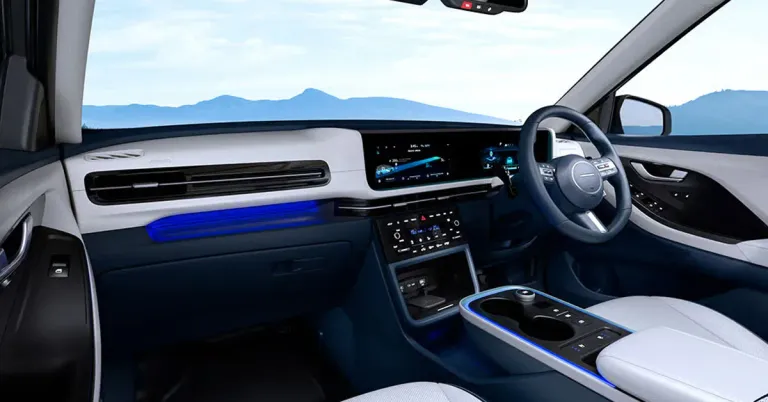
Hyundai has announced the starting vehicle price and battery rate but has not publicly released a complete variant-wise BaaS price table or all contractual terms.
Several details can materially affect the economics:
The agreement may specify a minimum monthly running commitment even if the vehicle covers fewer kilometres. The battery rate could differ according to loan tenure, variant, financier or annual usage.
Buyers also need clarity on early repayment, foreclosure charges, battery ownership after the finance term and what happens if the vehicle is sold before the contract ends.
A used buyer may need to assume the battery agreement or arrange fresh financing. If transfer terms are complicated, resale could take longer or require the original owner to settle the remaining battery obligation.
The contract should also state who pays when the battery is damaged in an accident, loses capacity outside the warranty threshold or requires replacement because of water ingress or misuse.
These terms determine whether BaaS is a genuine reduction in ownership cost or primarily a method of reducing the visible purchase price.
The strongest financial argument for BaaS is not necessarily the per-kilometre cost. It is the lower initial loan requirement.
Removing Rs 7.04 lakh from the vehicle price reduces the down payment and conventional car EMI. This may allow a customer to buy the Creta Electric without taking a loan of more than Rs 18 lakh before insurance and registration.
The battery payment then varies with usage – or is represented as a usage-linked EMI – rather than being fully financed as part of the vehicle.
For customers with predictable mileage, this can improve monthly cash flow. It can also reduce the interest paid on the conventional vehicle loan if the battery financing terms are competitive.
However, the buyer is replacing one large loan with two financial obligations: the car loan and the battery agreement. The correct comparison is the combined monthly outflow over the intended ownership period, not the reduced vehicle EMI in isolation.
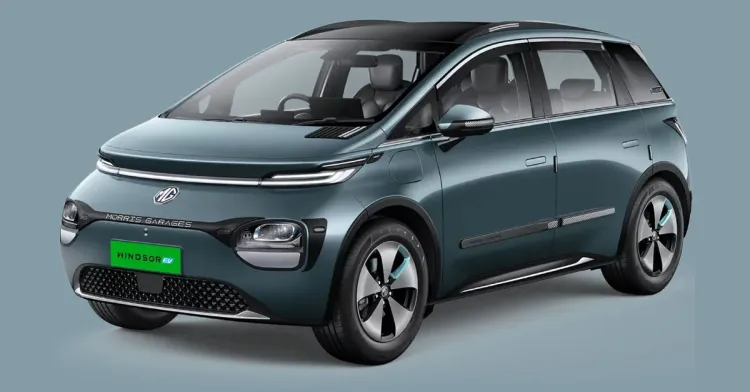
MG Motor was the first manufacturer to use BaaS at scale in India’s passenger-EV market. The Windsor EV starts at Rs 9.99 lakh under its BaaS programme, with battery charges beginning around Rs 3.90 per kilometre. Rates vary according to the battery, variant and financing arrangement.
Maruti Suzuki subsequently launched the e Vitara with a BaaS entry price of Rs 10.99 lakh and a starting battery payment of Rs 3.99 per kilometre.
Tata has extended the model further down the market. The Punch EV is available from Rs 6.49 lakh under BaaS, with battery payments starting at approximately Rs 2.60 per kilometre.
The Punch EV is a smaller vehicle and not a direct Creta rival, so its lower price and rental should not be compared without considering battery capacity, range and vehicle class.
The common strategy is clear: manufacturers are separating the most expensive EV component from the showroom price so that the vehicle appears directly comparable with an internal-combustion model.

The base petrol Creta is priced close to Rs 11 lakh, which makes Hyundai’s Rs 10.99 lakh BaaS number highly effective in advertisements and showroom comparisons.
The two products still have different cost structures. The petrol buyer owns the engine and fuel system after paying the vehicle price and then purchases fuel. The BaaS buyer purchases the vehicle without the battery and continues paying both a battery charge and electricity.
The electric model may remain cheaper to operate, especially for customers charging at home. It also offers lower scheduled maintenance and stronger low-speed performance.
But BaaS is not a Rs 7.04 lakh discount. It is a financing structure that trades a lower entry price for a continuing obligation. For a buyer covering 1,000-1,500km a month and keeping the vehicle for five years, the structure could reduce upfront borrowing without allowing battery payments to approach the removed purchase cost. For a high-mileage customer or someone planning very long ownership, outright purchase may be simpler and eventually cheaper.
Comments are closed.