
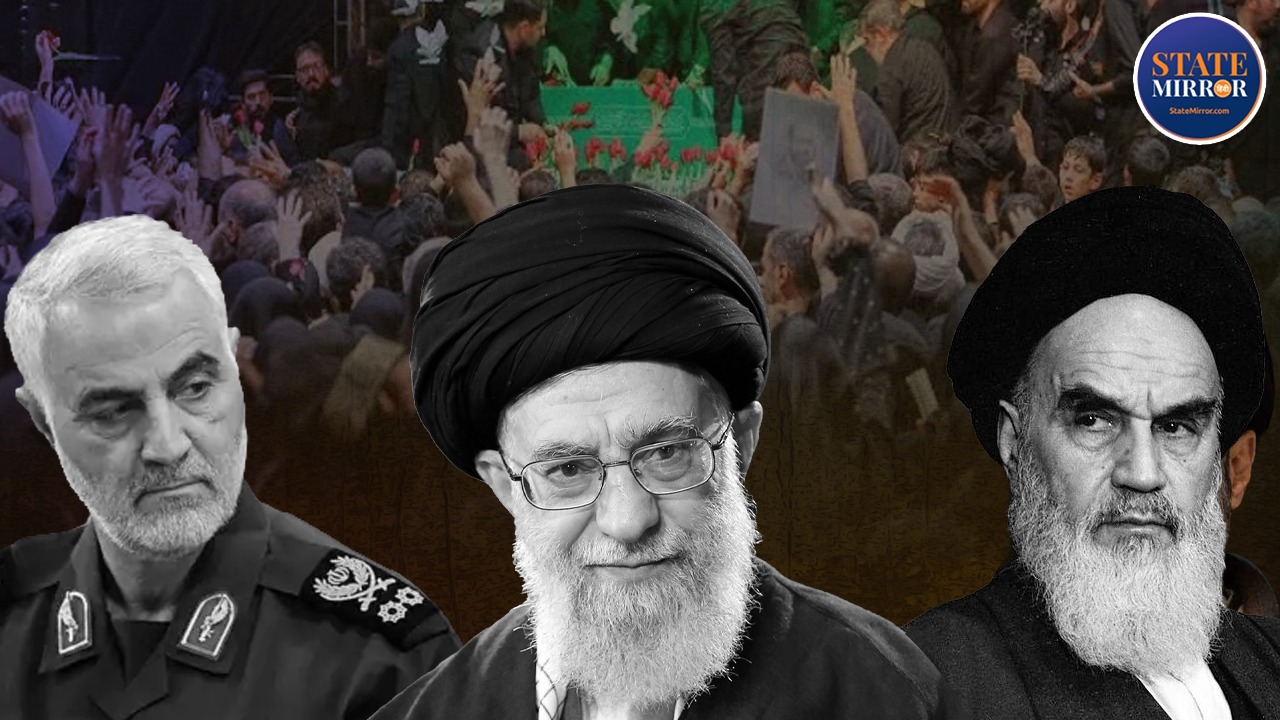
How prepared is Iran to avoid a situation like 1989 and 2020? Crores of people gathered at Khamenei’s funeral, what kind of preparations are made for crowd control?

Supreme leader of Iran Ayatollah Ali Khamenei It is expected that not lakhs but crores of people will gather for the last darshan and funeral rites. This will not happen for the first time. Even before this, Iran has seen two such crowd gatherings. During the funeral of Ayatollah Ruhollah Khomeini in 1989 and during the funeral of General Qassem Soleimani in 2020. In both the incidents the crowd went out of control and a large number of people were injured and died. Based on these experiences, Iran has made many major changes in its crowd management strategy this time. Tight security arrangements have been made.
1989: What happened at Khomeini’s funeral?
On June 3, 1989, Ayatollah Ruhollah Khomeini, leader of the Iranian Revolution, died. The next day, an estimated 80 lakh to 10 million people took to the streets in Tehran for his last rites and funeral. Due to such a huge crowd, the security system completely broke down. People broke the barricade and moved forward to reach the coffin, many started touching the coffin and taking clothes. The situation became so bad that the coffin fell on the ground, the shroud burst and the body had to be taken to a safe place again by helicopter. After the crowd was controlled, the last rites were performed again. It is counted among the worst state funerals in modern history.
2020: What happened in the funeral procession of Qasim Sulemani?
Exactly 31 years later, i.e. on January 3, 2020, after the death of General Qasim Suleimani in an American drone attack, a funeral procession was taken out in many cities across Iran. On January 7, a crowd of millions of people gathered in his hometown Kerman. Suddenly a stampede broke out while paying tribute. According to official figures, more than 56 people died while more than 200 people were injured. Due to this accident the funeral had to be postponed for a few hours. The incident showed that overcrowding in an emotional environment can become the biggest security risk.
Learning from both the incidents, the Iranian government has made preparations for crowd management in view of the millions of people attending Khamenei’s funeral on a large scale. Know what is the complete preparation.
1. Multi Layer Security Circle
Khamenei is the supreme leader of the country, so security will not be limited to crowd control only. The Islamic Revolutionary Guard Corps (IRGC), police, Basij militia, intelligence agencies and the army will jointly form a multi-level security cordon for his funeral. There will be different security layers for VIPs, foreign delegations and common people.
2. The crowd will be divided into several zones
The biggest mistake of 1989 was that the entire crowd gathered at one place. Now there is a possibility that people will be divided into different zones, screening areas and entry routes. By installing big LED screens, people can be given last darshan from a distance so that the pressure on the main venue is reduced.
3. Digital and drone surveillance
Iran now uses AI-based CCTV cameras, drone surveillance, helicopter monitoring and real-time command centres. As the crowd density increases, the control room can open alternative routes and stop the entry of people.
4. Phased Last Darshan
Instead of allowing everyone entry at the same time like in 1989, the last darshan can be conducted over several hours or in stages. This will reduce crowd pressure.
5. Medical and emergency arrangements
After the 2020 stampede, Iran deployed mobile hospitals, ambulance corridors, fire and rescue units and medical rapid response teams to large religious events. This arrangement is likely to be made on a larger scale at Khamenei’s funeral.
6. Separate routes for VIP and general public
Foreign heads of state, religious leaders and senior officials will reach the venue through a separate security route. Separate routes will be set for entry and exit of common people so that the crowd of both the groups does not mix.
7. Control over traffic and public transport
Many roads may be closed in Tehran. There will be special operation of metro and bus services while restrictions may be imposed on private vehicles. Parking can be made on the outskirts of the city and shuttle service can be run from there.
8. Special focus on terrorist and security threats
In view of such a big event, security agencies will also take the possibility of any terrorist attack, drone attack or sabotage seriously. Therefore, along with crowd control, air defense, electronic jamming and counter-drone systems can also remain active.
9. Can a situation like 1989 and 2020 happen again?
This cannot be completely denied. This is because more than 2 crore people are likely to reach Tehran together for the funeral. If this happens, crowd control can become a challenge for any country. However, after the experiences of 1989 and 2020, Iran now has better technology, more trained security forces, digital surveillance and modern crowd management systems. Still, the biggest risk will be emotional rush, sudden increase in pressure and gathering of people at one place.
Khomeini’s funeral in 1989 and Qassem Soleimani’s funeral procession in 2020 proved to be the biggest lessons of crowd management for Iran. If Ayatollah Ali Khamenei’s funeral takes place in the future, Iran will likely implement the largest security and crowd control system in history.
Nevertheless, the size of the event may be so large that it may not be possible to completely eliminate the risk; Success will depend on how effectively the crowd is staged and controlled.

Comments are closed.