
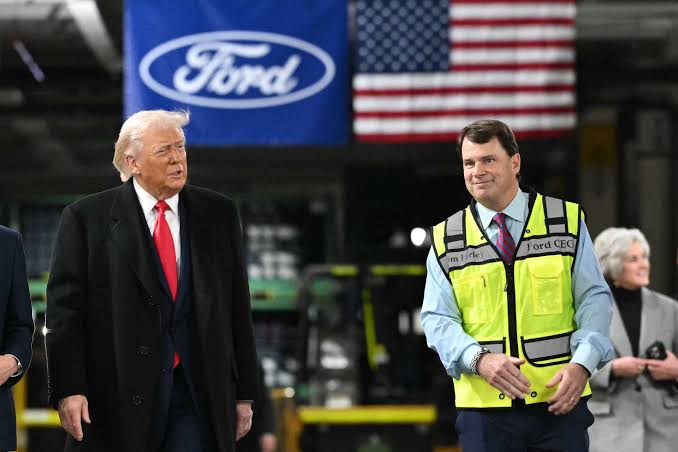

Years of recalls have tested Ford, but the automaker believes the worst may finally be behind it.
For much of the past decade, Ford has found itself in an uncomfortable position. While the company continued to dominate the American pickup truck market and proudly promoted its manufacturing heritage, it also became synonymous with one of the industry’s biggest headaches: vehicle recalls.
That reputation has come at a heavy price. Billions of dollars in warranty expenses, declining customer confidence, and repeated quality concerns have weighed on the company despite strong vehicle demand.
Now, Ford believes the tide is beginning to turn. Chief Executive Jim Farley says years of restructuring, engineering improvements, and tougher quality controls are finally producing measurable results. Although recalls have not disappeared entirely, the company argues that its newest vehicles are reaching customers with significantly fewer defects than before.
For Ford, this isn’t simply about improving rankings. It’s about restoring trust.
A difficult chapter that Ford wants to leave behind
Ford’s recall record has become one of the biggest challenges of Farley’s leadership. The company issued a record number of recalls in 2025, affecting roughly 13 million vehicles across 153 separate campaigns. The trend has continued into 2026, with more than 50 recalls already announced involving over 12 million vehicles.
The latest action includes hundreds of thousands of SUVs and F-150 pickup trucks built between the 2018 and 2021 model years.
While recalls demonstrate that manufacturers are willing to correct problems, they also highlight weaknesses in development, production, or supplier quality. More importantly, they create expensive warranty claims and can gradually erode consumer confidence.
Farley admits those years have been painful but insists Ford has learned from every mistake. According to the CEO, the company is entering an entirely different phase, one where preventing problems is far more important than fixing them after customers have already taken delivery.
Quality improvements are beginning to show measurable results
The strongest evidence supporting Ford’s optimism came from one of the industry’s most respected quality surveys.
Ford recently secured the top position among mainstream automotive brands in J.D. Power’s Initial Quality Study, marking the company’s best performance in more than a decade.
The study measures the number of problems owners experience during the first 90 days of vehicle ownership, making it one of the most closely watched indicators of manufacturing quality.
Only premium brands Porsche and Genesis finished ahead of Ford overall.
The result represents a dramatic improvement from only a few years ago, when Ford ranked near the bottom of the survey.
The company also improved across nearly every major category, including software reliability, infotainment systems, powertrain performance, and overall vehicle assembly. For a manufacturer that has struggled with electronic glitches and software-related recalls in recent years, the improvement carries particular significance.
Warranty costs are finally moving in the right direction
Quality problems affect far more than customer satisfaction.
Every repair covered under warranty directly impacts profitability, making warranty expenses one of the most closely monitored financial indicators for automakers.
Ford’s warranty costs peaked at nearly $4.8 billion in 2023, placing enormous pressure on earnings. Since then, the company says it has steadily reduced those costs.
Management reported approximately $1.5 billion in warranty and material savings during 2025 after adjusting for production volume and vehicle mix, while additional reductions are expected throughout 2026.
Financial analysts have welcomed the improvement. Several observers believe Ford may finally be reaching the point where warranty expenses stop acting as a major drag on profitability, although they caution that consistent performance over several years will be needed before declaring victory.
Building quality into every stage of development
Farley believes solving quality problems requires more than asking employees to work harder.
Instead, Ford fundamentally changed how vehicles are developed.
The company has hired hundreds of engineering specialists, strengthened collaboration between suppliers and internal teams, expanded product testing throughout development, and reorganised departments to identify defects earlier.
Rather than waiting until production begins, engineers now attempt to identify potential failures while vehicles remain in development.
Finding problems before assembly lines begin operating is considerably less expensive than issuing recalls years later.
Ford has also introduced more rigorous review meetings involving engineering, manufacturing, supplier management, and software teams to ensure issues are identified before customers encounter them.
Artificial intelligence is helping, but experience still matters
Like many manufacturers, Ford has increasingly incorporated artificial intelligence into its engineering operations.
AI tools now help engineers analyse testing data, identify unusual patterns, and predict potential component failures before production.
However, Farley says technology alone cannot replace decades of engineering experience.
After expanding its AI capabilities, Ford realised it also needed veteran engineers to interpret complex findings and mentor younger teams.
Many experienced specialists who had previously left the company were brought back specifically to strengthen engineering expertise.
Farley believes combining artificial intelligence with seasoned professionals creates a far more reliable quality system than relying on either alone. Technology may identify warning signs, but experienced engineers often understand why those problems occur and how to eliminate them permanently.
Executive bonuses now depend on product quality
Ford has also changed how it measures leadership performance.
Previously, executive compensation focused heavily on sales, profitability, and operational targets.
Today, quality plays a much larger role.
Senior executives are now rewarded based partly on quality improvements, creating direct accountability for reducing defects rather than simply increasing production.
The company has also recruited executives with extensive manufacturing and quality management backgrounds from outside industries, bringing fresh perspectives to Ford’s operations.
The message throughout the organisation is increasingly clear: building better vehicles is everyone’s responsibility.
The next challenge could be even tougher
Despite encouraging progress, Ford faces an even bigger test over the next several years.
The automaker plans to introduce an entirely new generation of vehicles across North America.
Launching multiple new models simultaneously is one of the most complicated tasks any manufacturer can undertake.
Modern vehicles combine traditional mechanical engineering with sophisticated software, electric drivetrains, advanced driver assistance systems, and increasingly connected technologies.
Even a small software issue can affect thousands of vehicles.
Farley acknowledges the challenge but believes Ford is far better prepared than it was several years ago.
The company intends to apply every lesson learned during its quality transformation to these upcoming launches.
Success would validate years of investment.
Failure could quickly erase much of the progress already achieved.
Customer confidence remains the ultimate goal
Although Ford celebrates its improved initial quality ranking, the company knows that long-term durability remains another hurdle.
Independent dependability studies continue to place Ford below several leading competitors when measuring vehicle reliability over multiple years of ownership.
Closing that gap will require sustained improvement beyond the first few months after purchase.
Farley acknowledges that building durable vehicles takes patience.
Unlike sales figures, long-term quality cannot be measured overnight.
Customers need years of ownership before manufacturers know whether engineering improvements truly worked.
That means Ford’s transformation will ultimately be judged not by a single survey or financial quarter, but by how vehicles perform throughout their entire lifespan.
A long road still lies ahead
Ford’s latest quality gains suggest that the company may finally be moving beyond one of the most expensive periods in its recent history.
Improved engineering processes, stronger supplier oversight, expanded testing, experienced leadership, and smarter use of artificial intelligence are beginning to deliver tangible results.
Yet the journey is far from complete.
Recalls continue, older vehicles still require repairs, and maintaining quality during a wave of upcoming product launches will present an entirely new challenge.
For Ford, however, the objective is no longer simply producing America’s best-selling trucks.
The bigger ambition is becoming one of the industry’s most trusted manufacturers again.
Whether that goal becomes reality will depend not on one successful year, but on consistently delivering reliable vehicles for millions of customers over the decade ahead.

Comments are closed.