
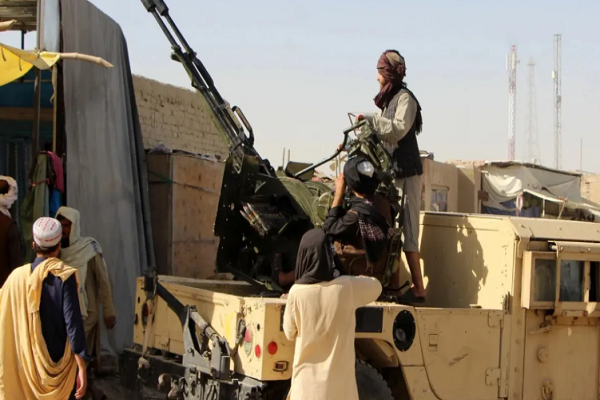

Islamabad, 18 July 2026: A very shocking report has come to light regarding Pakistan’s internal security and military management. According to the information received, the Pakistani military’s operational command and control system has collapsed in the entire area from the western border areas of the Indus River to Skardu. In sensitive provinces like Balochistan and Khyber Pakhtunkhwa, the influence of the army is now limited to only military cantonments i.e. garrison areas. Due to the atmosphere of serious distrust created at the local level, the command of the 11th and 12th Corps of the Pakistani Army is also proving to be ineffective. The Pakistani military establishment, under the leadership of Army Chief General Asim Munir, is facing the most serious command crisis since the 1971 India-Pakistan war.
On the other hand, due to the fierce public protests going on for the last 41 days in Pakistan Occupied Kashmir (PoJK), the northern supply line of the army including the China-Pakistan Economic Corridor (CPEC) has been greatly affected. Due to geographical conditions and continuous obstructions, all the main roads leading to Skardu have been closed, resulting in trucks loaded with Chinese goods being stranded in the Gilgit-Baltistan area. Amidst this serious crisis, there are major difficulties in delivering necessary military supplies and material to the Force Command Northern Areas (FCNA) and 34th Light Infantry Division, due to which the army has now been forced to depend on air supply.
As many as 1730 attacks on security forces in Balochistan and Khyber Pakhtunkhwa provinces.
According to the data of the report, from January 1, 2024 till now, approximately 1730 attacks on security forces have been reported in Balochistan and Khyber Pakhtunkhwa province, in which 19 major attacks have been specially mentioned. In these attacks, 13 times the Frontier Corps and the local police were caused heavy losses, while 6 times army convoys carrying food grains and liquor were targeted. The surprising thing is that no additional troops were sent from the headquarters to help the soldiers trapped in the difficult situation. After the horrific attack on Jafar Express, the Pakistani Army has almost stopped sending troops to dangerous areas, which is due to the low morale of the soldiers and limited resources.
Pakistan’s defense budget in the financial year 2026-27 is $10.8 billion, out of which $3 billion is spent only on pensions. For this reason, the soldiers’ ration has been cut and the quality of food has also deteriorated. The country has no strategic oil reserves and even limited crude oil is left in the refineries. As a result, the army’s counter-terrorism operations such as Zarb-e-Azb, Azm-e-Istehqaam and Shaban have ended without any decisive results, causing the army to lose the support of the local population.

Comments are closed.