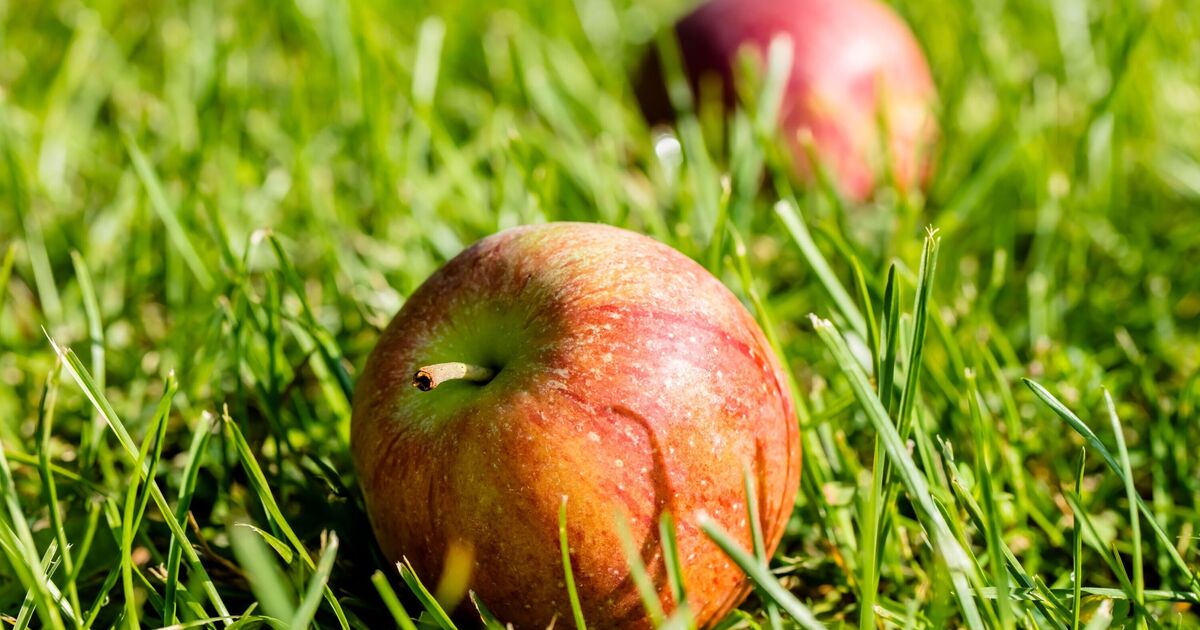
Fruit trees might spill into your space if planted too close to the edge of a garden (Image: Getty)
Fruit trees are very common in older residential areas of the UK. But, depending on which side of the fence any fruits fall, there could be certain legal issues at risk – from theft to fly-tipping.
According to the UK Orchard Network, it was standard landscaping practice during the Victorian era to plant at least one apple, pear, or plum tree in the long, linear gardens of suburban semi-detached and terraced homes. Many of these mature trees still survive today.
But, in 2026, it can lead to some issues with neighbours. It is especially risky when people have a passion for gardening and want to enjoy the literal fruits of their labour, or when people have no interest whatsoever.
Some might wrongly assume that, because the branches of those trees grow into their space, they are entitled to the fruit it produces. This can lead to issues for both neighbours, depending on who picks up the fruit after it falls.
What happens if fruit ends up in my garden?
Under UK law, you do not have the legal right to pick and keep fruit from a neighbour’s tree – even if the branches overhang into your garden. The fruit remains the property of the tree owner, so taking any without permission is considered theft.
Your neighbour technically has the right to enter your garden to retrieve their fallen fruit. Alternatively, collect the fallen fruit and offer it to your neighbour
Do not throw the fruit straight back over the fence without asking. According to Hibberts Solicitors, this can be classed as fly-tipping and lead to separate fines and legal issues should your neighbour pursue a case.
The only exception to this rule is if the fruit falls from a tree in a public space or common land. In this situation, it is usually fine to take it as it would be classed as foraging.
Fruit that hangs into your garden is not technically yours (Image: Getty)
What if they won’t take it back?
If the neighbour refuses to collect the fruit and it rots, creates a slip hazard, or attracts pests, it can be classed as a legal nuisance. This is when the problem goes from being solved by a simple neighbourly arrangement to needing more support.
To start, write a polite request asking your neighbour to clear the fallen fruit or manage the overhanging branches. Keep a copy as written proof of your communication.
If this fails to improve the situation, contact your local Environmental Health department. If the rotting fruit becomes a severe health or pest hazard, and your neighbour ignores the issue, they could be the ones liable for hefty fines.
Under the Environmental Protection Act (1990), the local authority can issue an Abatement Notice to the tree owner. This only tends to happen if the rotting material attracts vermin or creates an offensive, unhygienic odour.