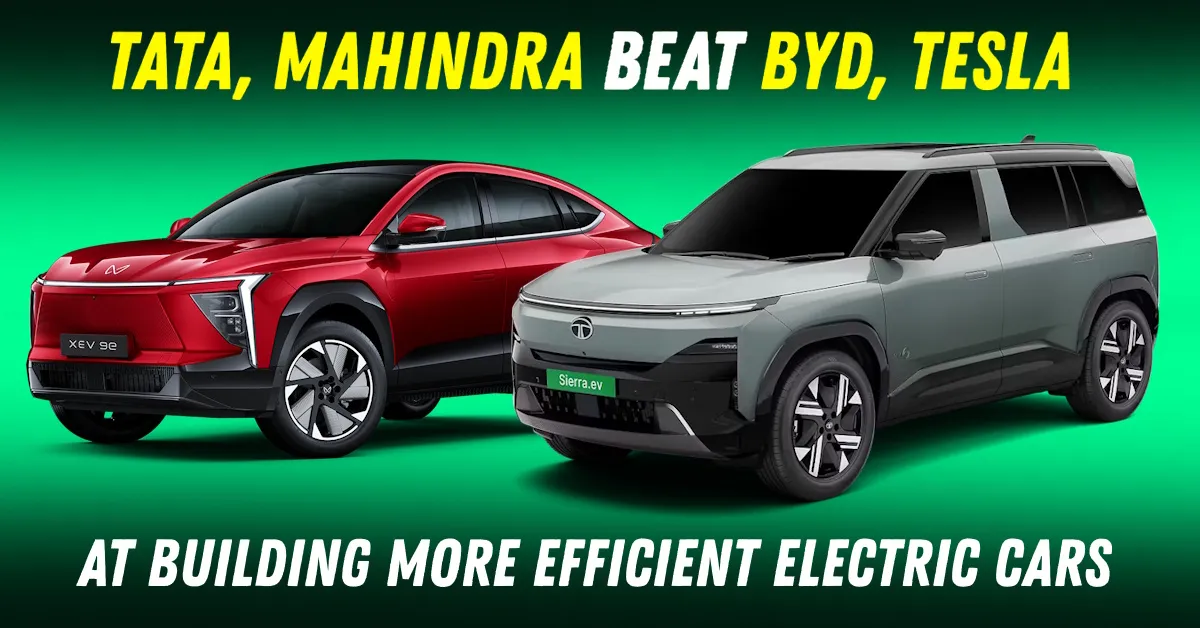
A lot of times, when we think of the best electric automakers, we think that the American Tesla Inc. or Chinese BYD might be on top of every list, right? Well, things are changing, and now Indian car manufacturers are also getting recognised globally. Recently, Tata Motors and Mahindra Automotive achieved a major global milestone in the electric vehicle space. According to the International Council on Clean Transportation (ICCT) Global Automaker Rating 2025, Tata Motors and Mahindra have been named as the world’s two most energy-efficient electric vehicle manufacturers. These companies have taken over EV giants Tesla and BYD.
It has to be noted that although Tesla and BYD dominate globally in terms of EV sales and technology, the ICCT report has highlighted that Tata Motors and Mahindra are currently building electric cars that consume less electricity to travel the same distance. This achievement is very important because currently India’s EV market is still in its early stages. Getting recognised globally will push Indian EV makers to make more efficient EVs for the country, which could then be sold globally as well.
The ICCT evaluated 22 of the world’s largest automobile manufacturers in its 2025 Global Automaker Rating. The report measured a number of aspects of each company’s transition towards electric mobility. These included EV sales performance, manufacturing decarbonisation, future readiness, and battery-electric vehicle efficiency.
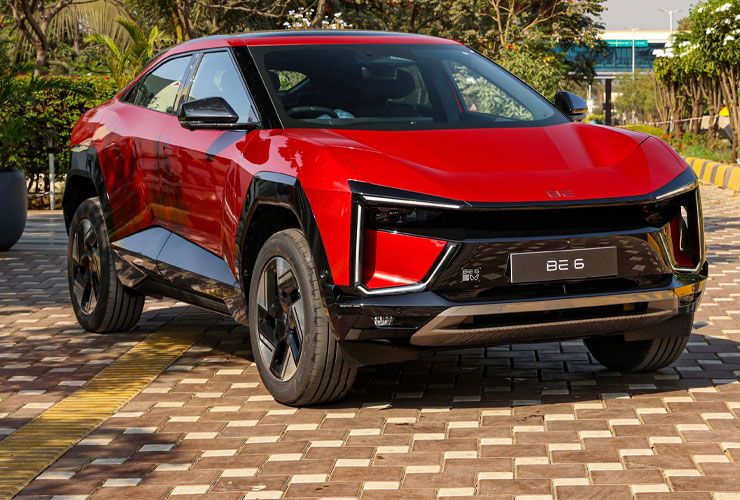
However, when it came to energy efficiency, Tata Motors managed to secure the first position globally. ICCT highlighted that its adjusted energy consumption figure of 106 Wh/km is the highest. Mahindra Automotive has also followed Tata Motors closely in second place with 113 Wh/km.
As for Tesla and BYD, which are regarded as global leaders in electric mobility, they managed to occupy the third and fourth positions respectively. The report also highlighted that the average energy consumption across leading EV manufacturers stood at 131 Wh/km. This means both Indian manufacturers have performed a lot better than the global average.
In simple terms, the lower Wh/km figures indicate that a vehicle requires less electricity to travel every kilometre. This not only improves efficiency, but it also reduces electricity consumption. Additionally, it also helps in lowering the running costs for customers.
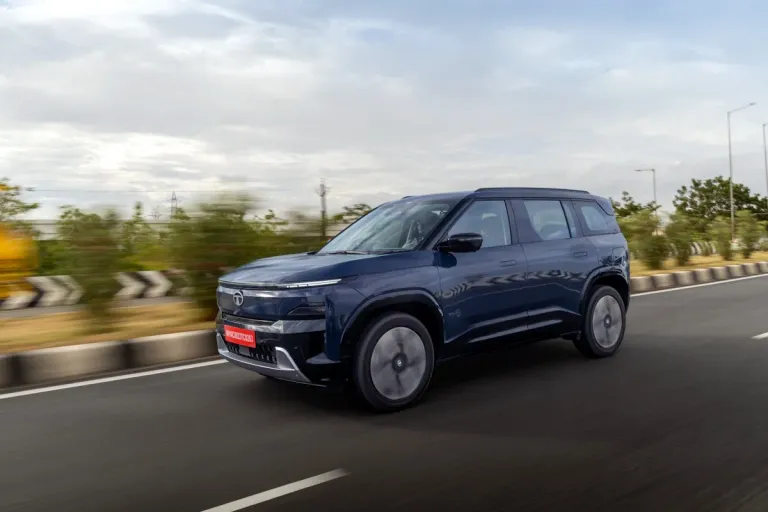
The report has suggested that the strong performance of Tata Motors and Mahindra is due to the type of electric vehicles they currently sell. Unlike many global manufacturers that offer larger, heavier, and more powerful electric SUVs and sedans, the Indian brands have been mainly focusing on compact crossovers. These prioritise efficiency, affordability, and everyday usability.
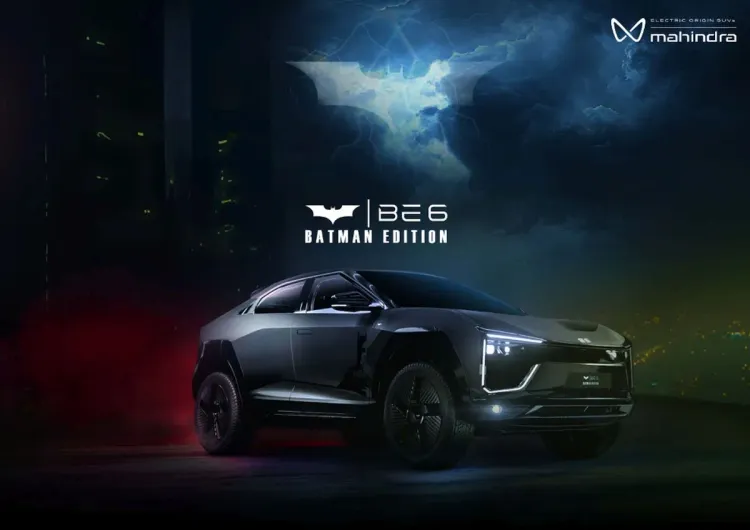
As per the report, models such as the recently launched Tata Sierra.ev and Mahindra BE 6 have been designed around lower energy consumption rather than outright performance. So even with smaller battery packs, these lighter vehicles and optimised powertrains have helped these vehicles in achieving impressive efficiency figures during standardised test cycles.
The ICCT converts each manufacturer’s official test-cycle data into comparable Wh/km values, after which it calculates the average across the entire battery-electric vehicle portfolio. The ranking does not evaluate acceleration, charging speed, or pricing. Instead, it only measures how much electricity each vehicle consumes when travelling a fixed distance under standard laboratory testing conditions.
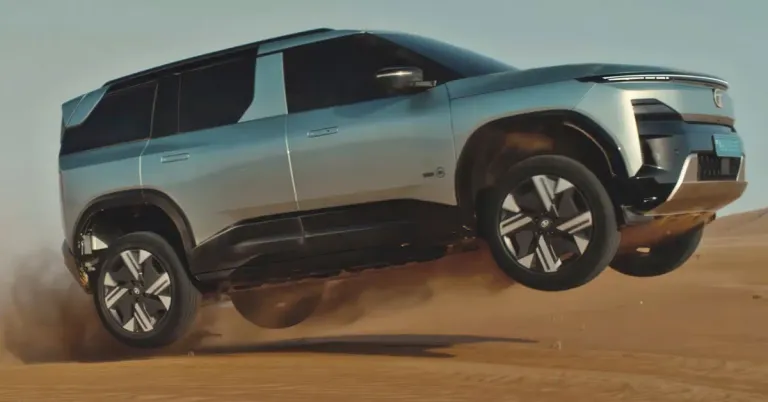
The Tata Sierra.ev and Mahindra BE 6 are the latest examples of how Indian manufacturers have been focusing on energy-efficient electric mobility. The Sierra.ev is available with 63 kWh and 75 kWh battery packs and offers a claimed range of up to 665 km (MIDC). Meanwhile, Tata claims over 500 km of real-world range under its C75 cycle with the larger battery.
The SUV also supports high-speed charging, with 263 km of range being added in just 15 minutes and 20-80 percent charging taking around 26 minutes. As for the Mahindra BE 6, it comes with 59 kWh and 79 kWh battery options and offers an ARAI-certified range of up to 682 km. Both SUVs have been developed to maximise efficiency without compromising everyday practicality.
However, the ICCT has also pointed out that energy efficiency is only one aspect of an electric vehicle. There are other factors, such as charging speed, charging infrastructure, battery technology, and driving range, which still play an equally important role in customer adoption.
Despite leading the global efficiency rankings, it has been mentioned that Indian manufacturers still have work to do in several other areas. The ICCT report has highlighted that Tata Motors is ranked among one of the weakest manufacturers globally in charging speed. Its driving range rankings are also lower when compared to international competitors.
This means that although Tata’s EVs consume less electricity, they still are behind some global rivals when it comes to fast-charging capability and long-distance usability. Additionally, India’s overall EV market is still very small. Currently, electric vehicles account for less than five percent of new passenger vehicle sales in the country when compared to around 25 percent globally.
The Indian government has set an ambitious target of achieving 30 percent EV penetration by 2030. According to the ICCT, reaching this goal will require much better fuel-efficiency regulations, supportive industrial policies, market incentives, and investment in charging infrastructure.
Source