
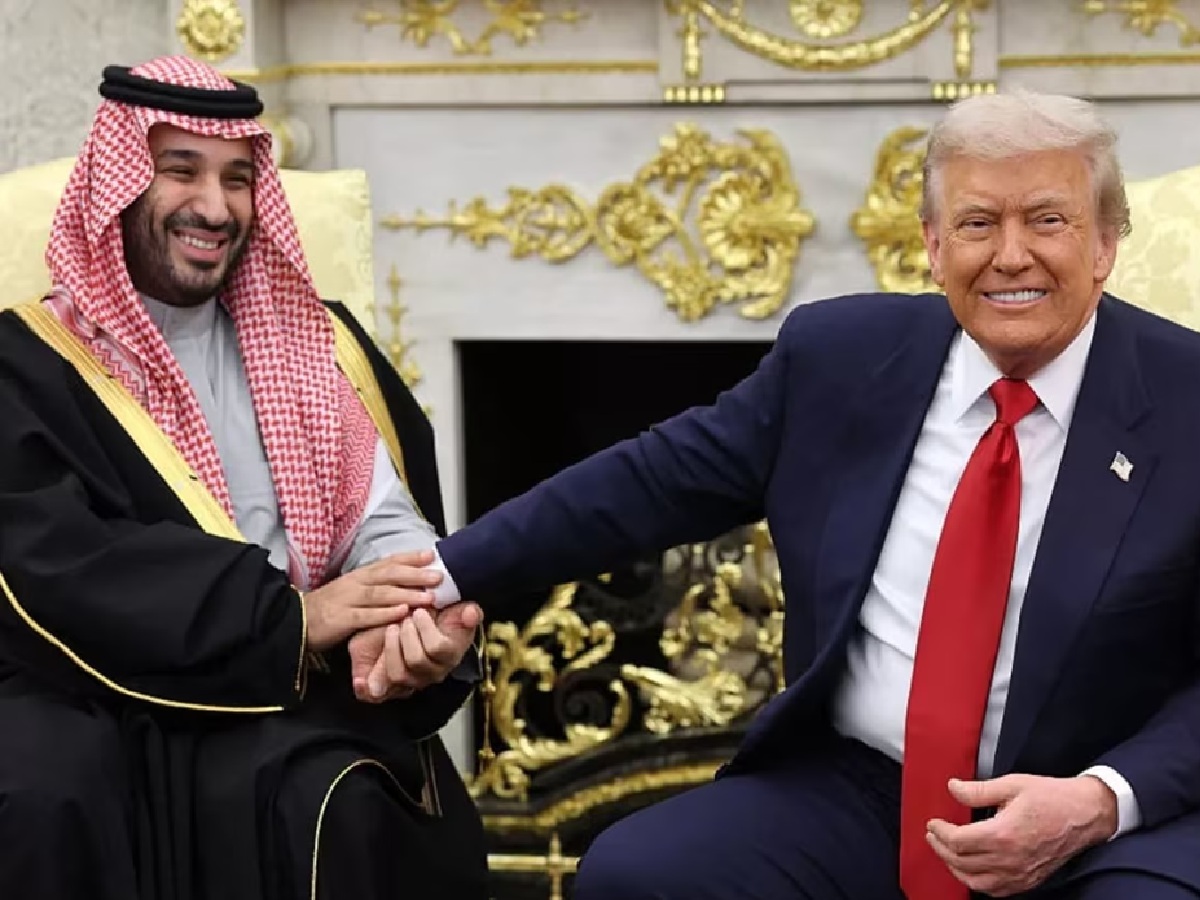
US-Saudi Arabia Sign Historic 30-Year Nuclear Agreement: Experts Fear New Arms Race in West Asia:

Amid escalating geopolitical tensions and ongoing conflicts involving Iran, Washington and Riyadh have struck a monumental geopolitical pact. US President Donald Trump has officially approved a historic, multi-billion-dollar nuclear agreement between the United States and Saudi Arabia, set to remain in effect for the next 30 years. Under the terms of the deal, American corporations will assist in constructing advanced nuclear power plants across the Kingdom. However, the absence of stringent non-proliferation safeguards and security restrictions typically mandated by Washington has triggered global panic, with international experts warning that the pact could ignite a dangerous nuclear arms race.
Unprecedented Concessions: Uranium Enrichment on Saudi Soil
Typically, whenever the United States transfers sensitive nuclear technology to a foreign nation, it enforces rigorous controls to block weaponization. In stark contrast, this new agreement grants Saudi Arabia several major relaxations. Most notably, the Kingdom will now be legally permitted to refine and enrich uranium on its own domestic soil. Under historic US nuclear regulations, partner countries were strictly prohibited from conducting independent uranium enrichment or reprocessing spent nuclear waste, but this critical condition has been entirely waived in the Saudi accord.
IAEA Inspection Restrictions and Bilateral Safety Control
Another controversial element embedded within the multi-billion-dollar agreement involves regulatory oversight. Unlike standard global nuclear pacts, this deal bars the International Atomic Energy Agency (IAEA)—the United Nations’ nuclear watchdog—from conducting unannounced surprise inspections without prior authorization. Instead, the framework dictates that all safety protocols and monitoring guidelines regarding uranium enrichment will be governed strictly through bilateral agreements between the US and Saudi Arabia, bypassing traditional international supervisory bodies and inviting sharp criticism from security analysts worldwide.
The Iran Factor: Mohammed bin Salman’s Warning and Regional Risks
The core anxiety surrounding the pact stems from strategic regional dynamics in West Asia. Saudi Crown Prince Mohammed bin Salman has previously made his intentions clear, openly declaring that if Iran successfully develops an atomic bomb, Saudi Arabia will acquire or build its own nuclear arsenal without hesitation. Because uranium can be refined to weapon-grade levels, experts fear that the absence of strict oversight could enable the Kingdom to pursue military capabilities. With Iran potentially accelerating its nuclear program in response and rival Middle Eastern states eyeing similar technologies, this agreement threatens to destabilize global security and trigger an unprecedented nuclear arms race across the region.

Comments are closed.