
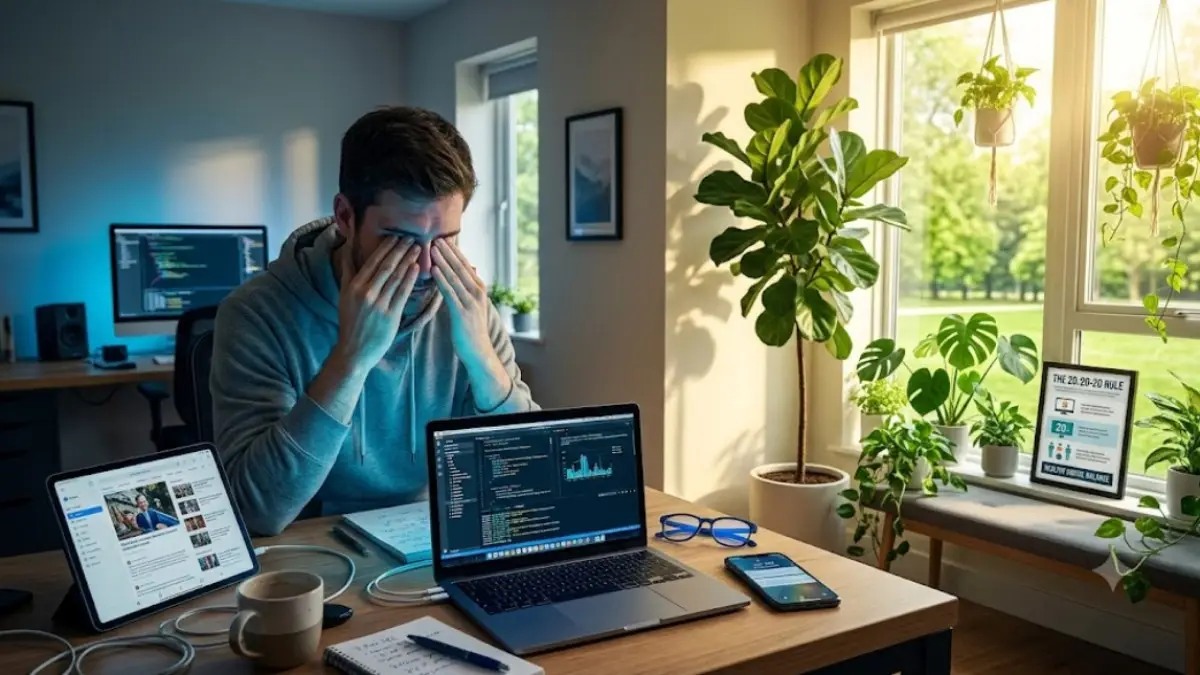
Is too much screen time making the brain dull? Know 5 major side effects and prevention methods

Brain Health Alert: Mobiles, laptops and tablets have become an important part of our lives today. Be it office work, online studies, social media or entertainment, the use of screens for every work is increasing. But if this screen which provides convenience is used excessively then it can affect not only the eyes but also the functioning of the brain. Experts believe that watching screens continuously for long periods of time can cause mental fatigue, distraction and negative effects on memory.
Although screen time does not directly make the brain “dull”, continuous and uninterrupted screen use can affect normal brain functioning. Its effects are especially visible in children, teenagers and people who work on computers for long periods of time.
Side effects of excessive screen time
Decreased concentration and focus
Constant social media notifications, short videos, and rapidly changing digital content expose the brain to new information over and over again. This can make it difficult to concentrate on any one task for a long time. Gradually, focus starts decreasing in studies, office work and daily tasks.
Mental fatigue and brain fog
Staring at screens for hours causes the brain to continuously process information. Due to this, mental fatigue and brain fog like situation may be felt. In such a situation, the person may take more time to think, take decisions and complete normal tasks.
impact on sleep quality
Blue light emitted from mobiles and laptops can affect the production of melatonin hormone in the body. This hormone is necessary for good sleep. The habit of watching screens till late night can increase problems like delay in falling asleep, frequent awakenings and feeling tired the next day.
Affected memory and learning ability
When the brain is constantly busy with short bursts of digital content and multitasking, the ability to retain new information over long periods of time can be affected. Excessive screen time, especially in children and adolescents, can impact learning and academic performance.
increased stress and irritability
Excessive screen time, especially excessive use of social media, can increase stress, anxiety and irritability. Being constantly busy in the digital world makes a person move away from real social activities, which can also affect mental health.
Easy ways to reduce screen time
- Every 20 minutes, look at an object 20 feet away for at least 20 seconds (20-20-20 rule).
- Stop using mobile and laptop at least 1 hour before sleeping.
- Take 5-10 minute breaks between screens.
- Spend some time every day reading a book, taking a walk or doing outdoor activities.
- Use screen time tracking features and set daily limits.

Comments are closed.