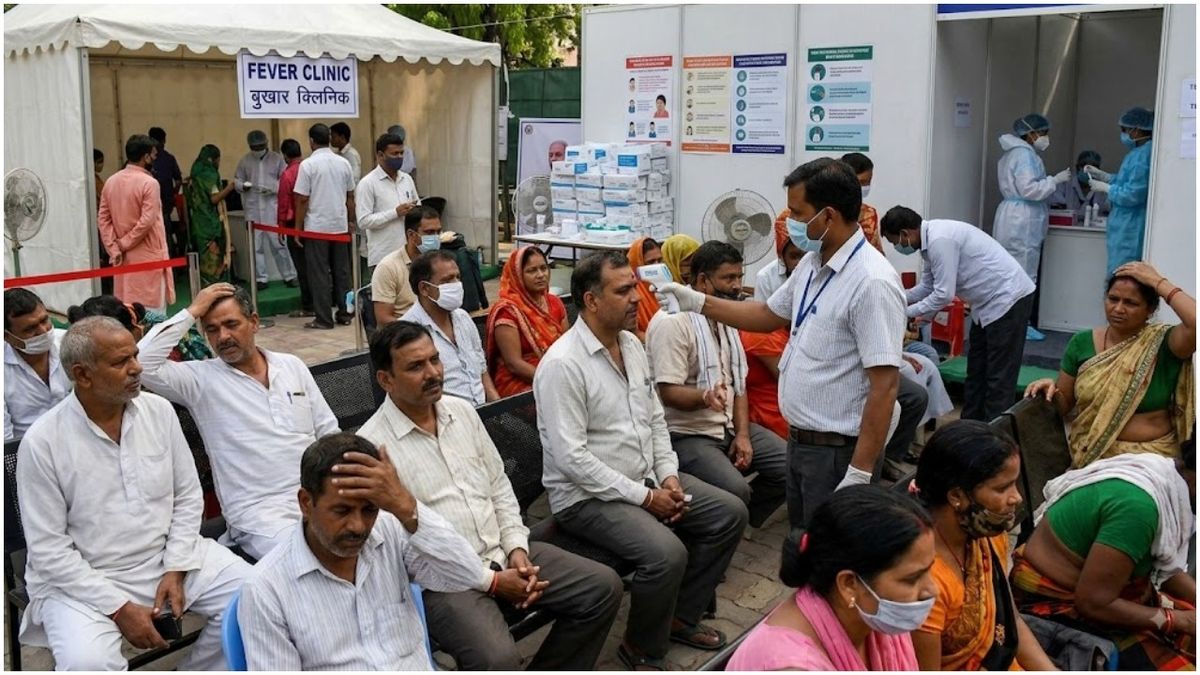
Delhi-NCR Fever Alert: These days, cold, swine flu and various infectious diseases are spreading rapidly in Delhi. All these diseases are related to lungs in which cough and cold are common. If reports are to be believed, H1N1 cases are most active in Delhi at present. This is influenza, of which a total of 1,449 cases have been registered. To deal with the increasing cases, special wards have also been made in Delhi’s RML Hospital and Safdarjung Hospital. It is being told that during the investigation, the result of one out of every three patients is coming positive. Cases of H1N1 flu are also increasing among children. Not only this, there are so many patients of cold, cough and flu in Ghaziabad and nearby areas that even adequate medicines are not available at this time. Let us know the symptoms of these diseases and ways of prevention.
Which infections are raising concerns in Delhi-NCR right now?
H1N1 flu- Due to monsoon season and temperature fluctuations, more cases of H1N1 flu, influenza A and cold-cough are being seen. However, swine flu is the most active among them. Besides, the risk of dengue has also increased.
Viral fever (Influenza infection)- Complaints of symptoms like fever, sore throat, cough, cold and body ache are also being seen among the people in Delhi-NCR. All these are symptoms of viral fever.
COVID-19- However, at present there is no latest report regarding Corona in Delhi. But cases of Corona are also seen in this season. In this infection also symptoms like cold, cough and fever are seen.
cold- The common cold causes more than 200 different types of respiratory infections, mainly including rhinovirus. Infection can occur through airborne droplets and by touching infected surfaces. This virus is considered responsible for more than half of the cases of cold and cough. However, people who have weak immunity also catch cold easily.
What is the difference between Cold, Flu, H1N1 and Covid?
In common cold, most of the patients suffer from nose and throat related infections which include sneezing, runny nose and feeling of sore throat. There itself. Flu often occurs due to seasonal changes in which the patient has body aches, fever and headache. H1N1 is different from all these. Its symptoms can be like seasonal flu but feel more serious. In Covid, fever, cough, sore throat and fatigue are felt but this cannot be confirmed without testing.
What are the symptoms of H1N1?
H1N1 means swine flu. Its symptoms match those of common flu. Its symptoms appear 1 to 4 days after coming in contact with the virus. Its main symptoms are as follows-
- fever or chills
- dry cough
- sore throat
- body pain
- muscle cramps
- Headache
- runny or blocked nose
- feeling weak
How to recognize symptoms of COVID-19?
Among the symptoms of Covid-19, the patient mainly gets such signs-
- fever or chills
- having a persistent dry or mucus-filled cough
- feeling very tired or weak
- loss of taste or smell
- sore throat
- head and body pain
- inability to sit or talk
How to differentiate between common cold and flu?
According to health experts, both of these are viral infections. But flu is a disease that spreads more rapidly. Runny nose and sneezing are common in cold. In this the symptoms are gradual and mild. There is no fever in cold whereas there is high fever in flu.
Who need to be more careful?
The elderly, small children, pregnant women and already sick people are more at risk of all these diseases spreading in Delhi-NCR. Especially small school going children because most of the children spread such infections from each other. Therefore, they need to be more careful. The immune system of these children is not fully developed, due to which they get dehydrated easily. Apart from this, patients like asthma and COPD also need to avoid flu infection.