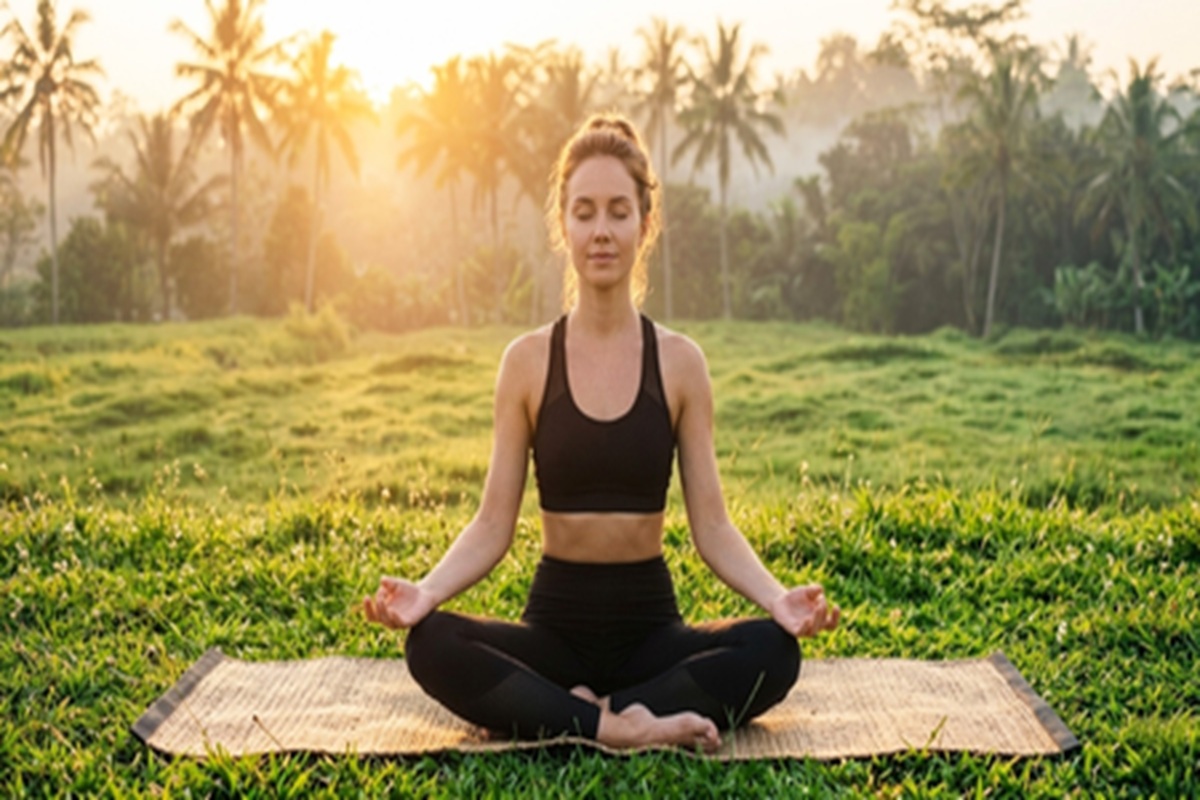
Padmasana is made up of two Sanskrit words 'Padma' (lotus) and Asana (sitting posture). In English this asana is also called 'Lotus Pose'. This asana mainly prepares the body for meditation and pranayama.
According to the Ministry of AYUSH, Central Government, Padmasana is a stable and soothing meditative posture, which is extremely effective in calming the mind, increasing concentration and awakening internal energy. This is considered to be the basic basis of yoga discipline.
This asana is a divine medium to remove the mental fatigue of modern life and fill it with new energy of concentration. Padmasana revolutionizes our overall health with just the right technique and consistent practice without any equipment.
Sitting in Padmasana posture puts mild pressure on the abdominal muscles, increases blood circulation and also strengthens the digestive system. It can be helpful in providing relief from problems like gas, constipation and indigestion. Also, practicing it daily increases the flexibility of the joints and makes them stronger. It helps a lot in foot pain of people who stand or walk for a long time.
In Padmasana, the back remains straight, due to which the spine becomes straight and strong. It improves back pain and the habit of sitting bent over. Additionally, it improves blood circulation in the pelvic area, which also provides relief from menstrual problems in women.
While doing this asana, both the legs are kept bent, due to which many people start facing problems. If a seeker faces problem in sitting in Padmasana by keeping both the legs together, then he can also sit in Ardha-Padmasana by placing one leg on the opposite thigh. Keep doing this until you feel flexible enough to reach Padmasana.
However, people who have severe pain or injury in their knees or ankles should not do this asana. In case of back pain, do not do this without expert advice.