When people talk about performance cars built around driver engagement, a few things usually come up — strong power-to-weight ratios, confidence-inspiring handling, and an overall purist driving experience. Some cars chase that feeling with brute force; others get there through compact packaging and low weight. One segment where that feeling is getting harder to find is compact performance cars and hot hatches.
The Ford Focus RS is gone. The underdog Honda CR-Z is also gone, so is the Mercedes-AMG A45, and the Mazdaspeed3. Nissan is keeping the flame alive with the new Z – the last sports car of its kind in the U.S. — but just barely, and Mazda has killed the MX-5’s larger 2.0-liter engine in Europe. The Porsche Cayman and Boxster are set to become electric, the Audi A5 Coupe no longer exists, and even the Toyota GR Supra and its BMW Z4 cousin are on their way out.
All of which is reason enough to celebrate the compact sports cars that still deliver what made this segment worth loving in the first place. The market is shifting in strange directions, and cars like these may not stick around much longer — something I’ve gotten to appreciate firsthand, having driven every car on this list. Here are five compact cars that are genuinely fun to drive.
Mazda MX-5 Miata
For many enthusiasts around the world, the words “fun” and “compact car” are almost synonymous with the MX-5. The Fiat 124 Spider, the Honda S2000, the Audi TT, and many other similar cars are relics of the past, but the MX-5 isn’t. When we reviewed the 2025 Mazda MX-5, we gave it a near-perfect nine out of ten and included it on our Editor’s Choice list for 2025’s best cars.
Thanks to a short wheelbase, a manual gearbox, a relatively lightweight body, and a clear emphasis on driving feel, the MX-5 has defined the segment it lives in. I used an ND3 as a daily for a while, and one thing that stood out to me is how easy the car is to work on — a refreshing change from a lot of the German cars I’ve spent time with.
With a manual transmission, the MX-5 appeals to the purist driver the same way it did decades ago when it had far more competition. Many modern iterations of long-lasting performance cars have changed a lot, but the MX-5 did not, and you can feel that the moment you step behind the wheel. It is agile, the chassis is very communicative, and thanks to its RWD setup, it is playful in the corners.
Prices can range from just a few thousand dollars for an older high-mileage example, all the way to $40,000 plus for brand-spanking new models. The MX-5 is also a relatively reliable car, meaning that after spending that kind of money, you are more likely to enjoy it trouble-free compared to most cars.
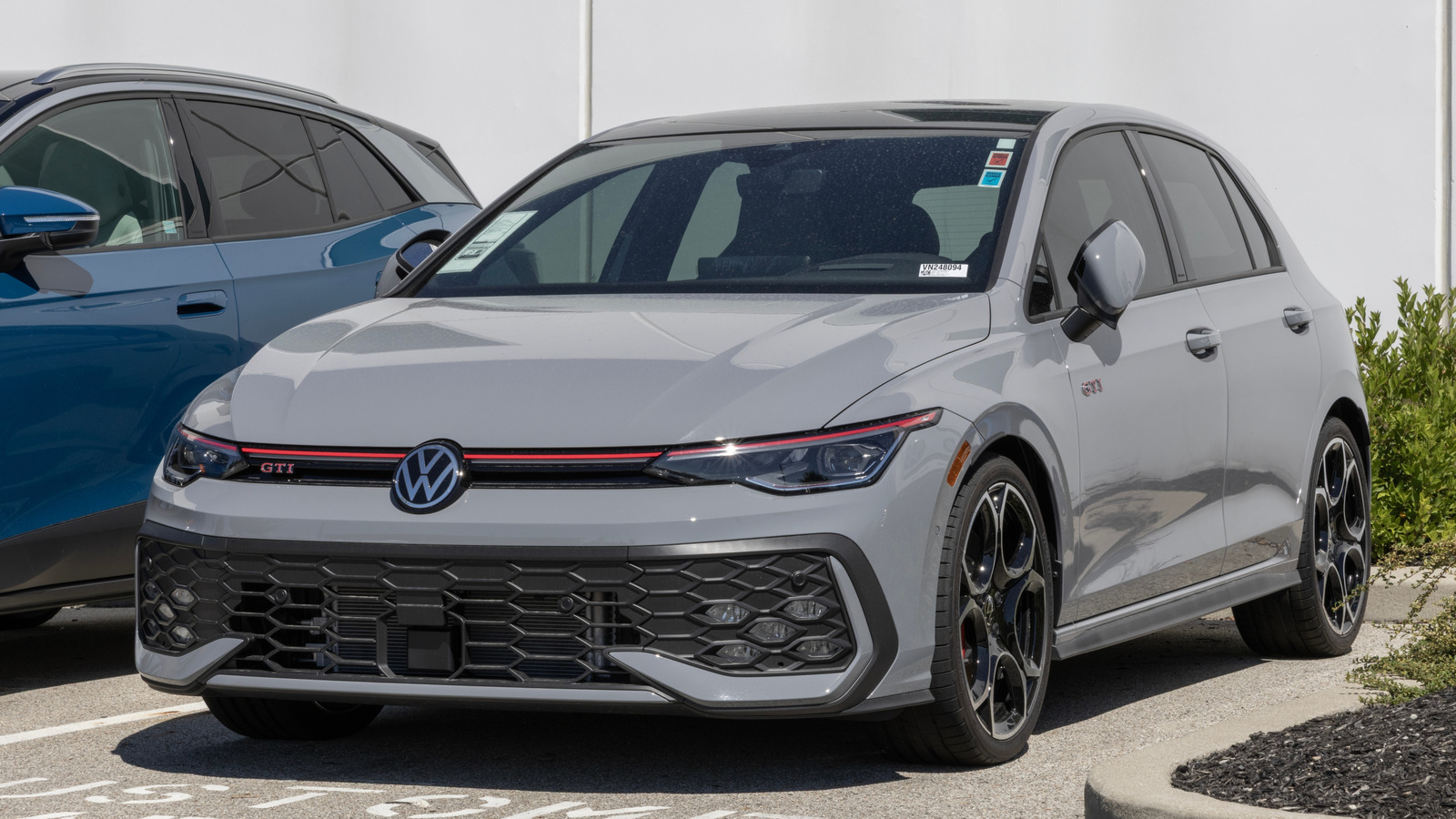
Volkswagen Golf GTI
Although the hot-hatch segment is dying, one of the O.G. hot hatches, the Volkswagen Golf GTI still manages to endure. Not only that, but it actually manages to impress. Car and Driver recently reviewed the brand-new 2027 Volkswagen GTI, and the verdict was: “Forget the spec sheet and the price creep—the GTI still has that intrinsic goodness to put a big smile on your face every time you get behind the wheel.”
This is exactly what you’d expect from a hot hatch, and VW has kept the same basic formula of the GTI since inception. I daily drove a Mk7.5 GTI with a manual gearbox, and I’ve also test driven the DSG-equipped Mk8. The EA888 engine is torquey at the low end, the DSG is rapid, and considering just how quick the GTI can go, there is a remarkable lack of twitchiness that can often be experienced with FWD cars.
Even at full tilt, the chassis remains composed, the car shifts balance nicely, and you can truly push the GTI hard before it breaks traction. This means that you can actually explore any GTI on a normal road without landing in jail. This is what stood out to me, especially compared to more powerful cars, the ones you can only explore on a track.
Volkswagen also finally listened to its customer base and ditched the frustrating touch-sensitive steering wheel buttons — one of the features we were most hoping to see in the Mk8 GTI facelift. Ultimately, one of the GTI’s best aspects is how it can serve multiple purposes at the same time, without being compromised. Whether it’s daily driving or canyon carving, you can do it both.
Toyota GR86 / Subaru BRZ
The Toyota GR86 and Subaru BRZ are still very much around in 2026, and they are truly among the last of their kind. Car and Driver named the pair to its 2026 10Best”Cars list, pointing out that “these two are some of the last remaining sub-2900-pound cars” still on sale.
Mechanically, the twins carry over unchanged for 2026: a 2.4-liter naturally aspirated flat-four making 228 horsepower and 184 lb-ft of torque, sent to the rear wheels through a standard six-speed manual or an optional six-speed automatic. Where the two cars diverge is price. Subaru dropped the base BRZ Premium trim for 2026, pushing the BRZ’s starting price to $37,055.
The Toyota GR86 and Subaru BRZ are mechanically identical, but they’re still not the same car when it comes to tuning. I’ve test driven both but spent a lot more time with a manual BRZ. Behind the wheel, both feel small, nimble, quick to change direction, and they appeal to drivers the same way every other car on this list does. On a tight and technical mountain pass, these can effectively shrink around you and give you an amazing experience for the price.
On a more open road, you can feel the lack of weight in sweeping corners, plus I loved the firm brake pedal and the way the weight transfers once you are on it. With the manual BRZ, the experience was rather amazing. Best of all, when letting go of the brakes mid corner, you will be reminded that these are RWD cars after all, meaning that all kinds of fun is guaranteed with these.
Honda Civic Type R
The 2026 Civic Type R starts at $47,395, up from $47,090 the year before, with none of the car’s hardware touched in the process. The powertrain is single and non-negotiable: a 2.0-liter turbocharged four-cylinder rated at 315 hp and 310 lb-ft, feeding the front wheels through a six-speed manual and nothing else.
There’s also just one trim, loaded with the equipment most rivals charge extra for — Honda backs off nothing on the options sheet, an approach reflected in items like the Type R’s standard limited-slip differential. MotorTrend's own testing put the Type R’s 0-60 time at 5.3 seconds — matching the number the outlet recorded for the previous-generation Limited Edition.
What makes the Honda Type-R so special is the purity we mentioned at the outset of this article. It gets rid of noise and clutter and gives you boatloads of fun. In my experience with a 2025 model, the Type R felt very racey and stiff, but never unlivable. The brakes felt firm and the engine felt fairly linear for a turbocharged unit. It is a much sharper and more special performance car compared to something like a Golf GTI.
On the other hand, this also means the GTI felt like a better daily. Like the rest of this list, the Type R makes the same case — moderate horsepower and a manual gearbox, applied to a car this light and this focused, will beat raw numbers every time when it comes to actually having fun behind the wheel.
Fiat 500 Abarth
The gas-powered Fiat 500 Abarth left the U.S. market in 2019, and the new Abarth 500e replaced it. Still, used gas-powered 500s stuck around as some of the cheapest ways into a proper Italian hot hatch on the used market.
Under the hood, a 1.4-liter turbocharged MultiAir four-cylinder made 157 horsepower and 170 lb-ft, sent to the front wheels through a five-speed manual, in a car weighing barely over 2,500 lbs. Interior space might not be as generous as some other cars on this list, but once you settle inside, you feel cocooned.
I used a 500 Abarth as my city car for three months, and it felt mad and angry — like it had the spirit of something a lot more powerful than its numbers suggest. It leans hard into that raw, unfiltered character, and the numbers don’t really tell the whole story. It was amazing at getting me from point A to point B around town, though it felt a bit weird at highway speeds. The overly upright driving position isn’t great either, and at 6’5″, I often felt like I was driving a shopping cart.
The car’s skittish braking manners and its unusually high center of gravity for something so small are flaws, but they are also charming. Clean manual examples routinely turn up for well under $15,000, putting genuine turbocharged fun within reach of buyers who’d otherwise be priced out of this list entirely.