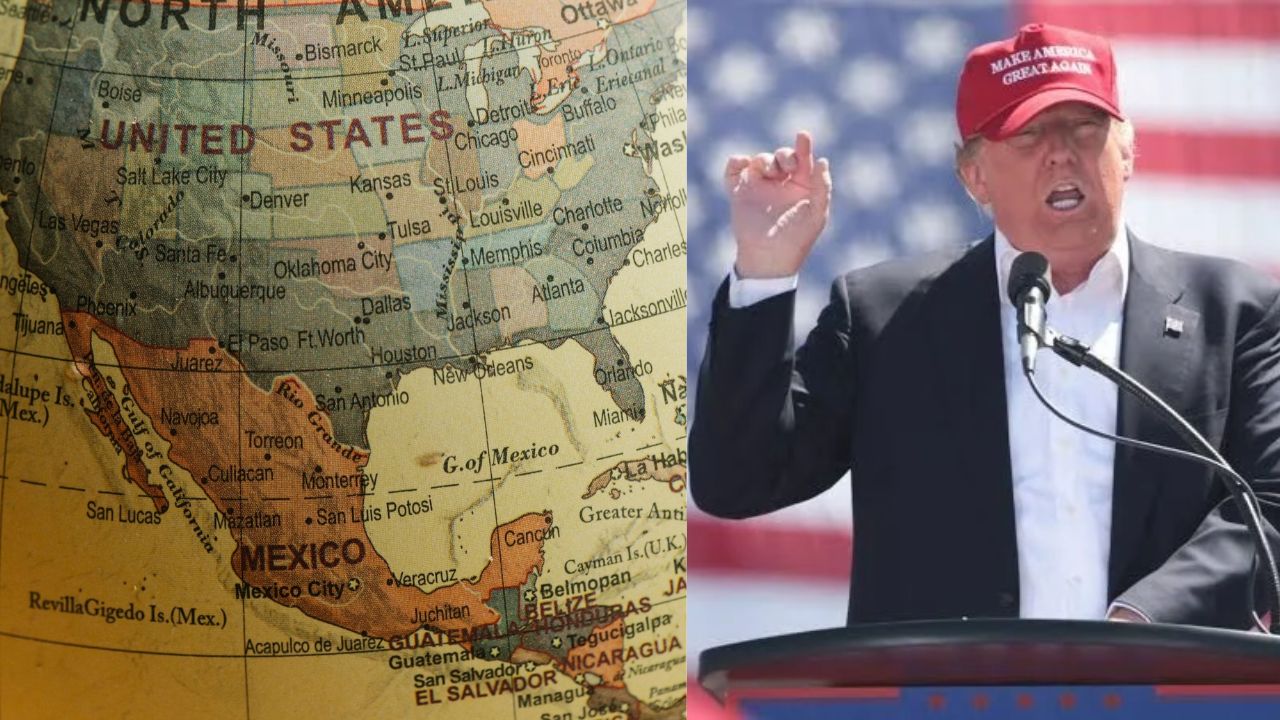
Washington: US President Donald Trump has triggered a fresh political controversy after suggesting that New Mexico could be renamed New America, sparking a heated debate over history, state identity and presidential powers. The proposal, shared through social media, has drawn immediate opposition from New Mexico leaders who defended the state's centuries-old name and heritage.
Trump's latest naming suggestion comes shortly after his administration moved to rename major geographic landmarks, including changing the official federal reference of the Gulf of Mexico to the Gulf of America and Lake Ontario to Lake America.
The development has gained attention across the United States as questions emerge over whether a president can change the name of a state and what impact such symbolic decisions could have on American history and culture.
Trump Shares New America Map, Sparks Debate
Trump posted an image on his Truth Social platform showing a map of New Mexico with the word “Mexico” crossed out and replaced with “America”. The post suggested a possible name change but did not include any official announcement, legal proposal or government notification.
The White House also shared the image on social media, but officials have not started any formal process to rename the state. The move quickly became a political flashpoint, with supporters viewing it as part of Trump's broader America-focused messaging, while critics called it an unnecessary attempt to rewrite historical identity.
New Mexico Governor Rejects Name Change Idea
New Mexico Governor Michelle Lujan Grisham strongly opposed the suggestion and defended the state's existing name. State leaders argued that New Mexico's identity is deeply connected with generations of history, culture and communities, including Native American, Hispanic and American influences.
Democratic lawmakers also criticized the proposal, saying the state's name represents its heritage and cannot be altered through a presidential statement or social media post.
Can Trump Legally Rename New Mexico?
Unlike federal landmarks such as lakes, mountains or other geographic features, a US president does not have the authority to officially rename a state. Experts say changing the name of a state requires a constitutional process involving approval at the state level and further legal procedures.
While the federal government can update names of certain geographic locations through official systems, changing a state's name involves a much more complex process. At present, there is no official government effort underway to rename New Mexico.
Trump's Push for America Themed Names
The New Mexico controversy is the latest in a series of naming moves promoted by Trump. Earlier, Trump signed an executive order changing the federal reference of the Gulf of Mexico to the Gulf of America. He also approved the renaming of Lake Ontario as Lake America during a period of heightened trade tensions with neighboring Canada.
Trump has also hinted at possible future changes involving other major geographic locations, including oceans surrounding the United States. These moves have become part of Trump's broader political messaging focused on national identity and symbolic changes.
The name New Mexico has existed for hundreds of years and predates the formation of the United States. The name originated during the Spanish exploration period and reflects the region's long historical connection with Spanish culture and Indigenous communities.
Over centuries, New Mexico developed a unique identity shaped by multiple cultures, traditions and historical influences. Opponents of the proposed name change argue that replacing the name would ignore the state's historical journey and cultural significance.
Political Battle Over Identity and History
The controversy has added another layer to the ongoing political divide in the United States over issues of national identity, history and government authority.
Democratic leaders have accused Trump of using symbolic announcements to divert attention from major policy issues, while Trump's supporters argue that such moves represent a stronger expression of American identity. The debate has also renewed discussions about the limits of presidential power and the role of historical names in shaping public identity.
##What Happens Next?
No official procedure has been initiated to rename New Mexico, and the proposal currently remains a political statement rather than a government action.
The controversy is likely to continue fueling political debate as Trump pushes his agenda of changing geographic names and highlighting American identity.
For now, New Mexico remains New Mexico, but Trump's latest suggestion has opened a wider national conversation about history, symbolism and the power of names in American politics.