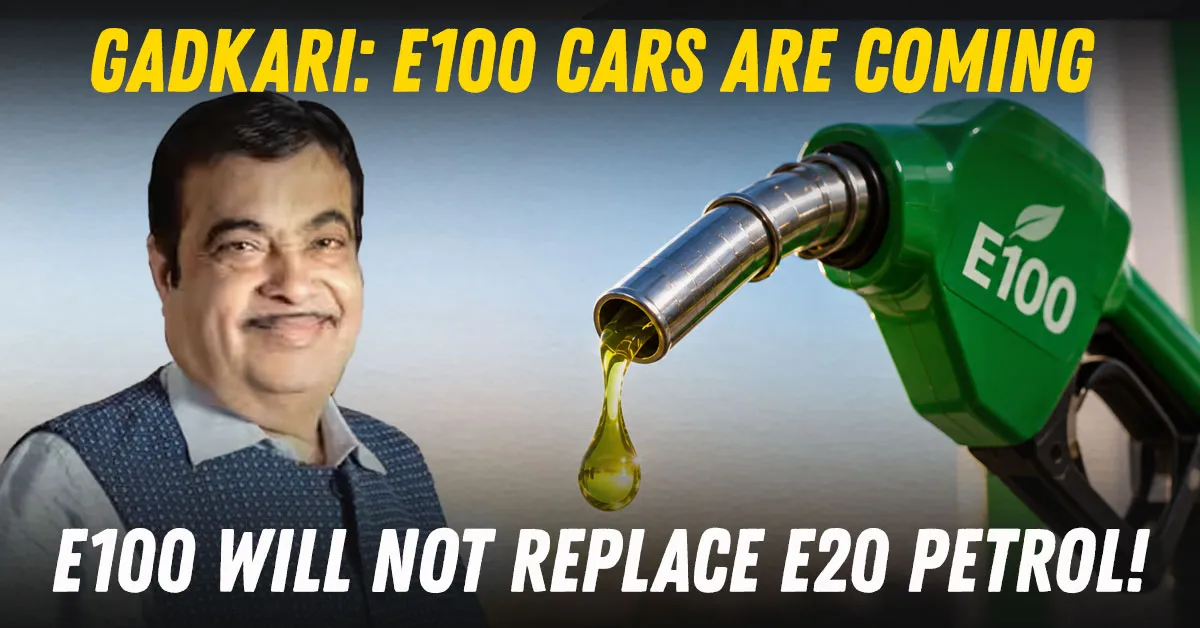
Road Transport and Highways Minister Nitin Gadkari says carmakers are developing flex-fuel engines capable of running on 100 percent ethanol, or E100, and that vehicles using this technology will be introduced. The announcement points to the next stage of the ethanol programme, but it does not mean regular petrol is about to be replaced by E100 across the country.
That distinction matters. Most petrol cars currently on sale are designed for E20, which contains 20 percent ethanol and 80 percent petrol. A flex-fuel vehicle is different because its fuel system, sensors and engine management are designed to adjust automatically to a much wider range of ethanol-petrol mixtures. In principle, an E100-compatible flex-fuel car can run on anything from petrol-heavy blends to almost pure ethanol.
The technology is no longer just at the prototype stage. Maruti Suzuki launched the Wagon R Bioflex in June 2026 at Rs 7.24 lakh ex-showroom. It is based on the 1.2-litre Wagon R and uses revised fuel injectors, fuel pump, fuel lines, ECU calibration and an ethanol sensor to handle high-ethanol fuel. Hero MotoCorp has also launched flex-fuel versions of the Splendor+ and HF Deluxe.
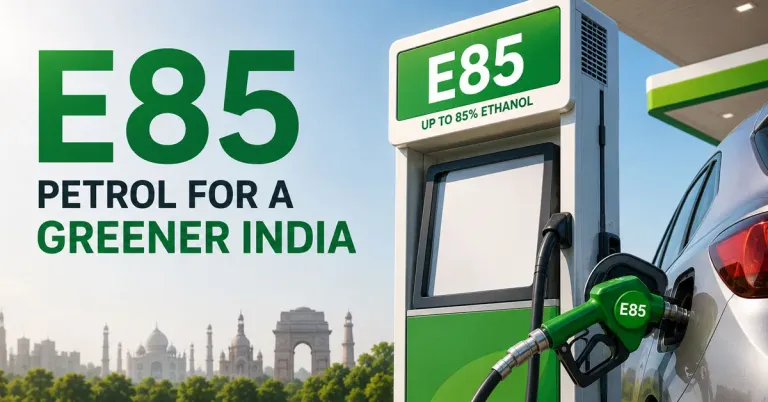
The fuel network is beginning to follow. E85, which contains roughly 80-85 percent ethanol, was launched in June 2026 at 48 public-sector fuel stations. The government said E85 was priced nearly Rs 20 per litre below conventional E20 petrol at launch. Importantly, it is meant only for vehicles specifically designed and certified for high-ethanol fuel.
The current push towards E100 therefore builds on infrastructure and vehicle work that has already started. Toyota demonstrated an Innova Hycross-based electrified flex-fuel prototype in 2023, while Maruti and Hero have since moved flex-fuel technology into production vehicles. Gadkari’s latest statement suggests more manufacturers and models are expected to follow.
The government has separately said that no decision has been taken to increase the nationwide base ethanol blend beyond E20. Any move to higher blends for the general vehicle fleet would require further technical studies and consultation with carmakers, oil companies and research institutions. Higher blends such as E85 and E100 are therefore being treated as fuels for compatible flex-fuel vehicles rather than as replacements for E20 in ordinary petrol cars.
That approach also avoids forcing owners of existing E20 vehicles to use fuel their cars were not designed for. For a consumer, the attraction of a flex-fuel vehicle is choice. The same car can use the higher-ethanol fuel where it is available and a lower blend where it is not.
Ethanol can be cheaper per litre, but it contains less energy than petrol. An earlier government ethanol roadmap, using automobile-industry inputs, estimated that fuel efficiency on E100 could be more than 30 percent lower than on petrol in a comparable engine. That means E100 has to be priced sufficiently below petrol for the cost per kilometre to remain attractive.
The equation can improve as engines are optimised specifically for high-ethanol fuel. Ethanol has a high octane rating, allowing higher compression ratios and more aggressive ignition timing. But customers will ultimately judge flex-fuel cars on real-world mileage, fuel availability, purchase-price premium and whether the lower pump price actually produces lower running costs.