Fresh Bus’ revenue jumped 2.4X to ₹63.5 Cr in FY26, while its net loss widened 33% to ₹43.6 Cr
The electric intercity bus startup has scaled to 100 buses across 10 routes, with plans to reach 200 buses and 16 routes by March 2027
Fresh Bus said it turned contribution-margin positive in March 2026, with margins currently at 15%-17%, and is targeting ₹180 Cr revenue and ₹25-30 Cr loss in FY27
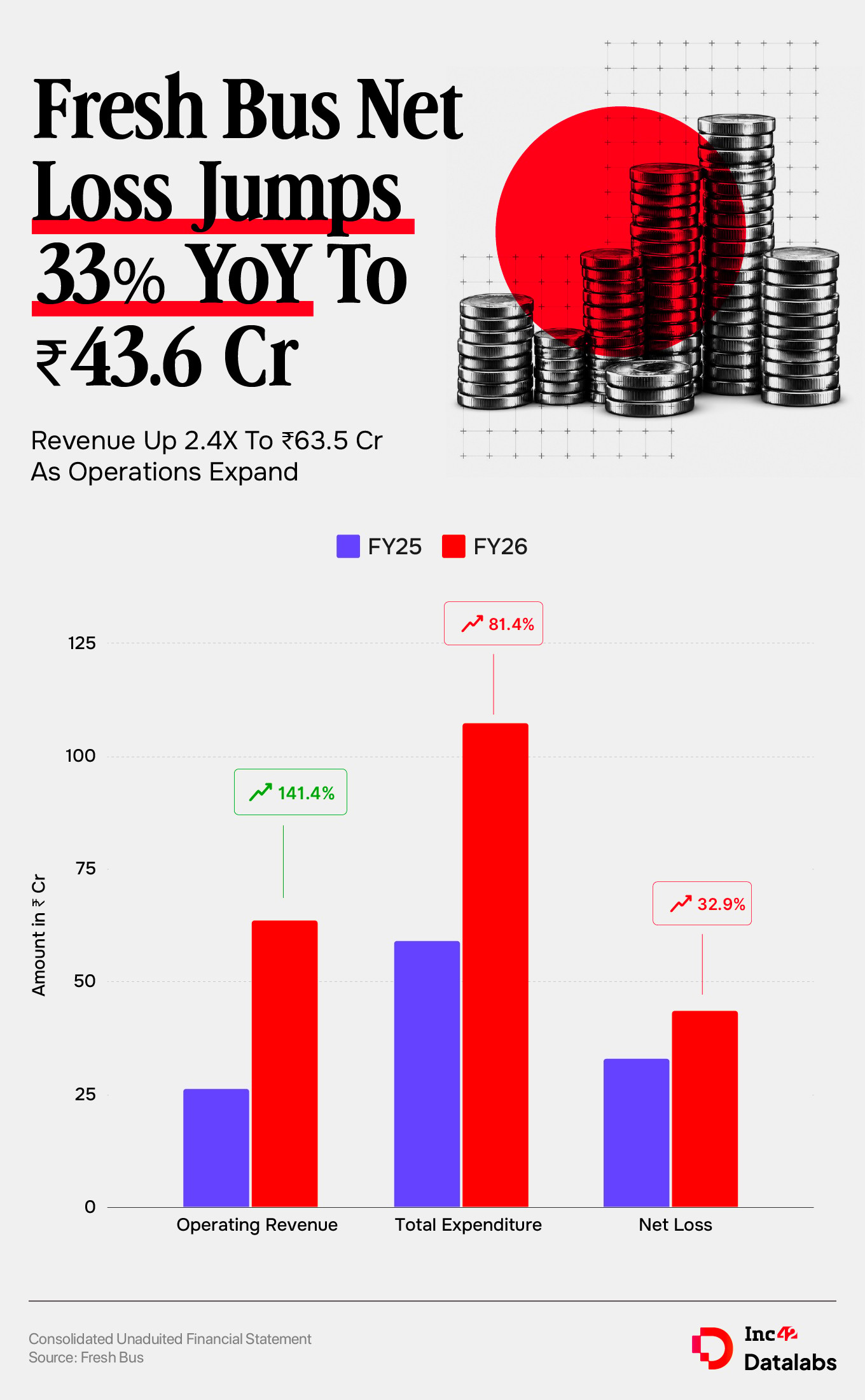
ixigo backed e-intercity bus operator Fresh Bus reported a 2.4X jump in its FY26 operating revenue to ₹63.5 Cr from ₹26.3 Cr as it expanded its electric fleet and route network.
The startup’s top line grew on the back of a rapid expansion of its bus fleet and routes, founder and CEO Sudhakar Reddy Chirra told Inc42.
The expansion also led to the startup’s bottom line for the fiscal swelling 33% to ₹43.6 Cr from ₹32.8 Cr loss incurred in the previous fiscal.
The startup’s bottom line was weighed down by a sharp increase in expenditure over the fiscal. Its total expenses rose 81.4% YoY to ₹107.2 Cr from ₹59.1 Cr in the year-ago period.
The jump in expenses in FY26 was primarily linked to the expansion of the fleet, according to Chirra.
Lease costs rise with the number of buses, while maintenance, captain salaries, tolls and distribution expenses increase as operations scale, he said.
Fresh Bus’ Growth Plans
The startup is now targeting a revenue of ₹180 Cr in revenue in FY27, while reducing its loss to around ₹25 Cr-₹30 Cr, Chirra said.
Chirra claims that the startup became contribution-margin positive in March 2026, with a current contribution margin of 15%-17%, according to Chirra. He expects Fresh Bus to turn profitable around April-June 2027.
The startup is looking to improve its bottom line by reducing up to 30% of its costs by doubling down on larger bus fleets. This will benefit increasing fare rates as well customer stickiness, the founder believes.
Founded in 2019, Fresh Bus operates electric buses on intercity routes. It leases buses from fleet providers including Vertelo and Drivn and offers users a digital platform to search for and book tickets. The startup claims to have completed 25 Lakh journeys for 9 Lakh passengers.
At the end of the fiscal year, Fresh Bus operated 100 e-buses across 10 routes, primarily in South India. It intends to double this number to 200 by the end of FY27 and broaden its route options to 16.
Beyond FY27, Fresh Bus plans to reach 500 buses by March 2028, initially focusing on southern India before expanding westward and then into the north. It expects to reach 1,000 buses across the three regions by March 2029.
The startup currently operates at 85-90% occupancy, with around 1.6-1.7 Lakh seats offered each month, Chirra said. Established routes such as Bengaluru-Tirupati, Bengaluru-Chennai and Hyderabad-Vijayawada have repeat ratios of more than 55%.
Moving forth, the startup is planning to deepen its presence in southern India, with routes including Chennai-Madurai, Chennai-Tanjavur, Chennai-Trichy, Bengaluru-Trichy, Bengaluru-Madurai and Bengaluru-Tanjavur planned by March.
In August, Fresh Bus and ChargeZone expanded their partnership to support 400 additional electric buses, taking the fleet supported by ChargeZone’s charging network to 500 buses. ChargeZone will add 30 MW of charging capacity to the 10 MW already dedicated to Fresh Bus.
The expanded network is expected to connect 20 cities and 17 additional towns across Tamil Nadu, Karnataka, Andhra Pradesh and Telangana over the next 15 months
Fresh Bus had last raised ₹87.5 Cr in Series A funding in August 2024, with participation from Maniv Mobility, Shell Ventures, Alteria Capital and Riverwalk Holdings. The company had said the capital would be used to add 150 electric buses and expand its route network.
In August 2026, ixigo agreed to sell a 17.39% stake in Fresh Bus to Twelve Stone LLP for ₹36.6 Cr. Moreover, it recognised a ₹11.22 Cr share of loss from Fresh Bus in FY26.