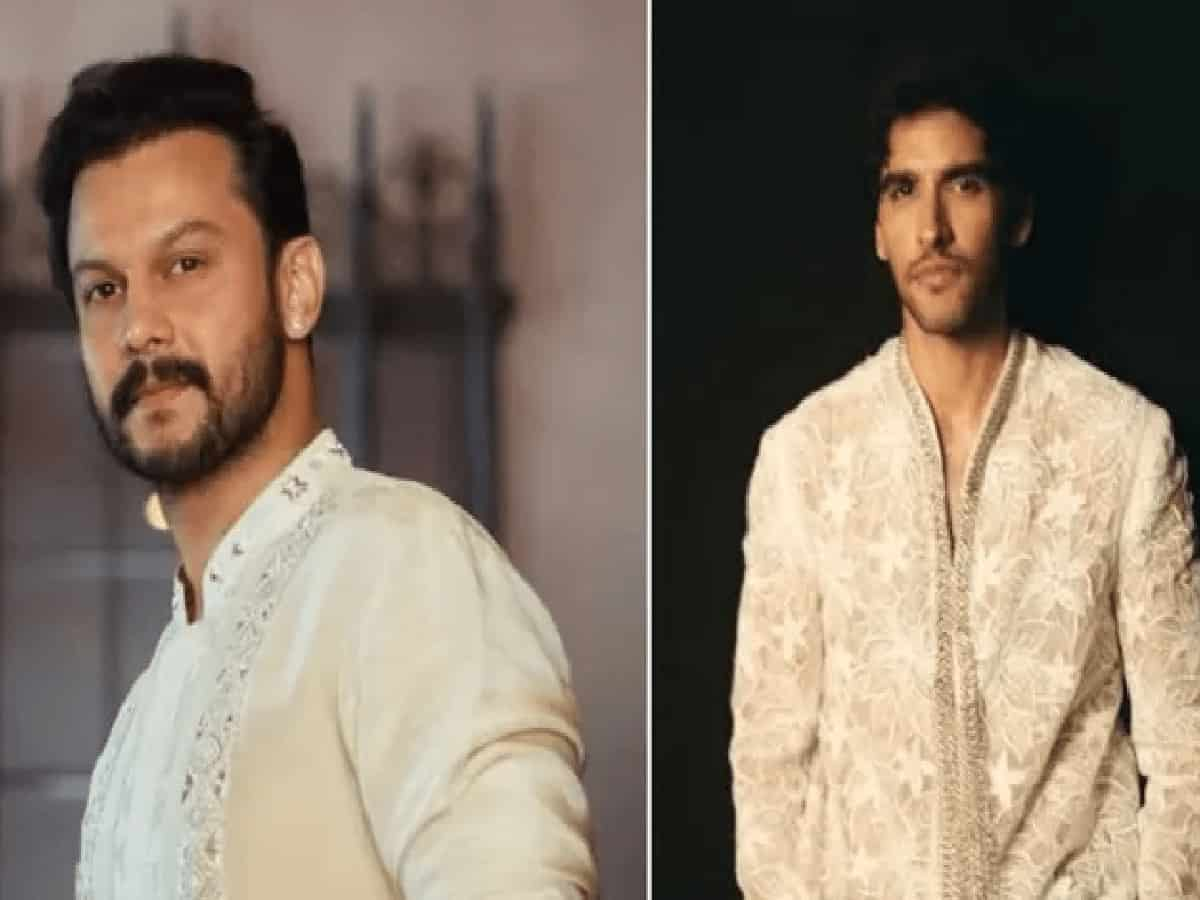
As festive lights illuminate homes and markets across the country, the celebratory buzz surrounding Diwali has brought wardrobe choices to the forefront of conversation. For mainstream showbiz, the festival of lights often feels synonymous with high-octane red carpet galas, curated designer mood boards, and competitive social media showcases. Yet, in an era where celebrity styling teams typically dictate every stitch and silhouette, a refreshing counter-narrative of understated simplicity and authentic emotional nostalgia is taking center stage. Leading this shift are Bollywood actors Adinath Kothare and Ansh Duggal, who recently shared their personal philosophies on festive dressing. Rejecting artificial fashion trends, both performers reveal that their festive wardrobe choices remain deeply anchored in family customs, generational ties, and sheer everyday comfort.
Childhood Tailors and Mother’s Love: Adinath Kothare’s Timeless Festive Tradition
For National Award-winning actor and filmmaker Adinath Kothare, the festive season arrives alongside significant career milestones. Having drawn widespread praise for his performance as Raj Awasthi in the recently released film The Navel and essaying the revered character of Bharat in director Nitesh Tiwari’s magnum opus RamayanaKothare approaches Diwali with deep humility and heartfelt gratitude. Despite working alongside premier industry stylists, the actor insists on keeping his shopping rituals completely unpretentious. For Kothare, festival preparation is not about procuring luxury labels or chasing runway aesthetics; it is an intimate family ritual that has remained unbroken since his boyhood years.
“Even today, I do my Diwali shopping myself,” Kothare explained while opening up about his festive plans. “We don’t have any restrictions on wearing only branded or designer clothes. Since childhood, we’ve had an unwritten tradition of getting a new kurta-pyjama every single Diwali. The special thing is that even today, my mother personally buys my Diwali fabrics, and then we get them tailored. We still visit the exact same local shop to purchase the cloth and have it stitched by the same family tailor we have trusted since I was a child. He knows our measurements and stylistic preferences by heart. Over decades, this interaction has blossomed into an affectionate, personal bond that brings genuine joy. Purchasing festive attire through this routine has evolved into our family’s most cherished annual ritual”.
Indian Cinema’s Golden Era: Expanding Beyond Mumbai to Global Audiences
Beyond personal wardrobe traditions, Kothare reflected on the larger cultural and cinematic transformations unfolding across the entertainment landscape. Highlighting how storytelling in India is democratizing rapidly, he emphasized that authentic regional voices are now dominating global cinematic conversations. “Our industry is no longer confined within the geographical boundaries of Mumbai; someone sitting anywhere in the country can craft a masterpiece and find a worldwide audience,” Kothare observed. “Indian cinema is truly navigating its golden era, where regional languages and diverse cultural stories are shining on international platforms. However, in this hyper-connected digital landscape, viewers also face the responsibility of exercising media literacy—discerning which information is authentic and which news cannot be trusted”.
Comfort Over Red-Carpet Glitz: Ansh Duggal on Ditching Fashion Pretence
Echoing a similar sentiment of self-assured authenticity, actor Ansh Duggal, recognized for his screen presence in popular music videos and projects such as Don’t Be Shy and Nakhrewalioutlined why personal comfort will always triumph over transient runway guidelines. Duggal shared that while professional stylists provide valuable suggestions on professional sets, he firmly refuses to surrender his personal aesthetic during private cultural celebrations. For him, traditional attire is not a prop for digital validation, but a medium to feel grounded in one’s roots.
“I have always felt completely confident in my own choices regarding clothes,” Duggal stated. “I wear whatever feels inherently comfortable on my body. During Diwali, I have a deep love for classic Indian attire, particularly a clean, breathable kurta-pyjama. For me, fashion simply means wearing an outfit that makes you feel genuinely good from the inside. As professional actors, stylists certainly assist us with looks, but the final decision must remain strictly your own. Before professional styling teams entered our lives, we would wear whatever traditional clothes we could pull together at home—sometimes even borrowing our father’s vintage kurta. That simplicity holds unmatched emotional warmth”.
Disconnecting from Social Validation: Savoring Festive Warmth with Family
Duggal also addressed the growing social pressure among young urban creators and industry professionals to stage glamorous, heavily coordinated photoshoots specifically for social media engagement on festival evenings. Rejecting the performative nature of online celebrations, the actor noted that festive holidays should remain sacred spaces for rest, indulgence, and real human connection. He emphasized that the true essence of Diwali cannot be captured through filtered phone screens or calculated aesthetic grids.
“The real essence and joy of Diwali lies in eating great homemade food, sharing sweets, enjoying festive drinks, and spending unhurried quality time with your family and loved ones,” Duggal reflected. “I feel zero pressure to curate fashionable photoshoots for Instagram just to prove I had a good festival. I intentionally maintain boundaries with social platforms, using them primarily to communicate work and promote my upcoming cinematic projects rather than letting them dictate how I experience festive memories.”
Nostalgia and Authenticity: Redefining Men’s Festive Fashion in Modern Bollywood
The shared outlook of both Adinath Kothare and Ansh Duggal marks a notable cultural shift within modern Bollywood. At a time when celebrity fashion is often measured by brand logos, couture price tags, and viral engagement metrics, their grounded approach honors the emotional intimacy of Indian festivals. Whether it is wearing handpicked fabric chosen with maternal care or slipping into a father’s well-worn, heirloom kurta, these actors demonstrate that genuine style is not manufactured by designers—it is woven from memory, family affection, and the enduring comfort of home.