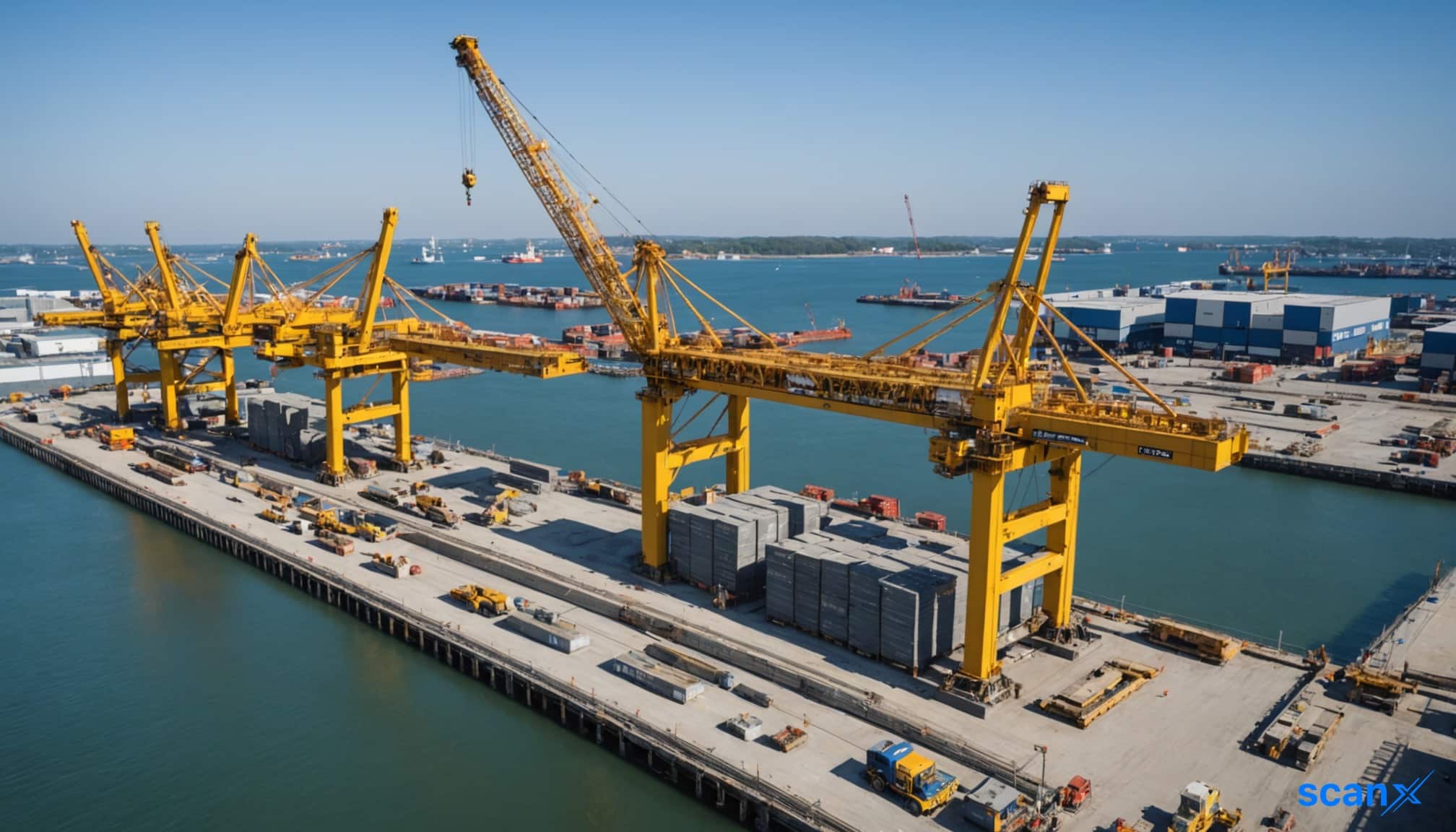
Adani Ports & Special Economic Zone Ltd (APSEZ) has officially inaugurated the Phase II expansion of the Colombo West International Terminal (CWIT), doubling its operational handling capacity to 3.2 million Twenty-Foot Equivalent Units (TEUs).
The $750 million investment project was flagged off by Sri Lankan Prime Minister Dr. Harini Amarasuriya on September 30, 2026. The milestone cements CWIT’s trajectory toward capturing nearly 25% of the Port of Colombo’s targeted 13 million TEU overall capacity by 2028.
Key Operational Milestones
Operating under a 35-year Build-Operate-Transfer (BOT) concession in partnership with John Keells Holdings and the Sri Lanka Ports Authority, CWIT has achieved rapid operational growth since going live:
|
Metric |
Value |
|---|---|
|
Total Project Investment |
$750 Million |
|
Expanded Capacity |
3.2 Million TEUs |
|
Previous Capacity |
1.6 Million TEUs |
|
Cargo Handled (First 18 Months) |
2.0 Million TEUs |
|
Safe Working Hours Logged |
17 Million Hours |
The expanded quay length and deep-water access now allow the terminal to berth three ultra-large container vessels simultaneously. Furthermore, as Sri Lanka’s first fully automated container terminal, CWIT utilizes a fully electric equipment fleet designed for zero tailpipe emissions.
Strengthening Indian Ocean Trade Corridors
Speaking on the milestone, Ashwani Gupta, Whole-Time Director and CEO of APSEZ, noted that doubling CWIT’s capacity serves as a strong statement of confidence from global shipping lines. The expansion sharpens APSEZ’s competitive footprint across critical east-west maritime trade routes passing through the Indian Ocean.
Krishan Balendra, Chairperson of John Keells Group, highlighted that reaching 2 million TEUs within its first 18 months reflects exceptional coordination between private consortium partners and the Sri Lanka Ports Authority.
By moving from an average throughput of ~111,000 TEUs per month to a capacity headroom of ~266,000 TEUs per month, the terminal is structured to absorb increasing transshipment volumes across South Asia without operational bottlenecks.