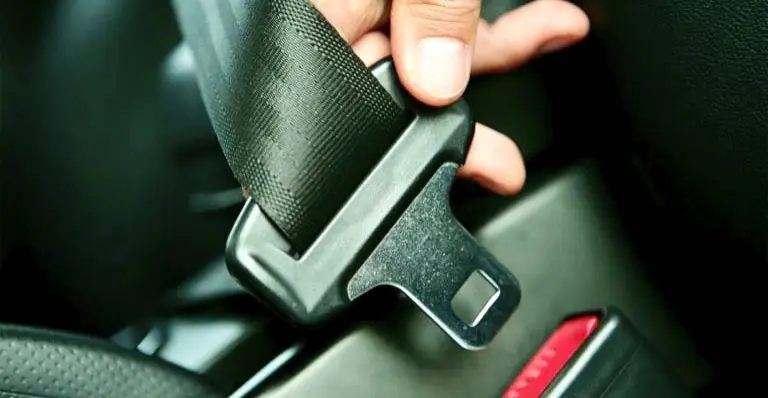
New Delhi: The Supreme Court, on Wednesday, said there are adequate laws mandating the wearing of seat belts while a vehicle is in motion and it is the duty of the law enforcement agencies to ensure compliance.
The observation came from a bench of Chief Justice of India (CJI) Surya Kant, Justice Joymalya Bagchi and Justice V Mohana, which was hearing a petition seeking directions for mandatory wearing of seat belts in vehicles.
A number of deaths and injuries arising out of road accidents could be prevented if the law mandating wearing of seat belts was complied with, the counsel appearing for the petitioner told the bench.
A number of vehicles have non-functional seat belts because of fancy seat covers or other modifications, he said.
“The law is very clear on seat belts. The question is of implementation. How can we ensure that every citizen and every driver in this country complies with it,” the Court observed.
It then asked the petitioner to send his suggestions on the issue to the competent authority.
“It is the work of the law enforcement agencies to ensure compliance,” it said.
The Court referred to Rule 138(3) of the Central Motor Vehicles Rules, 1989, and said it requires the driver, the person seated in the front seat or the persons occupying front-facing rear seats to wear seat belts while the vehicle is in motion.
Negligence of people and weak enforcement of law lead to serious injuries and even deaths in road accidents across the country, the petitioner’s counsel argued.
The bench then noted that there are adequate laws concerning road safety measures, including wearing of seat belts while a vehicle is in motion, as reported by The Economic Times.
The non-compliance of law by people or failure of law enforcement agencies in taking appropriate action against the defaulters was essentially a question of maintenance of law and order, the Court held.
It also noted that people should wear seat belts for the sake of their families.
The Court then disposed of the plea while granting liberty to the petitioner to forward a copy of his petition to the concerned authority to consider the suggestions given by him.