

4
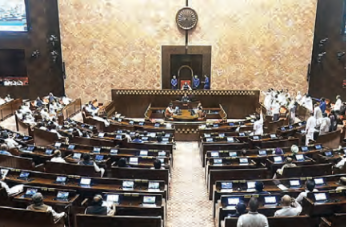
The first week of the ongoing Monsoon Session of Parliament was marred by Opposition protests demanding a discussion on paper leaks and the resignation of Education Minister Dharmendra Pradhan. Due to the intense deadlock and confrontation between July 20 and July 24, the two Houses of Parliament could function for only about 20 minutes. With Dharmendra Pradhan’s resignation on Saturday, the Centre is all set to pass major Bills in both Houses starting Monday, July 27. On Monday, the government will introduce the Public Examination (Prevention of Unfair Means) Amendment Bill in the Lok Sabha—a move announced by Prime Minister Narendra Modi late Thursday night and subsequently approved by the Cabinet on Friday. According to sources, the amendment bill may include provisions for a fine of Rs 10 crore and a 10-year prison sentence, alongside arrangements for expedited trials in fast-track courts.
Additionally, the government will attempt to pass the Prevention of Insults to National Honour (Amendment) Bill, 2026, in the Rajya Sabha, aiming to extend legal protection to “Vande Mataram”, similar to that enjoyed by the National Anthem. This bill seeks to amend the Prevention of Insults to National Honour Act, 1971.
Furthermore, amidst the political turmoil surrounding the FCRA Amendment Bill 2026, the government may introduce and pass this bill during the week, provided the House functions smoothly. While the government—spearheading this amendment under Union Home Minister Amit Shah—maintains that the bill is essential for national security and transparency, Opposition parties have launched a strong protest against it.
It is worth noting that the FCRA (Foreign Contribution Regulation Act) regulates the foreign funds received by non-governmental organisations (NGOs) operating within the country. The government states that the existing law has several loopholes, which certain organisations have been exploiting to misuse foreign funds.
The most significant change in this FCRA amendment bill is the constitution of a “designated authority.” Under this proposal, if an NGO’s FCRA licence is cancelled or voluntarily surrendered, the government could take control of its assets and any institutions established using foreign funds.
There are currently over 16,000 organisations in the country registered under the FCRA that receive substantial foreign funding annually. The government believes it is essential to ensure that these funds are utilised in a completely transparent manner.
Government sources indicate that this amendment bill could help curb suspicious activities—such as Maoism, radicalism, and illegal religious conversions—facilitated by foreign funding.

Comments are closed.