Automobile Desk – In order to reduce the ever increasing fuel prices and daily driving expenses, today most of the people are shifting their vehicles to CNG. There are many such popular cars and SUVs in the Indian market with which the vehicle manufacturing companies do not offer the option of CNG variant. In such a situation, car owners are resorting to aftermarket CNG kits for their convenience and better mileage. This trend of installing CNG in old and second hand petrol vehicles has increased rapidly, but before making this change, it is very important to understand the financial and legal aspects related to it.
The main reason for installing CNG kit from outside is financial savings. When you buy a factory-fitted CNG model from the company, its price is much higher than the petrol variant. In contrast, the cost of getting the kit installed from an authorized center outside is 25 to 30 percent less. However, this facility is limited to petrol vehicles only. This conversion is generally not possible in diesel or other fuel type vehicles.

Along with saving money, there are some major practical disadvantages associated with this process. The first and foremost impact is on the official warranty of the vehicle. If your vehicle is within the warranty period and you get a CNG kit installed from outside, the car manufacturer immediately voids its 'powertrain' (engine and gearbox) warranty. Even if the kit is government approved or installed by a highly skilled mechanic, companies consider it a modification to the original structure. Although in some cases the warranty on electrical or other body parts of the vehicle may remain intact, it entirely depends on the company's policies. Some private vendors claim to provide a separate third-party warranty of 1 to 2 years for this, for which additional payment has to be made.
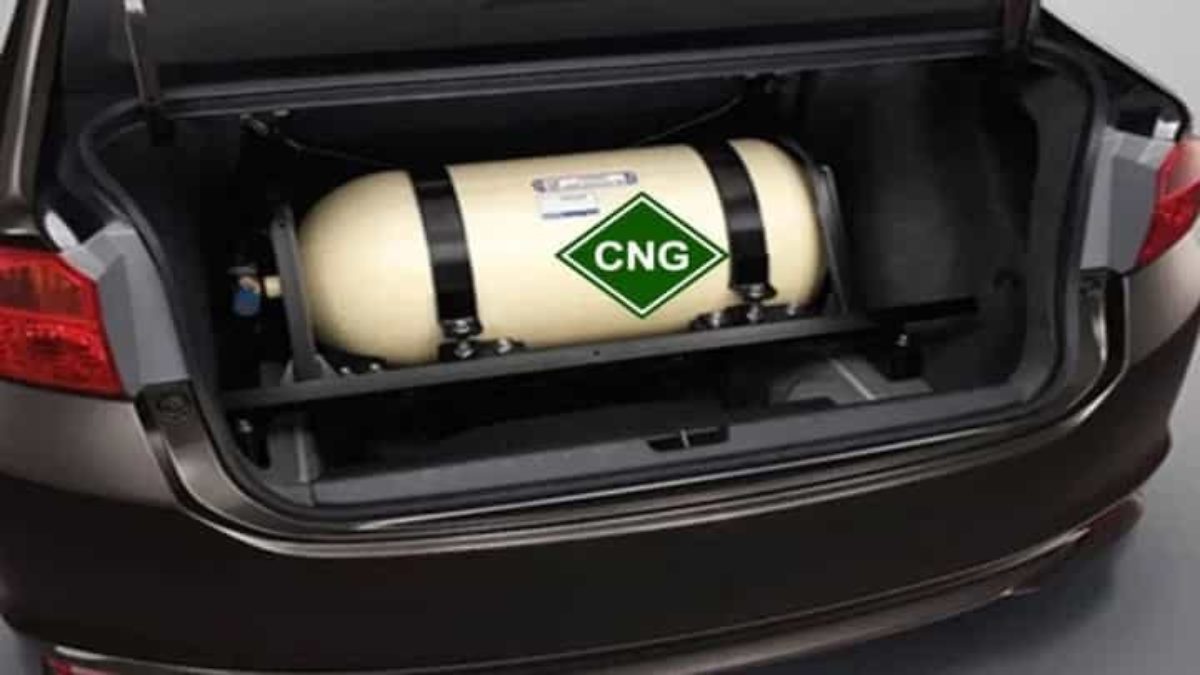
The second big issue is related to the boot space of the car. Nowadays, automobile companies design factory-fitted CNG cars by hiding the dual-tank or cylinder in the lower part of the vehicle in such a way that there is enough space left for luggage. On the contrary, if CNG is fitted from outside, a larger cylinder is placed inside the trunk, due to which the luggage carrying space is almost eliminated.
The third and very sensitive point is the vehicle insurance and paperwork. It becomes mandatory to update the insurance policy as soon as the CNG kit is fitted externally in the car. Adding CNG increases the total declared value (IDV) of the vehicle and also changes the risk factor, due to which the insurance premium increases slightly. The most important thing is that immediately after installing the kit, you have to register CNG in the Registration Certificate (RC) of your vehicle from the Regional Transport Office (RTO).
If you drive without getting the RTO documents amended or without informing the insurance company, the claim will be completely rejected in case of any future accident or fire. Legally, driving a CNG vehicle without RC update also falls in the illegal category. So when deciding to go for aftermarket CNG, don't just look at the fuel savings, but also understand the warranty issues, lack of boot space and the rules related to paperwork.