
Canada-India Diplomatic Reset Brings Relief and Renewed Hope to South Asian Canadians – Obnews

By Ayush Anand, Sudhir anand
The diplomatic thaw between Canada and India under Prime Minister Mark Carney and Indian Prime Minister Narendra Modi has brought a sense of relief to many South Asian Canadians who spent the past several years watching relations between the two countries deteriorate.
The diplomatic crisis of 2023 and 2024 was not an abstract foreign policy dispute for the diaspora. Visa service disruptions, reductions in diplomatic staff and increasingly confrontational political statements affected families, students, business owners and travellers in both countries. Weddings, funerals, family visits and emergency travel became more complicated as uncertainty surrounded visas and consular services.
The recent return to high level engagement has therefore been welcomed as a significant change in tone. Prime Minister Carney’s visit to India in March 2026, followed by further discussions surrounding the G7 Summit in Évian, France, indicated that Ottawa and New Delhi were once again prepared to communicate directly and rebuild institutional ties.

For transnational families, the most immediate benefit is greater predictability. Normalized diplomatic and consular services can make it easier for Canadians to visit relatives in India and for Indian family members to travel to Canada. It can also reduce uncertainty for international students, temporary workers and permanent residents who regularly navigate the immigration systems of both countries.
The diplomatic reset may also create substantial economic opportunities. Canada and India have expressed an interest in completing a Comprehensive Economic Partnership Agreement and significantly expanding bilateral trade by 2030. Such an agreement could benefit businesses in technology, agriculture, education, energy, manufacturing and professional services.
South Asian Canadians are particularly well positioned to participate in this growth. Many entrepreneurs already maintain personal and commercial relationships in both countries. Improved political relations can lower the perceived risks of cross border investment, reduce regulatory obstacles and encourage new partnerships between Canadian and Indian companies.
Greater cooperation in areas such as critical minerals, liquefied natural gas, clean energy, technology and innovation could also create employment and investment opportunities in Canada. A stable political relationship gives business owners greater confidence to pursue long term projects without fearing that another diplomatic confrontation will suddenly disrupt trade or travel.
The renewed dialogue may also ease the emotional pressure felt by Canadians who believed they were being caught between their country of citizenship and their country of family origin. During the height of the dispute, sections of the diaspora felt divided by political loyalties, concerns about foreign interference and disagreements surrounding activism related to Indian domestic affairs.
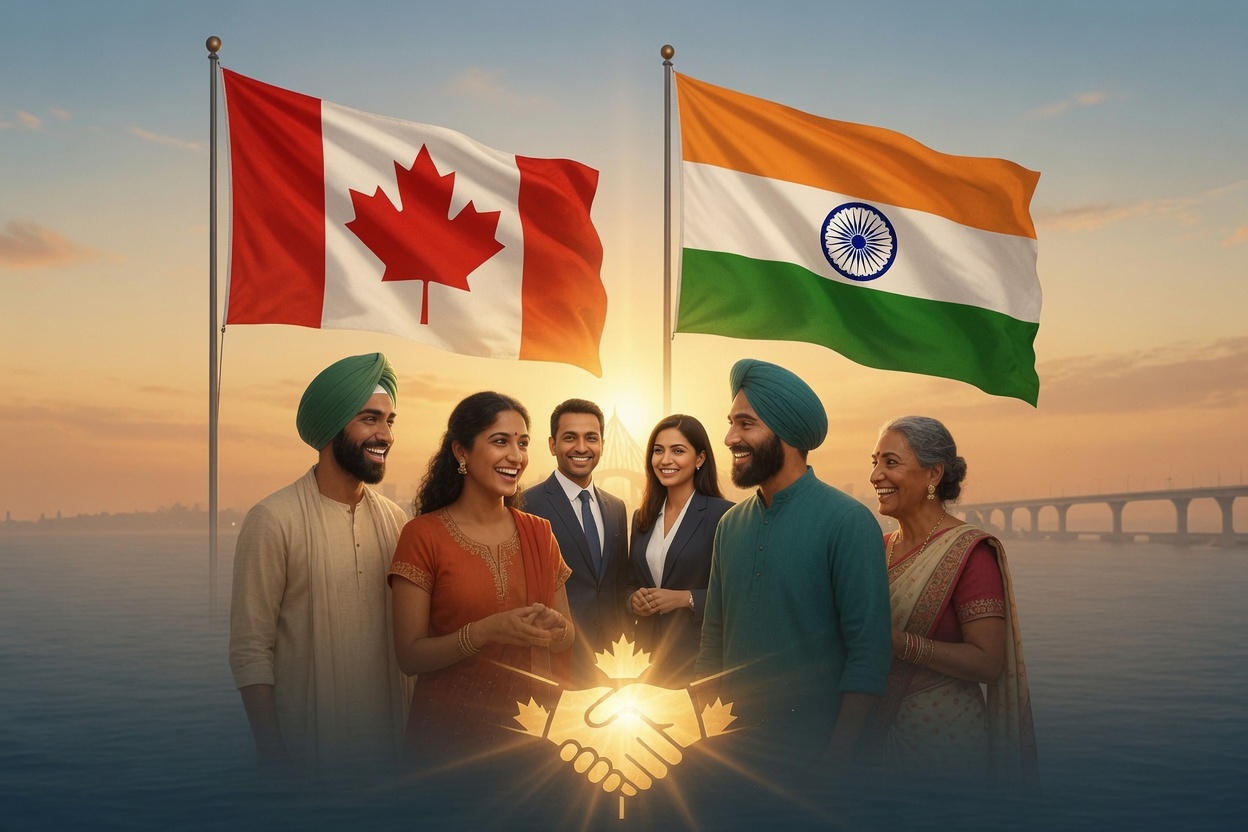
When Canada and India are openly confronting one another, South Asian Canadians can feel treated as part of the conflict rather than as Canadian citizens with legitimate family and cultural connections abroad. Improved relations allow the diaspora to return to its more natural role as a bridge between two major democracies and economies.
However, the new optimism should remain cautious. The serious security concerns that contributed to the breakdown in relations have not simply disappeared. Questions involving foreign interference, threats against individuals, diaspora activism and respect for Canadian sovereignty will continue to require careful investigation and frank discussions between both governments.
A lasting partnership will depend on more than photographs, handshakes and trade announcements. Canada and India will need to rebuild trust through consistent diplomatic engagement, transparent security cooperation and respect for the laws and institutions of both countries.

For now, the change in tone represents meaningful progress. South Asian Canadians can once again hope for easier family travel, stronger business opportunities and a relationship based more on cooperation than confrontation.
The Carney Modi reset does not erase the tensions of the past several years, but it offers both countries an opportunity to move forward. For the diaspora, it means a chance to focus once again on building families, businesses and communities without the constant pressure of being caught in a geopolitical dispute.

Comments are closed.