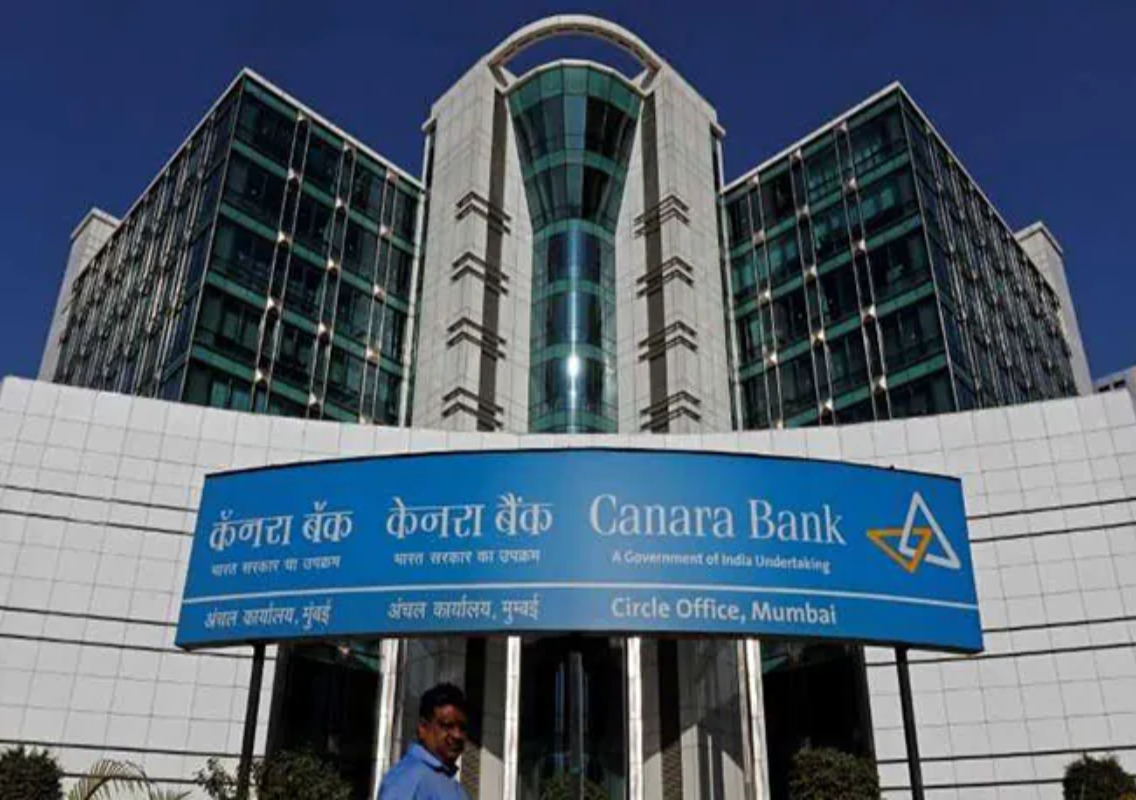
Shares of Canara Bank fell 6.12% in early trade on Thursday, October 15, after the lender flagged a potential one-time provision of up to Rs 15,000 crore under the expected credit loss (ECL) framework and disclosed treasury losses for the September quarter.
The stock declined to Rs 117.12 from its previous close of Rs 124.76, moving close to its 52-week low. It touched an intraday low of Rs 116.71, compared with the 52-week low of Rs 116.51 recorded on October 7.
Trading volume reached 2.05 crore shares at 9:33 am, about 1.47 times the 30-day average, according to the stock data cited in the report.
The disclosures came during Canara Bank’s second-quarter earnings call on Wednesday, after market hours. Although the bank reported its highest-ever quarterly net profit, management discussed the potential financial impact of transitioning to the ECL provisioning framework and the effect of rising bond yields on its investment portfolio.
The available data does not establish these disclosures as the direct cause of Thursday’s share-price decline.
Canara Bank Raises ECL Provision Estimate
Canara Bank Managing Director and CEO Rajesh Kumar Singh said the bank’s estimated one-time ECL provision could range between Rs 12,000 crore and Rs 15,000 crore.
The estimate is around Rs 3,000 crore higher than the bank’s earlier projection. Singh attributed the increase partly to higher bond yields and the additional mark-to-market provisioning requirement.
The expected credit loss framework is a forward-looking approach to provisioning that requires banks to estimate potential credit losses rather than relying only on losses that have already occurred.
The transition could therefore require banks to set aside provisions based on expected risks in their lending portfolios. For Canara Bank, the revised estimate has become an important consideration for investors assessing the potential effect on future profitability and capital.
Bank May Recognise Provisions Over Two Years
The Reserve Bank of India has allowed banks a transition period of up to five years for the new ECL framework.
However, Canara Bank management indicated that the lender could recognise the provision over approximately two years, depending on market conditions and movements in bond yields.
The timing of the provisioning could influence how the financial impact is reflected in the bank’s results. A faster recognition schedule could bring a larger portion of the cost into the earlier years of implementation.
Singh also said the bank currently has no plan to pass the additional cost on to customers.
Management acknowledged that the bank’s return on assets could fall below 1%. However, it expects higher profits and improvements in asset quality to help absorb the impact.
The final financial effect will depend on the provisioning requirements, market conditions and the bank’s ability to sustain earnings during the transition.
Treasury Losses Add to Investor Concerns
Apart from the potential ECL provision, Canara Bank reported losses in its investment portfolios during the September quarter.
The bank recorded a loss of around Rs 1,300 crore on its available-for-sale (AFS) investment portfolio. According to the report, the chief financial officer said this loss was adjusted against the AFS reserve.
The bank also disclosed a loss of approximately Rs 55 crore in its fair-value-through-profit-and-loss portfolio. This compared with gains of around Rs 555 crore in the previous quarter.
The treasury performance reflects the pressure that changing bond yields can place on banks’ investment portfolios. Such movements can affect the valuation of investments and influence quarterly financial results.
These treasury losses were discussed alongside the possible ECL provisioning requirement during the earnings call.
Quarterly Profit Rises Despite Provisioning Concerns
Despite the potential costs and treasury pressures, Canara Bank reported a strong increase in net profit for the September quarter.
The lender’s net profit rose 8.4% year-on-year to Rs 5,175 crore. Net interest income (NII), which reflects the difference between interest earned and interest paid, increased 20.39% to more than Rs 11,000 crore.
The bank’s asset quality indicators also remained at the levels reported for the quarter. Gross non-performing assets stood at 1.33%, while net non-performing assets were 0.30%.
These results indicate that the bank continued to report higher profitability and relatively low reported non-performing asset ratios even as management highlighted potential future provisioning costs.
However, the ECL transition and investment portfolio losses remain important factors for investors to monitor because they could affect earnings and returns in subsequent periods.
What the ECL Provision Means for Canara Bank
The revised ECL estimate of Rs 12,000 crore to Rs 15,000 crore represents a potential one-time provisioning requirement rather than an immediate confirmation that the entire amount will be charged in a single quarter.
The bank’s proposed approach to recognising the provision over about two years, compared with the RBI’s transition period of up to five years, will be significant in determining the timing of the impact.
Management expects higher profits and improving asset quality to provide support during the transition. It has also said there are currently no plans to pass the additional cost on to customers.
For investors, the key factors to watch include the final provisioning estimate, the schedule for recognising the expense, movements in bond yields and the bank’s ability to maintain earnings.
Canara Bank’s latest results show higher quarterly profit alongside concerns about future provisioning and treasury performance. The balance between these factors will remain central to assessing the bank’s financial outlook as it prepares for the ECL framework.