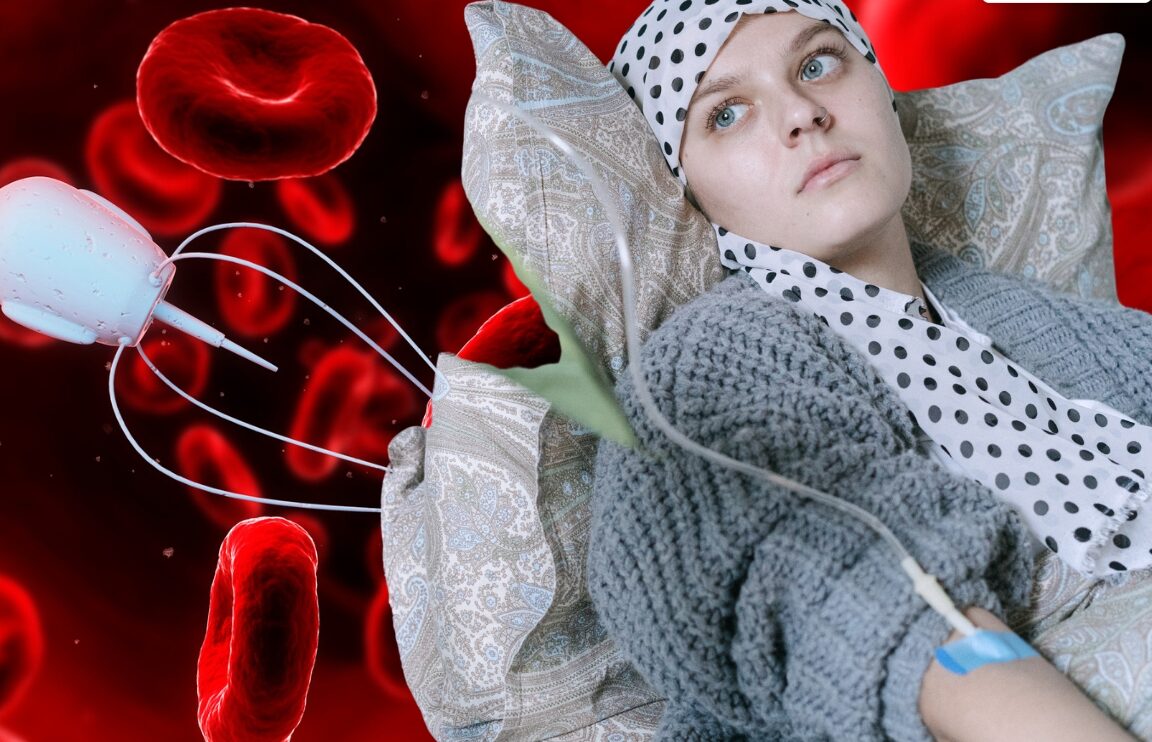
Cancer Nanorobot Research: Imagine if the technology used in cancer treatment could become so small that it could reach tumors inside the body and directly target cancer cells. It sounds like a story from a science-fiction film, but scientists are moving rapidly in this direction. In a research, scientists have developed such nanorobots, which recognize cancer cells and become active around them and along with destroying them, they also strengthen the body’s immune response. However, this technology is still at the laboratory and animal study stage. It has not been implemented for humans yet.
How does a nanorobot target cancer cells?
In a study published in Nature Nanotechnology in December 2025, researchers prepared a peptide-based nanorobot. Its specialty is that it can recognize a protein called PD-L1 present on the surface of cancer cells. After this, in the relatively acidic environment of the tumor, it changes its structure and forms such fibers, which damage the membrane of the cancer cell. That means its job is not just to reach the cancer cells.
Researchers have designed it in such a way that along with damaging the cancer cells, it also helps in increasing the activity of the immune system at that place. According to research, this may help T-cells to respond against the tumor.
Good results were seen on rats
This technique was tested in various models of mice with colorectal cancer. According to the researchers, the nanorobot showed the ability to remain in the tumor for more than 120 hours and in some experiments its effectiveness was better than existing treatment combinations. Similarly, a 2026 review report on nanorobotics also states that such technologies are showing promise in delivering drugs to tumors, finding cancer cells and reducing damage to normal tissues.
Has cancer treatment started in humans?
To put it in one line – not yet. Many results regarding such nanorobots are based on pre-clinical research i.e. cells and animal models. Multi-phase clinical trials will be necessary to understand its safety, correct dosage, behavior in the body and long-term effects in humans. Therefore, it is more correct to see it not as a new cancer treatment at the moment, but as a possibility for future targeted cancer therapy.
Technology can change the direction of treatment
One of the biggest challenges of cancer treatment is to target the tumor while causing minimal damage to healthy cells. Nanorobots are trying to find a technical solution to this problem. If their safety and effectiveness are proven in future human trials, they could play an important role in the field of precise and personalized cancer therapy.